
Your Compounder of Choice

Mon - Fri: 8:00 - 16:30 | Sat & Sun: Closed

2026 Best PVC Resin Suppliers for Global Buyers

Global buyers choosing a pvc resin supplier in 2026 face a market shaped by infrastructure needs, cost shifts, and uneven regional capacity. PlasticsEurope’s Plastics the Fast Facts 2023 estimated global plastics production at 400.3 million tonnes in 2022. PVC is one part of that broad market, used in pipes, profiles, cable insulation, and flooring. The figure provides useful context, but it does not show which suppliers can meet a buyer’s exact grade, delivery schedule, or quality requirements.

Those details matter. A resin sample may look consistent, yet processing behavior can change with formulation, equipment, and operating conditions. Buyers should examine technical data sheets, certificates of analysis, production controls, and documented shipment performance. The U.S. Geological Survey’s Mineral Commodity Summaries offers authoritative coverage of industrial materials and production trends, while market reports can help frame demand and pricing discussions. Neither source replaces supplier-level verification.

Look beyond the quoted price. Check whether the supplier can explain K-value, bulk density, residual monomer specifications, and recommended processing conditions in clear terms. Ask for recent batch documentation and confirm how the company handles specification changes. Small details count.

This guide compares suppliers through practical considerations: product range, export experience, quality assurance, logistics, and communication. Rankings and market claims can age quickly, and public data may not capture private capacity changes. Treat any shortlist as a starting point, not a guarantee. A careful qualification process still does the hard work.
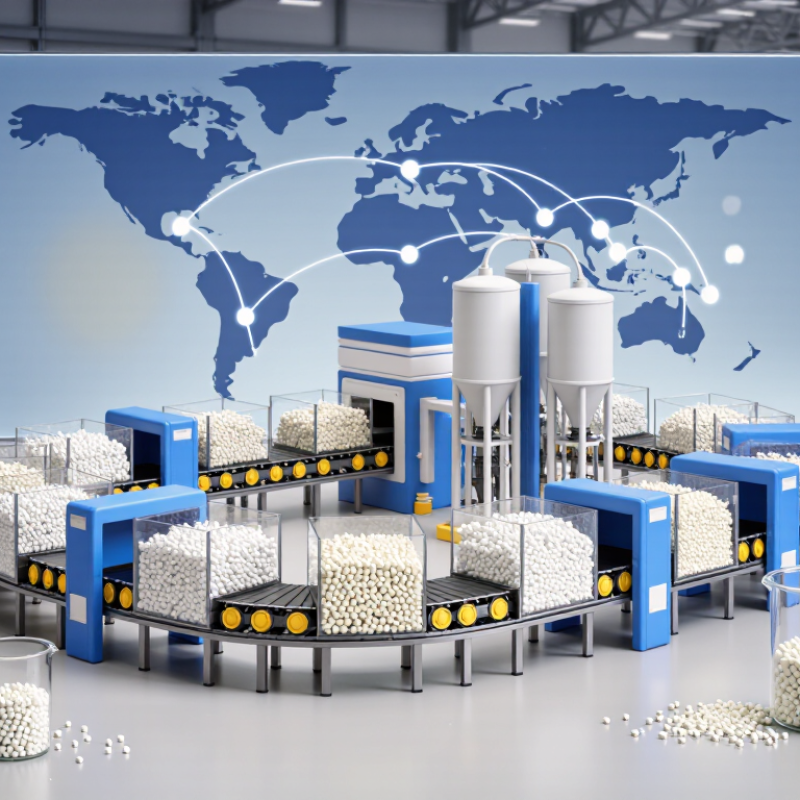
2026 Best PVC Resin Suppliers for Global Buyers

Understanding PVC Resin Grades and Their Global Applications

PVC resin grades differ in molecular weight, porosity, and processing behavior. General-purpose suspension resin is widely used for rigid pipes, fittings, profiles, and window frames. Its strength and dimensional stability suit products expected to last outdoors. Emulsion resin, with finer particles, is often selected for flexible coatings, flooring, and synthetic leather. Paste grades can form smooth layers. They need careful temperature control.

For global buyers, the application should guide grade selection more than a supplier’s broad product description. A pipe producer may prioritize consistent fusion and melt strength, while a flooring maker may focus on plasticizer absorption and surface finish. K-value can help compare grades, but it is not a complete performance test. Processing equipment, additives, and local climate also affect results. Small trial batches matter.

Tips: Request a technical data sheet and a recent batch certificate. Confirm the grade’s intended process, then test it on your own line. Check bulk density and particle size if feeding consistency is important. Ask how specifications are monitored between shipments. One detail is easy to miss: a grade that runs well in a laboratory may behave differently on an older production line. That deserves a real trial.

Key Criteria for Evaluating PVC Resin Suppliers in 2026

2026 Best PVC Resin Suppliers for Global Buyers

Key Criteria for Evaluating PVC Resin Suppliers in 2026

Choosing a PVC resin supplier takes more than comparing quoted prices. Start with the resin grade and its intended use. Ask for current technical data sheets, batch-specific certificates, and clear information about K-value, particle size, and bulk density. These details affect processing behavior. A sample run can reveal issues that paperwork misses.

Consistency matters. Compare test results across several batches, not just one. Ask how the supplier handles quality checks, production changes, and complaints. Reliable suppliers explain their limits plainly and provide traceable documentation. If answers stay vague, treat that as a signal. Even a small variation can affect extrusion output or finished-product appearance.

Evaluate delivery capability as carefully as product quality. Confirm typical lead times, packaging options, loading capacity, and how delays are communicated. For overseas shipments, request practical details about moisture protection and container handling. Check payment terms and quote validity, too; resin prices can shift. A low offer may still carry hidden costs. One area buyers sometimes overlook is communication during routine orders. Test it before a problem occurs. A supplier may look strong on paper, yet the first shipment can expose gaps in coordination.

Regional Supply, Certifications, and Quality Standards

Regional supply matters as much as price when choosing a PVC resin supplier. PlasticsEurope’s Plastics – the Fast Facts 2024 reports global plastics production of 413.8 million tonnes in 2023, underscoring the scale and complexity of the supply chain. For buyers, a nearby producer may shorten transit times, but port congestion, seasonal demand, and limited rail access can still cause delays. Ask suppliers for typical lead times, shipment records, and contingency plans for your destination.

Quality depends on documented controls, not polished brochures. Request recent certificates of analysis showing K-value, bulk density, volatile content, and particle size for the specific grade. Check that the quality-management certificate covers the production site supplying your order. ISO 9001 certification is a useful process indicator, but it does not guarantee that every batch meets your processing needs. Test a sample on your own equipment; lab results alone can miss real production issues.

Tips: Compare landed cost, not just the resin price. Confirm certificate validity with the issuing body, and request batch traceability from production to shipment. Keep a retained sample from each delivery. This adds work, admittedly, but it can make disputes easier to investigate.

2026 Best PVC Resin Suppliers for Global Buyers — Regional Supply, Certifications, and Quality Standards

PVC resin suppliers should be assessed against the same material baseline. This chart shows the elemental mass composition of the PVC repeat unit (C₂H₃Cl), calculated from standard atomic weights; it is not a supplier comparison.

For purchasing decisions, confirm grade-specific specifications, test methods, certificates, and regulatory documentation directly with each supplier. Actual resin formulations and product properties can vary by grade.

Comparing Supplier Capacity, Pricing, and Delivery Terms

A global buyer should compare PVC resin suppliers by usable capacity, not headline capacity alone. Ask how much material is available for your grade and shipment window. Capacity matters. A supplier may quote a large monthly output, yet maintenance or competing orders can reduce near-term availability. Request a recent production schedule, typical lot size, and confirmation of whether supply is allocated or made to order. These details help distinguish a dependable offer from a promising estimate.

Pricing needs the same careful reading. Compare the resin price alongside packaging, inland transport, port handling, and payment terms. A low offer can become less attractive when the quote excludes key costs. Check how long the price remains valid, especially when raw-material costs are changing. Delivery terms also shape the real cost: confirm the named destination, estimated lead time, loading point, and responsibility for freight and insurance. Get dates in writing. Ask what happens if production or shipping slips, and whether partial shipments are possible. A spreadsheet helps, but it will not catch every operational risk; buyers should verify assumptions directly and leave room for delays.

Selecting a PVC Resin Supplier for Your Business Needs

Choosing a PVC resin supplier starts with the grade your process actually needs. Suspension and emulsion resins behave differently, and K-values can affect melt strength, processing speed, and finished-product performance. Ask for a current technical data sheet and a certificate of analysis for each shipment. Check that the stated values match your requirements, not just the sample you approved months ago. Small differences can matter.

Supply reliability deserves equal attention. Compare typical lead times, minimum order quantities, packaging options, and how the supplier handles delays. For example, a buyer receiving resin in 25-kilogram bags may need different storage and handling support from one receiving bulk deliveries. Ask how product lots are identified and whether retained samples are available for troubleshooting. Clear answers are a good sign. Vague promises are not.

Evaluate communication before committing to a large order. A useful supplier can explain grade selection, share relevant processing guidance, and respond with specific information when a problem appears. Request a trial quantity and test it on your own equipment. Record flow behavior, product consistency, and any changes in scrap or cycle time. One trial may not reveal everything; production conditions vary, and that is easy to underestimate. Compare landed cost, not only the quoted price, and review performance over several deliveries before making a long-term decision.

2026 Best PVC Resin Suppliers for Global Buyers - Selecting a PVC Resin Supplier for Your Business Needs

Use this supplier-selection guide to compare PVC resin offers against your product requirements. Technical values are typical industry ranges, not guaranteed specifications; confirm the current grade data sheet and certificate of analysis with each supplier.

Evaluation Dimension What to Look For Typical Reference or Check Why It Matters
Resin process and grade Confirm whether the material is suspension PVC (S-PVC) or emulsion PVC (E-PVC), and request the exact grade specification. S-PVC is commonly used for pipes, profiles, and rigid compounds; E-PVC is commonly used in paste applications such as flooring and coatings. Different production processes and particle characteristics affect processing behavior and end-product performance.
K-value / molecular-weight indicator Match the grade to the forming process and mechanical-property requirements; compare test methods and stated tolerances. Common S-PVC grades are often described by K-values in the approximate 55–70 range; the suitable value depends on the application and formulation. K-value is an indicator related to polymer molecular weight and viscosity, influencing processing and product properties.
Quality consistency Request a recent certificate of analysis (COA), specification limits, batch traceability, and a process for handling non-conforming material. Check the properties relevant to the grade, such as K-value, apparent bulk density, volatile matter, and residual vinyl chloride monomer. Consistent batches help reduce production adjustments, scrap, and finished-product variation.
Compliance documentation Verify applicable safety data sheets, chemical declarations, and destination-market requirements for the intended use. Ask for current documents and confirm that the material and any additives meet the rules relevant to the destination and application. Regulatory obligations differ by market and use, particularly for food-contact, medical, or other regulated applications.
Packaging and handling Confirm bag or bulk format, net weight, palletization, moisture protection, labeling, and loading method. Packaging commonly includes multiwall bags or jumbo bags; available formats and weights should be confirmed for each shipment. Suitable packaging supports safe handling and helps protect the resin from contamination and moisture during storage and transit.
Supply capacity and lead time Ask for available monthly volume, order minimums, production allocation, lead-time assumptions, and contingency plans. Compare written delivery commitments for the required grade, quantity, and shipping window rather than relying on general capacity claims. Reliable availability can be as important as unit price when planning continuous production.
Export and logistics capability Check export-document experience, port or inland delivery options, shipment tracking, and clarity on the agreed Incoterms® rule. Request a complete quotation that states currency, validity, shipment quantity, delivery point, and which party arranges freight and insurance. Clear logistics terms make landed-cost comparisons more accurate and reduce shipment disputes.
Technical and after-sales support Assess response times, access to application guidance, sample availability, and the process for investigating quality concerns. Request a trial sample and agree on evaluation criteria before placing a recurring order. Responsive technical support can help troubleshoot processing issues and assess grade suitability.
Total landed cost Compare the full delivered cost, including resin price, freight, insurance, duties, handling, and any applicable local charges. Use the same grade, quantity, destination, delivery basis, and quotation date for each comparison. A lower quoted resin price may not result in a lower overall procurement cost.

Note: PVC resin is not interchangeable across all processes or end uses. Confirm grade suitability, current specifications, regulatory status, and safe handling requirements directly with the supplier before purchase.