Your Compounder of Choice

Mon - Fri: 8:00 - 16:30 | Sat & Sun: Closed

How to Choose the Right PVC Resin for Global Sourcing?

Choosing the right PVC resin for global sourcing is more than comparing prices on a supplier spreadsheet. The decision affects processing stability, product durability, shipping risk, and long-term customer trust. A resin that performs well in a rigid pipe may fail in flexible flooring or electrical insulation. The details matter.

PVC technology author George Wypych puts the principle plainly: “The right PVC resin is the one that meets the application and processing requirements.” This guidance remains practical for international buyers. Start with the product’s end use, then review K-value, bulk density, particle size, thermal stability, and plasticizer absorption. These figures should match the extrusion, injection, or calendaring process. A clear technical data sheet helps. It does not tell the whole story.

Ask for recent certificates of analysis, batch consistency records, and representative samples. Check how the PVC resin behaves after storage in heat, humidity, or long-distance transport. A low quotation may become expensive when filters block, fusion slows, or rejected batches arrive at a port. Supplier audits also deserve attention. Can the producer explain raw material controls and corrective actions?

Some sourcing plans look complete on paper. They are not.

I have seen buyers focus heavily on K-value while overlooking packaging strength and moisture protection. That is an avoidable weakness. A reliable global sourcing strategy compares technical performance, documentation quality, supply continuity, and responsible compliance practices. It should also include a trial order before committing to large volumes. Specifications can guide the choice, but actual processing evidence must confirm it.
How to Choose the Right PVC Resin for Global Sourcing?

Define PVC Resin Types and Their Key Properties

PVC resin is not one uniform material. Its production route shapes processing behavior, surface finish, and final product performance. The main categories are suspension, emulsion, bulk, and paste resin. Suspension PVC is widely used for pipes, profiles, cables, and films because it offers balanced flow and strength. Emulsion PVC contains finer particles and suits coatings, flooring, and flexible products. Bulk PVC can provide good purity and consistent particle structure. Paste resin is designed for plastisol applications, where controlled viscosity matters.

Key properties deserve a closer look. K-value indicates molecular weight and strongly affects strength, fusion, and processing temperature. Higher K-values may improve mechanical performance but can require more processing energy. Particle size and porosity influence resin absorption, feeding, and surface appearance. Plasticizer absorption matters in flexible formulations. Thermal stability, residual monomer levels, whiteness, moisture, and contamination should also be checked.

Do not judge by K-value alone.

During global sourcing, request technical data sheets, safety documents, batch records, and applicable compliance reports. Compare lot-to-lot results instead of relying on one sample. A trial run is essential. Measure fusion time, torque, bulk density, sieve residue, and final surface quality. One practical mistake is assuming that similar grades behave identically on different equipment. A cheaper resin may require more stabilizer or create more processing waste. That changes the real cost.

I would record these differences carefully, even when the first result looks acceptable. No resin is perfect.

Match Resin Performance to the Intended Application

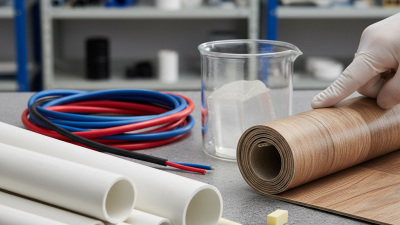
Choosing the right PVC resin begins with the finished product, not the lowest quoted price. Match resin performance to the intended application. Rigid pipes need consistent fusion, impact strength, and long-term pressure resistance. Cable insulation needs electrical stability, flexibility, and controlled processing behavior. Flooring may require a different balance of plasticizer absorption, surface appearance, and abrasion resistance.

Check the resin’s K-value, bulk density, particle size, and thermal stability. These details influence melt flow, fusion time, and production speed. A higher K-value can support strength, but it may also demand more processing energy. Small differences matter. Ask for a current technical data sheet and certificate of analysis. Then compare those figures with your actual operating conditions, including extruder temperature, screw design, and cooling time.

Laboratory data is only the starting point. Request a production trial using your intended additives and equipment. Inspect the surface after extrusion. Measure dimensions, tensile performance, and color stability. Review storage conditions as well, because moisture, heat, and poor packaging can affect handling. A clean spreadsheet is not enough. I have seen a resin pass basic tests yet create uneven fusion on a busy production line. That result deserves investigation, not excuses. Suppliers should explain test methods, batch consistency, and corrective procedures clearly. Reliable sourcing depends on evidence that matches real application demands.

Evaluate K-Value, Additives, and Processing Requirements

How to Choose the Right PVC Resin for Global Sourcing?

K-value is the first practical filter when comparing PVC resins. It indicates average molecular weight and strongly affects melt viscosity, strength, and fusion behavior. Lower K-values usually support easier flow in rigid profiles and injection molding. Higher K-values can improve toughness, but they demand more heat and mixing energy. Choose by process, not specification alone. According to PlasticsEurope’s Plastics—The Fast Facts 2024, global plastics production reached 413.8 million tonnes in 2023. This scale makes consistent resin selection increasingly important across international supply chains.

Additives can change the result dramatically. Confirm the stabilizer system, lubricant balance, impact modifier, plasticizer level, pigment, and moisture condition. A resin with suitable K-value may still show poor fusion or surface defects. Check the certificate of analysis, safety data, residual vinyl chloride information, and lot-to-lot test results. Grand View Research’s 2024 PVC market analysis projects continued market growth through 2030, increasing pressure on processors to control quality rather than chase the lowest price. Request small trial lots before committing to containers. Measure torque, fusion time, melt strength, color stability, and finished-part impact performance. Field experience suggests that supplier data often looks cleaner than production reality. I would not treat one successful trial as proof. Resin performance can shift with equipment wear, storage humidity, and local additive regulations. Evaluate those variables honestly.

Compare Supplier Quality, Certifications, and Global Compliance

Choosing PVC resin globally starts with evidence, not a low quotation. In supplier evaluations, I compare K-value, viscosity, bulk density, moisture, and residual VCM. These figures affect processing stability, odor, and finished-product performance. Request a recent certificate of analysis for every production lot. Then compare it with an approved sample under actual mixing and extrusion conditions. A sample can look excellent. Production consistency matters more. Ask how the supplier controls raw materials, batch changes, equipment cleaning, and complaint records. Clear traceability should reach the pallet label.

Certifications need careful reading. ISO 9001 can indicate a controlled quality system, but it does not prove resin performance. Check certificate scope, issuing body, expiry date, and covered manufacturing site. For environmental or product requirements, request applicable REACH, RoHS, food-contact, or other destination-specific declarations. Requirements vary by country and application. Do not accept a generic compliance letter. Ask for test reports from competent laboratories, preferably with ISO/IEC 17025 accreditation.

I once treated a valid certificate as complete assurance. That was too optimistic. Documents must match the exact grade, plant, and shipment period.

Tips:

  • Build a supplier scorecard covering quality history, technical support, certifications, traceability, and corrective-action speed.
  • Verify one recent lot independently when the application is sensitive.
  • Keep retained samples in sealed bags, labeled with lot number and date.
  • Ask for written change notification before formulation or process changes.
  • If answers arrive slowly, investigate the system behind them.
  • Low price is useful only when compliance remains stable.

Assess Cost, Logistics, and Long-Term Supply Reliability

Choosing PVC resin for global sourcing requires more than comparing invoice prices. Evaluate K-value, particle size, porosity, and residual moisture against your processing conditions. A resin suited for rigid pipe may perform poorly in flexible products. Request recent certificates of analysis, batch records, and sample test results. Test samples on your own equipment. Small differences matter. A low quote can still be wrong when yield, scrap, or additive use increases.

Calculate landed cost, not just the resin price. Include ocean freight, insurance, duties, port handling, storage, inland delivery, and financing. Ask for quotation validity, currency assumptions, minimum order quantity, and packaging details. A twenty-ton container may look efficient, yet slow-moving inventory can consume the savings. Compare palletized bags, container loading, and moisture protection before approving shipment plans. Port congestion can turn a cheap route into an expensive delay. I would challenge my own forecast here; demand rarely follows a perfect spreadsheet.

Long-term reliability depends on more than production capacity. Review maintenance schedules, raw material access, quality controls, and contingency plans. Ask how quickly the supplier handles off-specification batches and transport disruptions. Request references from comparable industrial users across different seasons. Set clear specifications, inspection rights, claim procedures, and communication times in the contract. Maintain a qualified backup source and sensible safety stock. Neither is free. Still, paying slightly more for consistent resin may protect production, customer trust, and cash flow.

How to Choose the Right PVC Resin for Global Sourcing?

Regional benchmark comparison for suspension-grade PVC resin sourcing. Lower cost and shorter lead time reduce purchasing risk, while higher supply reliability supports long-term continuity.

Planning benchmark ranges: resin cost and ocean logistics are shown in USD per metric ton, lead time is measured in calendar days, and supply reliability represents the expected percentage of orders delivered on time. Actual results vary by grade, destination, contract terms, port congestion, and seasonal market conditions.