
Choosing a reliable pvc compound supplier is rarely as simple as comparing prices. Global buyers must examine formulation consistency, processing support, production capacity, and delivery performance. A supplier may offer attractive samples, yet fail when monthly demand increases. That gap matters.
Dr. John Scheirs, a respected polymer consultant and author, has stated, “Material selection must be linked to processing conditions and the final application.” This principle is highly relevant to pvc compound purchasing. A rigid pipe formulation needs different performance priorities than a flexible cable compound. Weather resistance, flame behavior, hardness, color stability, and migration control can change the entire buying decision. Small details matter here.
This guide reviews ten PVC compound suppliers serving international buyers. It considers technical experience, quality systems, customization ability, export readiness, and practical communication. Factory scale alone does not prove reliability. Neither does a polished website. Buyers should request current technical data sheets, batch samples, test methods, and realistic lead times. They should also clarify packaging details, pallet protection, and storage conditions. A twenty-five-kilogram bag can arrive damaged after a long sea journey. That is not a minor inconvenience.
The ranking is not absolute. Application requirements differ. A supplier strong in medical-grade compounds may not suit construction profiles. Some companies provide excellent laboratory support but limited regional inventory. Others respond quickly but offer fewer formulation options. These weaknesses deserve attention. The best choice usually balances verified performance, transparent communication, and dependable supply rather than chasing the lowest quotation.
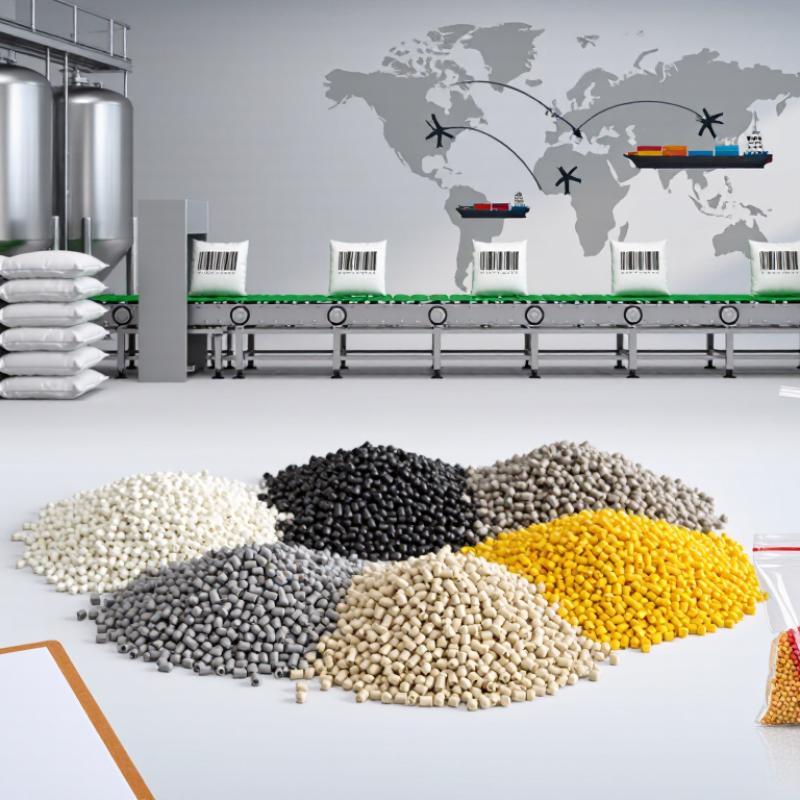
PVC compound starts with a simple chemical fact: chlorine represents about 56.7% of PVC’s mass. The remaining portion comes mainly from carbon and hydrogen. This chlorine content supports flame resistance, durability, and stable performance. However, it does not make every compound automatically safe or suitable for every application.
Additives shape the final material. Plasticizers create flexibility, while stabilizers support heat resistance during processing. Impact modifiers improve toughness. Lubricants help the compound flow through equipment. Fillers can reduce cost, but excessive loading may weaken the finished product. Small formulation changes matter.
Major product grades include rigid PVC, flexible PVC, cable compounds, pipe grades, and impact-modified grades. In plant trials, I have seen two compounds with similar datasheets behave differently during extrusion. Processing temperature, screw design, moisture, and storage time can change the result. Buyers should request batch records, test certificates, and practical processing data from each supplier.
A reliable supplier should explain hardness, density, tensile strength, elongation, and thermal stability clearly. Flame-retardant or low-smoke grades require application-specific testing. Food-contact, medical, and electrical uses also demand documented compliance for the target market. No supplier is perfect. A missing test value may reveal weak control, or simply poor documentation. Either way, it deserves a question before purchase. Developing a small trial order is often wiser than trusting a polished brochure.
Top 10 PVC Compound Suppliers for Global Buyers
Selecting the right PVC compound supplier requires more than comparing quoted prices. I review production capacity, formulation expertise, certifications, export experience, and application support. A useful shortlist includes ten suppliers across flexible, rigid, flame-retardant, medical-grade, cable, and automotive compounds. Capacity should be checked in actual monthly output, not only advertised annual figures. A factory producing 2,000 tonnes monthly may serve urgent orders better than a larger plant with limited scheduling flexibility.
Certification evidence matters. Look for ISO 9001 quality systems and ISO 14001 environmental management. Automotive buyers may require IATF 16949. Product documentation should include technical data sheets, safety data sheets, batch traceability, and relevant regulatory declarations. Confirm whether testing is performed internally or by an independent laboratory. That detail is easy to miss. It matters during audits.
For comparison, assess the ten suppliers by lead time, minimum order quantity, color consistency, technical response, and market coverage. Some focus on Europe, while others serve Asia, North America, or emerging markets. Evaluate their experience with extrusion, injection molding, wire insulation, flooring, and seals. Request recent sample batches and inspect hardness, tensile strength, density, and thermal stability. I have seen attractive samples fail after scale-up. A supplier should explain corrective actions clearly, even when the mistake was theirs. Price still matters, but reliability usually costs less than repeated production delays. No ranking remains permanent; capacity, compliance, and service quality can change within one year.
The chart compares ten anonymous supplier profiles using a normalized 0–100 screening index. The index combines production capacity, certification coverage, export-market reach, technical support, and PVC formulation capability. It is intended as a neutral framework for global buyers and does not disclose company or brand names.
Global buyers need more than a glossy PVC compound datasheet. A credible supplier should connect each grade with repeatable test evidence and clear material limits.
ASTM D1784 classifies rigid PVC by tensile strength, modulus, impact resistance, and heat-deflection performance. ISO 1163 supports consistent designation and basic property reporting for PVC materials. UL 94 evaluates burning behavior, including V-0, V-1, and V-2 classifications.
These ratings are not interchangeable. A V-0 result does not prove outdoor durability, chemical resistance, or long-term mechanical strength.
In practical plant audits, missing conditioning details often create misleading comparisons. ASTM test temperature, specimen thickness, and molding history can change the result. Small details matter.
PlasticsEurope’s Plastics – the Facts 2023 reported 400.3 million tonnes of global plastics production in 2022. That scale increases the need for traceable resin content, batch records, and independent verification.
Buyers should request density, tensile strength, elongation, impact strength, Vicat softening temperature, and color stability data. ISO 1163 values help organize comparisons, but they should not replace application testing.
Real assemblies face heat, pressure, UV exposure, and installation errors. Laboratory data can look perfect. Field performance may still disappoint.
Tips: Ask for the original test report, specimen thickness, conditioning method, and laboratory accreditation. Compare three production batches, not one attractive sample. Keep a retained sample from every approved lot.
One weakness remains: suppliers may report typical values rather than guaranteed minimums. That distinction should be written into the purchasing specification.
Comparing ten PVC compound suppliers requires more than checking the quoted kilogram price. A low offer may exclude additives, packaging, testing, or inland delivery. Request a written quotation with grade, color, hardness, batch tolerance, and shipment terms. Small orders cost more. Many suppliers set MOQs between 500 and 1,000 kilograms, while customized colors may require higher volumes. A trial order can reveal processing behavior before full production begins.
Lead time usually includes formulation approval, raw material preparation, compounding, testing, and packing. Ask for each stage separately. For repeat grades, seven to fifteen working days may be realistic, but custom formulations often need longer. Keep safety stock near seasonal demand. A delayed container can stop an entire production line. That cost may exceed a small price difference.
Evaluate price per kilogram against landed cost, not the invoice alone. Under EXW, the buyer manages pickup and export arrangements. FOB normally includes delivery to the loading port, while CIF includes freight and insurance to the destination port. DDP may simplify delivery, but responsibilities should be checked carefully. A spreadsheet can still lie. In my sourcing reviews, suppliers with slightly higher prices sometimes delivered better consistency and fewer rejected batches. Ask for recent certificates of analysis, production samples, and references from comparable applications. Then compare payment terms, packaging loss, inspection costs, and port charges before selecting a supplier.
Top 10 PVC Compound Suppliers for Global Buyers?
For global buyers, a PVC compound supplier must prove compliance, not merely promise it. Under REACH, request current substance declarations and Candidate List screening for every formulation. ECHA updates the list, so an old declaration can become misleading. RoHS compliance requires control of ten restricted substances in relevant electrical and electronic applications. Test reports should identify methods, laboratories, dates, and sample formulation codes. A glossy certificate is not enough.
Phthalate control deserves separate attention, especially in flexible PVC used near children or food-contact environments. EU RoHS restricts DEHP, BBP, DBP, and DIBP to 0.1% in homogeneous materials. The European Chemicals Agency connects these restrictions with reproductive and environmental hazards. Buyers should compare formulation recipes with supplier declarations, not only finished-product labels. One missing plasticizer record can weaken an otherwise credible audit trail.
Sustainability claims need measurable evidence. The OECD Global Plastics Outlook reports 353 million tonnes of plastic waste in 2019, with only 9% recycled. For PVC compounds, ask for post-industrial and post-consumer recycled content, verified mass balance, and recovery yields. A European PVC industry progress report recorded approximately 810,000 tonnes recycled in 2022. Require batch-level traceability, energy data per kilogram, and proof that recycled inputs meet safety specifications. I have seen capable suppliers struggle with inconsistent waste streams. That weakness deserves honest disclosure, not polished language.
| Position | Anonymous Supplier Profile | REACH Evidence | RoHS Evidence | Phthalate Control | Recycled Content | Production Scrap Recycling | Environmental Management | Buyer Verification Documents |
|---|---|---|---|---|---|---|---|---|
| 01 | Supplier Profile A | Current SVHC declaration; confirm substances above the 0.1% communication threshold. | Homogeneous-material test report; lead, mercury, Cr(VI), PBB, PBDE and restricted phthalates at or below applicable limits. | Specify whether DEHP, BBP, DBP and DIBP are intentionally added; test plasticized grades where required. | Grade-specific; verify | Site-specific; verify | ISO 14001 certificate or equivalent environmental management evidence. | Declaration of compliance, laboratory reports, formulation statement, SDS and recycled-content substantiation. |
| 02 | Supplier Profile B | REACH Article 33 communication process should cover each supplied formulation and revision. | Verify the 0.1% limit for most restricted substances and 0.01% cadmium limit at homogeneous-material level. | Request a phthalate-free statement only when supported by formulation review or analytical testing. | Not publicly disclosed | Not publicly disclosed | Ask for energy, water and waste indicators covering the compounding site. | Latest SVHC screening, RoHS test report, restricted-substance list and waste-transfer records. |
| 03 | Supplier Profile C | Confirm the declaration is based on the current ECHA Candidate List and includes intentionally added substances. | Obtain product-specific evidence rather than relying only on a general corporate declaration. | For toys and childcare articles, verify applicable restrictions on DEHP, BBP, DBP and DINP. | Claim requires mass-balance or chain-of-custody proof | Measure by input/output mass balance | Prefer independently certified environmental objectives and annual performance reviews. | Material traceability records, third-party test reports and documented recycling methodology. |
| 04 | Supplier Profile D | Require notification of formulation changes that could affect REACH communication duties. | Confirm test methods, sample identification, detection limits and report validity date. | Check all plasticizers, stabilizers and processing aids against the buyer's restricted-substance list. | Pre-consumer or post-consumer; define clearly | Report percentage and calculation basis | Review waste hierarchy, internal regrind controls and disposal routes for unusable scrap. | Change-control procedure, approved raw-material list and verified recycling calculations. |
| 05 | Supplier Profile E | Use the current Candidate List version and retain supporting supplier declarations for audit purposes. | Test results should identify the homogeneous material evaluated, not only the finished article. | Where “phthalate-free” is claimed, identify the analytical scope and reporting limit. | Customer specification required | Customer specification required | Request site-level carbon, electricity and waste data where sustainability reporting is material. | SVHC declaration, RoHS report, phthalate scope, environmental certificate and KPI definitions. |
| 06 | Supplier Profile F | Confirm whether imported articles or mixtures create additional registration or communication responsibilities. | Ask for coverage of all applicable RoHS substance exemptions and their expiry or review status. | Verify compliance for flexible PVC, cable compounds, flooring grades and other plasticized applications separately. | Not publicly disclosed | Not publicly disclosed | Evaluate whether environmental data covers the actual manufacturing location. | Import/export compliance statement, exemption register, product test reports and site data. |
| 07 | Supplier Profile G | A declaration should state the date checked, formulation scope and response to SVHC changes. | Prefer laboratory testing accredited to ISO/IEC 17025 where testing is used as compliance evidence. | Include restricted plasticizers and any alternative plasticizers required by the end market. | Traceability evidence required | Monthly or annual KPI basis required | Check whether recycling claims distinguish reuse, recycling and energy recovery. | Accredited test report, chain-of-custody record and definitions for all sustainability claims. |
| 08 | Supplier Profile H | Confirm written communication procedures for customers receiving articles containing Candidate List substances above 0.1%. | Verify the finished PVC compound against the buyer's market-specific technical file. | Do not treat “low odor” or “non-toxic” as proof of phthalate compliance. | Grade-specific; verify | Site-specific; verify | Request documented targets for landfill diversion and process-waste reduction. | Customer declaration, SDS, technical data sheet, audit questionnaire and waste KPI records. |
| 09 | Supplier Profile I | Require a formulation-level statement for virgin, recycled and filled PVC compounds. | Confirm whether recycled feedstock has been screened for restricted substances before incorporation. | Recycled PVC requires additional feedstock controls because legacy additives may affect compliance. | Post-consumer share: verify | Internal rework: verify | Review incoming recycled-material controls and supplier qualification procedures. | Recycled-feedstock specification, contaminant screening, mass-balance records and test reports. |
| 10 | Supplier Profile J | Set a contractual obligation to provide updated REACH information after regulatory list changes. | Retain current declarations and repeat testing after major raw-material or formulation changes. | Confirm compliance for the specific destination market, application and customer restricted-substance list. | Not publicly disclosed | Not publicly disclosed | Use environmental metrics only when the boundary, period and calculation method are documented. | Contractual compliance commitment, change notification, current reports and sustainability data definitions. |