Your Compounder of Choice

Mon - Fri: 8:00 - 16:30 | Sat & Sun: Closed

China Best Plastic Injection Molding Manufacturers?

Choosing among China’s best plastic injection molding manufacturers requires more than comparing prices. Buyers must examine technical ability, production records, quality systems, and communication practices. A polished website is not enough evidence.

Experienced manufacturers usually explain mold design, material selection, cycle times, and expected tolerances clearly. They can provide sample parts, inspection reports, and realistic production schedules. Some also support DFM reviews, prototype development, surface finishing, and assembly. These services can reduce costly changes after tooling begins.

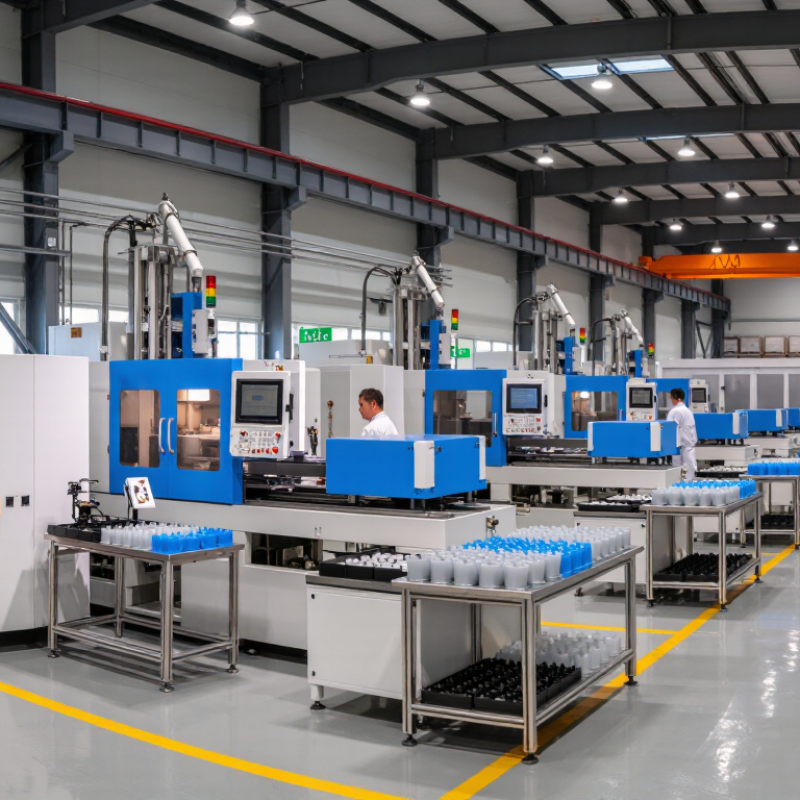
Look closely at the factory itself. A reliable supplier should show molding machines, tooling equipment, inspection tools, and controlled storage areas. Ask how operators manage flash, sink marks, warping, color variation, and dimensional drift. These small defects can become expensive when thousands of parts are involved.

Certifications may support credibility, but certificates alone prove little. Verify their scope, validity, and connection to your project. Independent audits, customer references, and traceable quality records offer stronger evidence. Regulatory requirements also depend on the product, destination market, and selected material.

No supplier is perfect. Even capable teams may underestimate tooling revisions or shipping risks. This is where careful questions matter. A strong partnership includes transparent quotations, documented approvals, measurable quality standards, and timely problem reporting.

The following outline evaluates leading China plastic injection molding manufacturers through practical criteria. It considers expertise, equipment, material knowledge, quality control, pricing, communication, and after-sales support. The goal is not to name a single winner. It is to identify the manufacturer that fits your product, volume, budget, and risk tolerance.
China Best Plastic Injection Molding Manufacturers?

What Defines a Leading Plastic Injection Molding Manufacturer in China

What Defines a Leading Plastic Injection Molding Manufacturer in China

A leading Chinese plastic injection molding manufacturer combines engineering discipline with practical shop-floor experience. Grand View Research’s Injection Molded Plastics Market report estimates the global market reached about USD 387 billion in 2023. It also projects a 4.6% compound annual growth rate through 2030. This pressure rewards suppliers that control quality, not merely production volume.

A capable manufacturer should show documented process controls, material certificates, mold maintenance records, and traceable inspection results.

ISO 9001 certification helps, but certification alone proves little. Engineers should review wall thickness, draft angles, shrinkage, and cooling design before tooling begins. That matters. A reliable supplier also measures critical dimensions with calibrated equipment and uses capability studies for repeat production. Plastics Europe’s Plastics—The Fast Facts 2024 reports global plastics production reached 413.8 million tonnes in 2023. Responsible manufacturers therefore need clear scrap controls, efficient material use, and practical recycling plans.

Communication reveals another difference. Experienced teams provide realistic tooling schedules, sample feedback, and corrective-action reports. They do not promise impossible tolerances without discussion.

A fast quotation can hide weak process planning. No factory is perfect.

Buyers should inspect production records, question assumptions, and request evidence from comparable projects. That small effort often separates a low-cost supplier from a dependable manufacturing partner.

Key Services Offered by Chinese Injection Molding Manufacturers

China Best Plastic Injection Molding Manufacturers?

Chinese injection molding manufacturers often provide more than part production. Their services may begin with design for manufacturability, or DFM, before any mold is built. Engineers review wall thickness, draft angles, ribs, and possible sink marks. This review can prevent expensive revisions later. It also reveals whether a design is practical for large-scale production.

Many suppliers offer rapid prototyping, mold fabrication, and trial runs under one workflow. Customers can select materials such as ABS, PP, PC, or reinforced engineering plastics. Experienced teams usually explain shrinkage, surface finish, color matching, and expected mold life. Clear technical drawings and approved samples reduce misunderstandings. However, material recommendations should be tested against real temperature, pressure, and impact conditions. A confident answer is not always a reliable answer.

Additional services may include CNC machining, ultrasonic welding, pad printing, assembly, inspection, and protective packaging. Quality teams can use calipers, gauges, color standards, and coordinate measuring equipment. Some manufacturers also provide dimensional reports and production samples before shipment. Communication matters here. A supplier that records mold changes, inspection results, and batch numbers is easier to audit. Low pricing can be useful, but unclear tooling ownership or vague quality terms may create problems. One overlooked detail can delay an entire container.

Materials, Machinery, and Technologies Used in Plastic Molding

China’s plastic injection molding sector serves automotive, medical, electronics, and consumer-product applications. Material selection usually starts with performance, not price. Polypropylene suits lightweight housings, while ABS offers better impact resistance and surface quality. Engineering plastics, including polycarbonate and nylon, handle heat and mechanical stress. Fillers can improve stiffness, but they may increase mold wear.

PlasticsEurope’s Plastics—The Fast Facts 2024 reports global plastic production reached 413.8 million tonnes in 2023. That scale explains the industry’s strong focus on efficient machinery. Servo-hydraulic presses remain common for flexible production. All-electric machines can reduce energy use and improve repeatability. The result depends on settings. A poorly tuned machine still produces waste.

Mold flow simulation helps predict weld lines, air traps, shrinkage, and uneven filling before steel is cut. Hot-runner systems can reduce material waste, while automated part removal supports stable cycle times. Conformal cooling may shorten cycles, although its tooling cost requires careful calculation. In practice, suppliers should document resin drying, barrel temperatures, injection pressure, and inspection results. Small details matter. The OECD’s Global Plastics Outlook estimated 353 million tonnes of plastic waste in 2019, so material efficiency deserves serious attention. Recycled content can be useful, but its moisture, color, and viscosity may vary. That variability is easy to underestimate. Reliable manufacturers should validate each material batch and connect process data with dimensional testing, rather than trusting attractive production claims.

China Best Plastic Injection Molding Manufacturers? Materials, Machinery, and Technologies Used in Plastic Molding

The chart compares representative midpoint values for common injection-molding materials. Actual settings vary by resin grade, part geometry, mold design, drying requirements, and machine configuration.

How to read the chart: Engineering plastics such as polycarbonate and nylon generally require higher melt temperatures than polypropylene and POM. Modern molding operations commonly combine servo-hydraulic or electric injection machines with hot-runner molds, automated part removal, process monitoring, and technologies such as gas-assisted molding, insert molding, and in-mold labeling.

How to Evaluate Quality, Capacity, and Production Standards

China Best Plastic Injection Molding Manufacturers?

How to Evaluate Quality, Capacity, and Production Standards

Choosing a molding manufacturer requires evidence, not polished photographs. Start by reviewing its quality system, inspection records, and material traceability. Ask for recent dimensional reports, resin certificates, and documented corrective actions. A reliable supplier can explain how operators control temperature, pressure, cooling time, and part weight. Check whether measuring equipment has current calibration records. During a factory visit, inspect the molding floor, storage areas, and mold maintenance bench. Clean aisles and labeled material bins reveal daily discipline. Small inconsistencies matter.

Capacity is more than the number of machines. Request a machine list showing clamping force, shot size, age, and current utilization. Compare these figures with your expected order volume and tooling requirements. Ask how the factory handles urgent orders, machine downtime, and backup production. A supplier with no practical contingency plan may struggle during peak demand. Production standards should also cover process validation, first-article approval, sampling frequency, and final inspection. Inspect packaging methods, batch labels, and shipment records. These details protect consistency after production leaves the machine.

A factory tour can impress you. It can also hide weak documentation. I would compare promises with records from several completed orders. Look for repeated measurements, not one perfect sample. Some suppliers may have excellent equipment but inconsistent operator training. That weakness deserves a written improvement plan, not a polite assumption. unerquicklich

China Best Plastic Injection Molding Manufacturers? - How to Evaluate Quality, Capacity, and Production Standards

Evaluation Dimension Recommended Benchmark Objective Evidence to Request Suggested Weight Score
Quality Management System A documented quality system certified to ISO 9001:2015, with controlled procedures for production, inspection, nonconforming products, and corrective actions. Valid certificate, certification scope, latest surveillance-audit status, internal-audit records, and corrective-action reports. 15% __/5
Mold Design and Engineering Formal DFM review covering wall thickness, draft angles, ribs, bosses, parting lines, shrinkage, venting, cooling, and ejection. DFM report, mold-flow analysis where required, approved 2D drawings, 3D files, revision history, and design-change records. 12% __/5
Machine Capacity and Process Range Machine selection should match part size, projected area, resin, mold dimensions, required clamping force, and annual volume. A practical supplier should disclose the available tonnage range and shot-size limits. Machine list, clamping-force range, maximum shot weight, platen dimensions, tie-bar spacing, utilization data, and preventive-maintenance records. 12% __/5
Dimensional Control Inspection methods and tolerances must be defined on the drawing or quality agreement. For tighter requirements, use GD&T, calibrated CMM measurement, and capability studies rather than relying only on visual inspection. FAI report, dimensional inspection report, CMM records, gauge list, calibration certificates traceable to recognized standards, and measurement-system studies. 15% __/5
Statistical Process Control For critical characteristics, a common production target is a process capability index of Cpk ≥ 1.33 after the process is stable; higher requirements may specify Cpk ≥ 1.67. Control plans, SPC charts, capability studies, sampling plans, reaction plans, and evidence that data covers normal production conditions. 10% __/5
Material Traceability Each production lot should be traceable from approved resin and colorant to machine, mold, operator, inspection records, and shipment. Resin certificates or supplier declarations, lot numbers, drying records, material issue logs, regrind controls, and batch-labeling procedures. 10% __/5
Testing and Laboratory Capability Testing should be matched to the application, such as tensile properties, impact resistance, flammability, dimensional stability, color, or environmental aging. Laboratory equipment list, test methods, technician qualifications, calibration records, third-party test reports, and retained-sample policy. 8% __/5
Production Capacity and Delivery Reliability Capacity claims should be supported by available machine hours, cycle time, cavity count, changeover time, staffing, maintenance downtime, and realistic utilization—not by machine count alone. Capacity calculation, historical on-time delivery data, production schedule, bottleneck analysis, overtime policy, and business-continuity plan. 10% __/5
Surface Finish and Appearance Control Appearance criteria should define acceptable limits for flow marks, weld lines, sink marks, flash, burns, scratches, color variation, gloss, and gate vestige under agreed lighting and viewing distance. Golden samples, approved limit samples, cosmetic inspection standard, gloss or color measurements where applicable, and defect photographs. 6% __/5
Compliance and Environmental Controls The supplier should identify applicable requirements such as restricted-substance declarations, product safety rules, recycling obligations, and customer-specific environmental requirements. Material declarations, relevant laboratory reports, environmental permits where applicable, waste records, chemical controls, and documented compliance reviews. 7% __/5
Weighted Evaluation Total 100% __/5
Scoring guide: 5 = fully verified and consistently demonstrated; 4 = strong evidence with minor gaps; 3 = acceptable but requires follow-up; 2 = weak or incomplete evidence; 1 = no reliable evidence.

Major Industries Served by China’s Plastic Injection Molding Sector

China’s plastic injection molding sector supports many industries, from automotive interiors to household appliances.

Automotive production uses molded dashboards, clips, air vents, and battery housings. These parts require stable dimensions and repeatable cycles.

Medical equipment makers need casings, laboratory trays, and disposable components. Such products demand clean production areas, traceable materials, and careful validation.

Electronics manufacturers also use molded enclosures, connectors, switches, and cable-management parts.

Consumer goods include storage boxes, kitchen tools, toys, and personal-care packaging.

Construction suppliers often order pipe fittings, insulation components, and electrical covers.

Each industry needs a different balance of strength, appearance, heat resistance, and cost.

A glossy sample may look impressive. However, poor mold cooling can cause warping after shipment. That risk is easy to underestimate.

Tips: Define the application before requesting a quotation. Share drawings, resin requirements, tolerances, annual volume, and testing expectations.

Ask how the manufacturer controls moisture, mold temperature, color consistency, and dimensional inspection. Request a small pilot run when the design remains uncertain.

It may reveal weak snap-fits, visible weld lines, or difficult ejection points. These defects are inconvenient, but early discovery usually costs less.

Some teams focus heavily on unit price and overlook tooling maintenance. That choice can create inconsistent parts later.

A reliable supplier should explain limitations clearly, rather than promise perfection.