10 Tips for Choosing a Large Injection Moulding Supplier
Choosing a large injection moulding supplier is not just a search for the biggest press or the lowest unit price. The right partner must match your part’s dimensions, resin, annual volume, quality needs, and delivery schedule. A supplier may show impressive machinery, yet still lack the process controls or engineering support your product requires. Details matter. Ask how the team manages mould trials, material drying, process records, and production changes. A clear answer is more useful than a polished sales presentation.
John Bozzelli, an injection-moulding educator known for his scientific-moulding work, emphasizes a practical principle: repeatable parts depend on controlling measurable process variables, rather than relying on guesswork. That principle is especially relevant when a large component magnifies small errors. A poorly controlled temperature or inconsistent fill can lead to visible warpage, uneven walls, or costly rework. Still, no checklist can replace a careful review of your own part and production risks. Supplier claims deserve verification.
The ten tips in this guide will help you assess machine capacity, tooling expertise, quality systems, material capability, and production resilience. They also cover less obvious questions: Can the supplier handle maintenance without disrupting deliveries? Will engineering staff review your design before tooling begins? Can you visit the production floor and inspect real process data? These checks take time. They can also expose gaps that a low quotation hides. Use the list to compare suppliers on evidence, not promises, and to identify where further technical discussion is needed.
Define Project Requirements and Production Goals
Before requesting quotes, translate the product idea into measurable production requirements. Record the part’s dimensions, material, expected tolerances, surface finish, and any features that affect mould design. Include an estimated annual volume and a realistic launch schedule. A supplier cannot assess capacity accurately if “high volume” means different things to each side. Small details matter. For example, a thin wall or visible sink mark may change tooling decisions and inspection needs.
Set production goals beyond the lowest unit price. Specify acceptable cycle time, expected output per shift, quality checks, and how demand may change over the next few years. Ask suppliers to explain their assumptions about cavities, machine size, and scrap rates. Share drawings and sample parts when available, but mark any dimensions that are still provisional. Clarify who approves design changes and how trial parts will be evaluated. A practical review might include measuring critical dimensions with agreed gauges and checking appearance under consistent lighting. I have seen planning discussions drift toward optimistic volumes before forecasts are stable. That estimate can mislead. Use a cautious baseline, then discuss how the supplier can scale production without compromising quality.
Define Project Requirements & Production Goals
Example annual good-part targets for a production ramp-up. Use your forecast and project requirements to set supplier capacity expectations.
Verify Supplier Capacity, Equipment, and Facility Scale
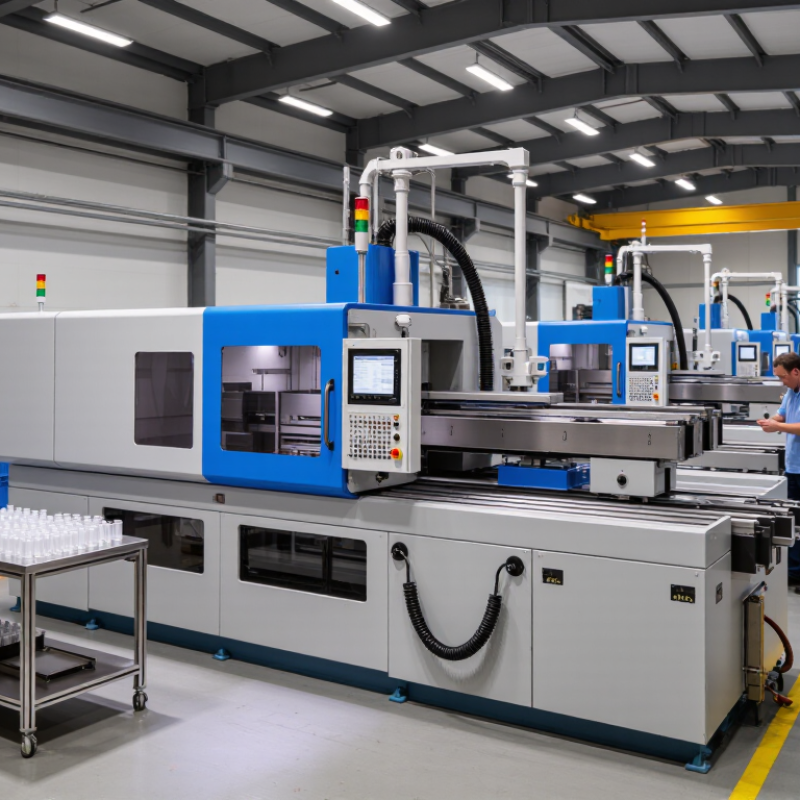
A large-tonnage press is not proof that a supplier can run your part. Ask for the machine list, including clamp force, shot size, tie-bar spacing, and platen dimensions. Then compare those figures with your mold drawing and projected part weight. Numbers can mislead. A press may meet the tonnage requirement but lack enough clearance for a bulky mold or the right injection capacity.
Check how many suitable machines are available, not just how many presses sit on the floor. Ask which units are committed to other jobs and how the supplier handles maintenance or a sudden schedule change. Request a walk-through of the molding area, tool storage, resin drying, and material handling. Look for clear work areas, labeled materials, and visible maintenance records. These details offer useful clues, though a tidy floor alone proves little.
If possible, review a recent production run for a comparable part and ask about output, scrap, and changeover time. A site visit is useful, but it can still show a staged moment. I would also ask to see the actual shift plan and speak with the person who schedules machines. Facility size matters less than whether the right equipment, trained operators, and support systems are available when your order is due.
Assess Engineering Expertise and Material Capabilities
Large-part injection molding begins long before a press closes.
Ask how the supplier reviews part geometry, wall thickness, flow paths, and expected loads. A capable engineering team can flag sink marks, weld lines, warpage, and difficult ejection areas during design review. Request examples of design changes that improved a real part, with measurements or trial notes where possible. Specifics matter.
Material capability deserves equal scrutiny.
The supplier should explain why a resin suits your part’s temperature, impact, chemical exposure, and appearance requirements. Ask for resin data sheets, drying conditions, and traceability procedures. For example, moisture-sensitive materials may need controlled drying before molding; poor handling can weaken parts or create surface defects. A credible team will discuss limits, not promise that one resin fits every need. Ask for evidence.
Look beyond a list of machines.
Confirm shot size, platen dimensions, tie-bar spacing, and mold support against your actual part and tooling. Ask how process settings are validated across production runs, and whether samples receive dimensional checks. A trial report can reveal more than a polished presentation. Still, engineering judgments are not perfect; designs sometimes change after testing, and that is worth planning for. Test early.
Review Quality Systems, Certifications, and Delivery Performance
A large moulding supplier should show how its quality system works on the shop floor, not just display a certificate. ISO’s ISO Survey 2022 recorded 1,265,216 valid ISO 9001 certificates worldwide. Certification is a useful baseline, not proof of consistent mould quality. Ask to see recent audit findings, corrective-action records, and traceability from resin batch to finished parts. Check whether operators record resin drying conditions, machine settings, and inspection results for each production run. Small gaps matter.
For automotive work, confirm whether IATF 16949 applies to the supplier’s site and scope. For other sectors, match certifications to your actual requirements. Then review control plans, measurement-system studies, and sample inspection reports. A clean first-article report is reassuring. It does not show how the next 50,000 parts will perform. Ask how the supplier handles cavity-to-cavity variation, tool wear, and nonconforming parts. The answer should include records, owners, and response times.
Delivery claims need the same scrutiny. Request 12 months of on-time-in-full results, separated by product family, and agree on how the metric is calculated. Does “on time” use the original promise date or a revised date? Ask for examples of missed shipments and the recovery plan. Compare quoted lead times with actual production schedules, available machine hours, and planned maintenance. A dashboard can look precise. I would still verify a few order records against dispatch notes; that check is easy to overlook.