Your Compounder of Choice

Mon - Fri: 8:00 - 16:30 | Sat & Sun: Closed

How to Choose the Right Plastic Raw Material?

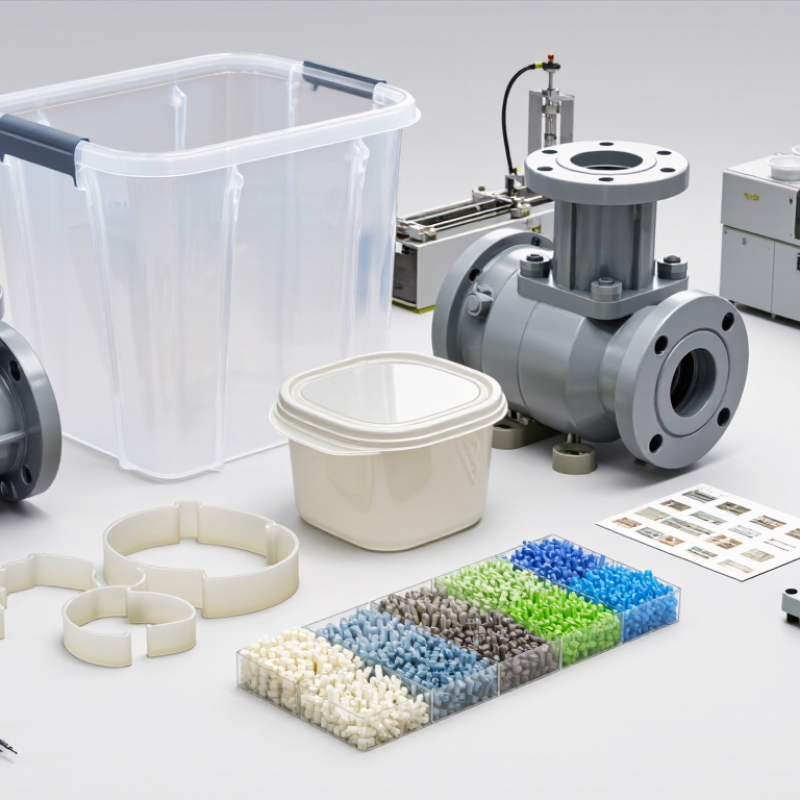
Choosing the right plastic raw material starts with the part’s real job, not a resin name on a quotation. A storage bin, a pump housing, and a food container face different demands. Consider what the part must withstand: impact, heat, moisture, chemicals, repeated flexing, or outdoor exposure. Small details matter. A thin hinge may crack where a thick wall remains intact. A glossy sample can look convincing, yet reveal little about long-term performance.

Material selection also depends on how the part will be made. Injection molding, extrusion, and blow molding place different demands on flow, shrinkage, and cooling. Compare technical data sheets, but treat them as a starting point. Test representative samples under realistic conditions, including the expected temperature and load. Ask suppliers about grade consistency, processing guidance, and available test data. If the application has specific performance or contact requirements, verify that the chosen grade is suitable for them.

There is no perfect resin for every use. Cost, availability, color, and recyclability may influence the decision, but none should hide a performance gap. A cheaper material can become expensive if parts warp or fail in service. And sometimes, the first choice is wrong. That is useful information, not a reason to guess again. A careful comparison of requirements, manufacturing limits, and test results gives teams a clearer basis for choosing—and a better chance of avoiding preventable surprises.
How to Choose the Right Plastic Raw Material?

Define the Product’s Performance and Service Requirements

How to Choose the Right Plastic Raw Material?

Define the Product’s Performance and Service Requirements

Start with the conditions the part will actually face. Will it carry a steady load, flex repeatedly, or take sudden impacts? A clip inside a warm enclosure needs different properties from a rigid panel exposed to sunlight. Record operating temperatures, contact with oils or cleaners, moisture, and expected service life. Small details matter. A brief temperature spike can change a material choice.

Translate those conditions into measurable targets, such as impact strength, stiffness, wear resistance, and dimensional stability. Consider how the part is made, too: thin walls and tight tolerances may limit suitable options. A material that performs well in a test may behave differently in a finished part. That is easy to overlook. Review technical data, then test representative samples under realistic conditions. No checklist captures every use case, and early assumptions sometimes need revisiting.

Tips: Write down the harshest realistic conditions, not just average ones. Test parts after heat, moisture, or repeated loading when relevant. Ask a qualified materials specialist to review unclear requirements before locking in a grade.

Compare Mechanical, Thermal, Chemical, and Electrical Properties

How to Choose the Right Plastic Raw Material?

Compare Mechanical, Thermal, Chemical, and Electrical Properties

Start with the part’s real job, not a single headline strength value. A snap-fit clip may face repeated bending, while a pump housing may carry a steady load. Compare tensile strength, impact resistance, stiffness, and creep under the expected conditions. Not just peak strength. A material can pass a short pull test yet slowly deform under constant pressure.

Temperature changes the picture. Check heat-deflection temperature and recommended continuous-use range, then consider brief heat spikes and repeated heating or cooling. A part near a warm motor may need more thermal margin than its surroundings suggest. Chemical compatibility also depends on concentration, contact time, and temperature. Oils, cleaning fluids, or damp air can cause swelling, cracking, or loss of strength. Details matter.

For electrical parts, review dielectric strength and insulation resistance, especially if moisture or dust may reach the surface. Ask for test conditions and compare data measured with the same methods; figures from different tests can mislead. Not always. I would also make a small prototype and expose it to the actual load, temperature, and fluid. That extra check can feel slow, but a neat datasheet cannot reproduce every real-world interaction.

Match the Resin to the Manufacturing Process

A resin should fit the process, not just the product description. In injection molding, melt flow matters: thin ribs and narrow gates often need a grade that fills easily. But very high flow can affect strength or appearance, so test the actual part geometry. Watch the first shots for short fills, flash, and uneven shrinkage. Small details matter.

Extrusion needs a melt that holds its shape as it leaves the die. For blow molding, the hot tube, or parison, must stay strong enough to expand without sagging. Thermoforming usually starts with plastic sheet, so sheet uniformity and heating behavior are key. Drying requirements also differ; moisture-sensitive resins may need careful drying before processing. A datasheet helps, but it cannot predict every machine, mold, or production condition. There is no perfect match on paper. Compare candidate grades in a controlled trial, using the intended equipment and realistic cycle settings. Record temperatures, pressure, scrap, and finished-part measurements. Then question the result: did the resin perform well, or did an unusually gentle setup hide a process problem?

Assess Compliance, Availability, and Lifecycle Cost

A resin that meets a datasheet target can still fail in production if its certificates, additives, or recycled content do not meet local requirements. Check applicable food-contact, chemical, and product standards before requesting samples. Ask suppliers for current declarations, lot-level traceability, and test conditions; then verify critical properties with your own molding or extrusion trials. Small differences matter. A color shift or longer cooling time can affect scrap rates and delivery schedules.

Availability deserves the same scrutiny as performance. PlasticsEurope reported global plastics production of 400.3 million tonnes in 2022, but that broad figure does not guarantee access to a specific grade in your region. Confirm lead times, minimum order quantities, backup supply, and how pricing changes with feedstock costs. Then compare lifecycle cost, not just price per kilogram: include processing energy, cycle time, rejected parts, transport, and end-of-life options. The OECD’s Global Plastics Outlook estimated that only 9% of plastic waste was ultimately recycled in 2019, after recycling losses. That figure is a reminder to check whether a material’s recovery claims match real local collection and sorting systems. Boundaries matter. A lifecycle estimate can look precise while hiding assumptions; document them, and revisit the choice when production data arrives.

How to Choose the Right Plastic Raw Material? — Assess Compliance, Availability, and Lifecycle Cost
Material Common Applications Compliance Checks Typical Availability Relative Raw Material Cost Lifecycle Cost Considerations
Polyethylene (PE: HDPE, LDPE, LLDPE) Containers, films, pipes, caps, and household goods For food contact, verify the exact grade and finished article against applicable food-contact rules. For chemical or outdoor use, check chemical compatibility and UV-stabilizer requirements. Generally high; widely produced in multiple grades, though local grade choice and supply can vary. Low to moderate Often economical to process. Consider wall thickness, durability, recycling access, and whether UV or barrier additives are needed.
Polypropylene (PP) Packaging, living hinges, caps, appliance parts, and automotive components Confirm the grade meets the relevant food-contact, chemical, flammability, or other end-use requirements. Heat resistance depends on grade and design. Generally high; commonly available in homopolymer, copolymer, and impact-modified grades. Low to moderate Low density can reduce material use by part weight. Account for shrinkage, warpage control, and any impact or heat-stabilizing additives.
Polyethylene Terephthalate (PET) Beverage bottles, food trays, fibers, and films For food or beverage use, check the applicable jurisdiction’s food-contact requirements and any recycled-content rules. Bottle and packaging designs may also need to meet local recycling criteria. Generally high for common packaging grades; specialty grades and recycled feedstock can have more variable availability. Low to moderate Strength and transparency can support lightweight packaging. Drying and processing controls may affect yield; evaluate collection and recycling infrastructure for the intended market.
Polyvinyl Chloride (PVC) Pipes, cable insulation, profiles, flooring, and flexible tubing Review restrictions on additives and the applicable rules for the use case, especially for toys, electrical products, medical devices, and food contact. Requirements differ by market and formulation. Generally high in many regions, with rigid and flexible formulations available. Low to moderate Long service life may lower replacement costs in suitable applications. Include formulation, processing controls, end-of-life handling, and local recycling options in the assessment.
Acrylonitrile Butadiene Styrene (ABS) Enclosures, appliance housings, toys, and interior components Check applicable flammability, chemical, electrical, and restricted-substance requirements. Food-contact suitability must be verified for the specific grade and application. Generally high for standard grades; flame-retardant and other specialty grades may have narrower supply. Moderate Good impact performance and surface finish can reduce finishing or replacement needs. Compare the cost of required flame-retardant or UV-resistant formulations.
Polycarbonate (PC) Safety glazing, lighting components, protective covers, and durable housings For medical, food-contact, optical, or safety applications, verify grade-specific approvals and testing. Assess chemical compatibility and any required UV or flame performance. Generally available, but specialty optical, medical, and certified grades may require longer lead times. High High impact resistance and service life can justify a higher resin cost. Consider scratch protection, chemical exposure, processing conditions, and replacement frequency.
Polyamide 6 (PA6, Nylon 6) Gears, fasteners, power-tool parts, and automotive components Check requirements for mechanical, electrical, chemical, and temperature performance. For regulated uses, verify the exact grade’s documentation and approvals. Generally available; reinforced, heat-stabilized, and other specialty grades may vary by supplier and region. Moderate to high Strength and wear resistance can support long service life. Moisture absorption affects dimensions and properties; include drying, conditioning, and reinforcement costs.

Note: Cost and availability are qualitative and vary by region, grade, order volume, and market conditions. Compliance depends on the specific formulation, finished product, intended use, and jurisdiction; confirm current requirements and documentation before purchase.

Validate the Material Through Testing and Prototyping

A datasheet narrows the shortlist; it does not prove a resin will work in your part. Test molded samples under realistic conditions. Measure tensile strength, impact resistance, heat distortion, and dimensional change. For a snap-fit housing, repeat assembly and removal, then inspect the hinge and latch for whitening or cracks. Use ASTM methods where suitable, and record the specimen shape, conditioning, and test settings. Small differences matter.

Prototype with the intended process, not just a convenient lab method. A printed sample may reveal fit, but it cannot fully predict molded shrinkage or weld-line weakness. PlasticsEurope’s Plastics—The Fast Facts 2024 reports 413.8 million tonnes of global plastics production in 2023; that scale makes avoidable material and process waste worth addressing early. OECD’s Global Plastics Outlook reports that 353 million tonnes of plastic waste were generated in 2019, with only 9% recycled. These figures do not choose a resin for you, but they strengthen the case for testing durability and end-of-life needs together. One prototype is rarely enough. I would also challenge my own results: a clean sample can flatter a process, while production variation exposes the weak point. Keep failed parts, too. They often show what the passing sample hides.

How to Choose the Right Plastic Raw Material?

Validate the Material Through Testing and Prototyping

Indicative tensile-strength values for common, unfilled plastic grades at room temperature. Actual results vary by grade, conditioning, and test method. Compare supplier data, then test production-representative prototypes using a consistent method such as ISO 527 before selecting a material.