

Your Compounder of Choice

Mon - Fri: 8:00 - 16:30 | Sat & Sun: Closed

Why Choose Laser Cleaning Equipment for Your Business?

Why choose Laser Cleaning Equipment for your business? The answer begins with the work in front of you: rust on a steel bracket, residue around a weld, or coating on a component that must remain intact. Laser cleaning uses a focused beam to remove surface contaminants, with settings adjusted to suit the material and task. It can reduce reliance on abrasive media and chemical consumables, while producing less secondary waste in some applications. Results depend on surface condition, operator skill, and process settings. It is not a universal replacement for established cleaning methods.

Market forecasts suggest growing commercial interest. MarketsandMarkets’ Laser Cleaning Market report estimated a market value of about USD 0.7 billion in 2023 and projected roughly USD 1.3 billion by 2028, at a 13.3% compound annual growth rate. These are forecasts, not evidence that every buyer will achieve a return. A careful evaluation should compare cycle time, labor, consumables, maintenance, and the cost of integrating the system. Ask suppliers for trials using your actual parts. Inspect the results under production conditions. That detail matters. A clean sample in a showroom may behave differently from a greasy component on a busy line. Laser Cleaning Equipment can be a strong fit, but the case should be proven on your surfaces, not assumed from a brochure.
Why Choose Laser Cleaning Equipment for Your Business?

What Laser Cleaning Equipment Is and How It Works

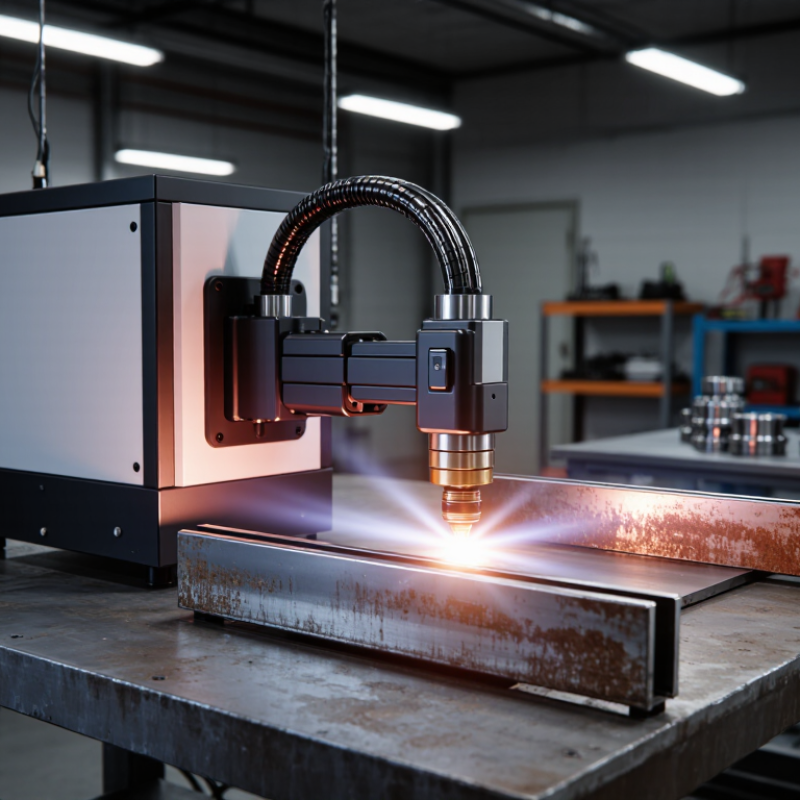
Laser cleaning equipment directs a controlled laser beam at a surface to remove rust, paint, oil, or oxide. The beam’s energy is absorbed by the unwanted layer, causing rapid heating and removal through vaporization or tiny bursts of material. The operator moves the beam across the workpiece, much like painting a narrow strip of light. No abrasive grit. No direct contact with the surface.

Pulse settings, beam speed, and distance affect the result. A thin oxide layer on steel behaves differently from paint on aluminum, so operators usually test a small area first. It is tempting to expect one setting to fit every surface. It won’t. Grand View Research estimated the global laser cleaning market at about USD 0.7 billion in 2023 and projected a 4.9% compound annual growth rate from 2024 to 2030. This market estimate indicates growing interest, not guaranteed savings or cleaning performance.

Tips: Start with a small test patch. Check the surface under bright light, and use suitable fume extraction and eye protection. Record settings that work; small changes in coating thickness can alter the finish.

How Laser Cleaning Fits into Business Operations

Laser cleaning fits best as a planned work step, not a machine parked in a corner. A team might use it to remove rust, paint, or oily residue before inspection, repair, or coating. Because the process does not rely on abrasive media, it can reduce cleanup from spent blasting material. It still creates airborne residue, so extraction and housekeeping need a place in the workflow. That matters. Before choosing equipment, compare the parts’ materials, surface condition, and access with the required cleaning rate. Reflective or heat-sensitive surfaces may need careful testing.

Tips: Run a small trial on a representative part. Record the settings, cleaning time, and surface result. A quick demo is useful, but production parts reveal more.

For day-to-day use, position the unit near the work cell and define who operates it, checks the optics, and handles residue. Train staff on beam controls, protective equipment, and the equipment’s operating instructions. Include extraction checks and routine maintenance in existing schedules. Some parts clean quickly; intricate shapes may take longer because operators must guide the beam steadily. Results can vary with technique, too. That is an imperfect detail worth measuring during a trial, rather than assuming every shift will match the demonstration.

Key Benefits for Productivity, Safety, and Cost Control

Why Choose Laser Cleaning Equipment for Your Business?

Laser cleaning can remove rust, paint, and residue without abrasive media touching the workpiece. That can reduce surface wear and time spent replacing or replenishing blasting materials. Less handling, too. On a metal fixture with tight corners, a focused beam may reach areas that need extra brushing by hand. Actual results depend on the coating, substrate, and equipment settings, so test a representative part before changing a full production process.

A cleaner station can mean less spent media to collect and dispose of, but laser work still needs proper controls. Fumes and fine particles may be produced as coatings are removed. Use suitable extraction, laser-rated eye protection, barriers, and operator training based on the equipment and task. Do not assume that “non-contact” means risk-free. A brief setup check can prevent an expensive mistake.

Cost control comes from comparing the whole workflow, not just consumables. Include purchase or rental costs, maintenance, extraction, training, and realistic cleaning speed. Some jobs may take longer than expected, especially on complex shapes or stubborn coatings. A laser is not automatically cheaper. Track labor time, rework, and waste on a small trial, then revisit the numbers after operators have gained experience.

Industries and Tasks Suited to Laser Cleaning

Laser cleaning suits industries that need to remove surface contamination while limiting contact with the underlying material. In manufacturing, it can strip rust, oxide layers, paint, and production residues from metal parts, weld areas, and tools. A faint rust line around a bolt or soot on a machine housing can be treated with controlled passes. This can reduce abrasive waste and avoid some chemical cleaners.

In cultural heritage work, trained conservators may use carefully selected settings to remove deposits from stone or metal objects. Automotive and equipment maintenance teams also use laser systems for preparing repair areas and cleaning molds. Results depend on the material, coating, and contamination; delicate parts still need assessment before treatment.

Tips: Test a small, inconspicuous area first. Adjust power and scanning speed for the surface, and use suitable fume extraction and eye protection. Keep safety barriers and operating procedures in place.

Not every task is a good fit. Thick coatings may take longer than expected, and reflective surfaces can require additional controls. Operators should verify cleaning results under good lighting and inspect for discoloration or surface damage. A test patch helps, though it may not fully predict performance across a complex part.

Why Choose Laser Cleaning Equipment for Your Business?

Industries and tasks suited to laser cleaning

Laser cleaning is commonly used to remove rust, oxides, coatings, oils, and other surface contaminants. The relative fit ratings shown are qualitative examples, not measured performance data; results depend on the material, contaminant, laser settings, and process testing.

Factors to Consider When Choosing a Laser Cleaning System

Why Choose Laser Cleaning Equipment for Your Business?

Choosing a laser cleaning system starts with the surface and the residue, not the headline power rating. Rust on a steel fixture behaves differently from paint on a delicate component. Compare pulsed and continuous-wave systems against your actual cleaning task, then request a trial using representative parts. Record cleaning speed, surface condition, and energy use. A polished sample can still hide poor performance on a complex seam.

The International Energy Agency’s Energy Efficiency 2023 report estimates that industry used about 37% of global energy in 2022. That makes power draw and operating hours worth comparing alongside purchase price. Also assess fume extraction, enclosure needs, operator training, service access, and the supplier’s safety documentation. Check that the equipment design addresses applicable laser-processing safety requirements, including ISO 11553-1. Specifications alone do not settle the choice; installation conditions matter, too.

Tips: Ask for a timed cleaning test on your own material. Inspect the surface under consistent lighting, and note residue or discoloration. Check the lens-cleaning routine and filter replacement cost. These details are easy to overlook. They can affect daily uptime.

Why Choose Laser Cleaning Equipment for Your Business? — Factors to Consider When Choosing a Laser Cleaning System

Factor What to Evaluate Why It Matters to Your Business
Contaminant and substrate Identify the material to remove—such as rust, oxide, paint, oil, or residue—and the underlying substrate, including its condition and surface finish. Cleaning results depend on both the contaminant and the substrate. Test representative parts to confirm removal quality and check for unwanted surface changes.
Laser type and operating mode Compare pulsed and continuous-wave systems, along with available control of pulse energy, frequency, and scan speed. Pulsed systems are often considered for controlled, localized cleaning. Continuous-wave systems may suit some higher-throughput applications, but heat input and process suitability must be assessed for each job.
Power and process window Evaluate usable power settings and whether the system can maintain a repeatable balance between cleaning speed and substrate protection. Higher rated power does not automatically mean better results. The appropriate settings depend on the material, contaminant, desired finish, and working distance.
Required throughput Estimate the area or number of parts to be cleaned per shift, including setup, repositioning, inspection, and changeover time. Compare performance using your own parts and workflow rather than relying only on headline cleaning-speed figures.
Surface quality and precision Define acceptable limits for residue, discoloration, roughness, coating removal, and dimensional change. Documenting acceptance criteria helps confirm that cleaning meets production or maintenance requirements without damaging functional surfaces.
Part size and accessibility Check the reach and maneuverability of the cleaning head, cable length, working distance, and access to corners, joints, or recessed areas. Ergonomics and access influence cycle time and whether large, fixed, or complex parts can be cleaned consistently.
Safety and facility controls Assess laser classification, enclosure or controlled-area requirements, interlocks, beam stops, operator training, and suitable wavelength-rated protective equipment. Laser cleaning can present serious eye and skin hazards. A safety assessment and controls appropriate to the specific system and workplace are essential.
Fume and particle management Determine what the removed material may produce and whether local exhaust ventilation, filtration, or other controls are needed. Removing coatings, oils, or corrosion can release fumes and airborne particles. Plan controls based on the material and applicable workplace requirements.
Operating costs Include electricity, extraction and filtration, consumables, maintenance, training, safety measures, and expected equipment uptime. A realistic cost comparison considers the full process and any existing cleaning steps that may be reduced or replaced.
Integration and support Review portability, controls, automation options, service access, spare-parts availability, and operator training. Compatibility with production or maintenance workflows can affect adoption, consistency, and long-term availability of the system.
Application testing Request a controlled trial using representative parts and record settings, cycle time, surface condition, and safety requirements. Testing provides practical evidence of process suitability before equipment selection and helps establish repeatable operating procedures.