
Your Compounder of Choice

Mon - Fri: 8:00 - 16:30 | Sat & Sun: Closed

7 Best PVC Raw Material Suppliers for Global Buyers

Choosing a reliable PVC raw material supplier requires more than comparing prices on a spreadsheet. Global buyers must examine product consistency, technical support, documentation, and delivery performance. A low quotation can lose its value when resin arrives late or shows unstable processing behavior.

This guide reviews seven leading suppliers for international purchasing teams. The comparison considers PVC grades, suspension and emulsion resins, compound options, packaging quality, production capacity, and export experience. It also considers practical details, such as 25-kilogram bags, pallet protection, batch identification, and container loading. Buyers should request a current certificate of analysis, safety data sheet, technical data sheet, and relevant compliance documents before placing an order. Melt flow, K-value, particle size, and additive compatibility may affect the final product significantly.

Details matter. A dependable supplier communicates clearly when specifications change or shipping schedules move. Strong suppliers can also provide samples, explain processing differences, and support troubleshooting during trial production. However, no supplier is perfect, and a global ranking cannot replace your own factory evaluation. Market conditions, regional regulations, payment terms, and application requirements can change the result.

The best choice depends on your product and risk tolerance. A pipe manufacturer may prioritize long-term consistency, while a flooring producer may focus on plasticizer absorption and surface performance. Reviewing these suppliers with documented testing and direct communication can help buyers make a more confident decision. Still, some information may require verification because product portfolios and certifications change over time.
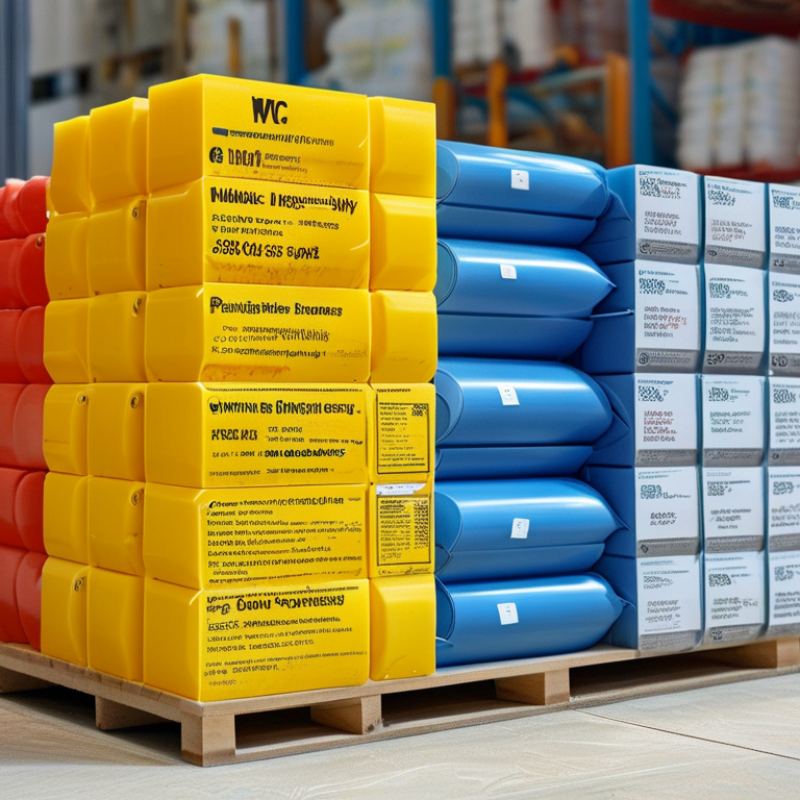
7 Best PVC Raw Material Suppliers for Global Buyers

PVC Market Overview: Global Demand Surpassed 45 Million Tonnes in 2023

Global PVC demand surpassed 45 million tonnes in 2023, according to widely cited industry estimates. The figure reflects construction, pipes, cables, flooring, packaging, and medical applications. Demand is not evenly distributed. Asia consumed a major share, while infrastructure spending supported growth elsewhere. A container of resin can affect an entire production schedule. That reality makes supplier selection a commercial decision, not a simple price comparison.

For global buyers, the seven best PVC raw material suppliers should demonstrate consistent K-value, controlled moisture, and stable particle performance. They should provide current technical data sheets, safety documentation, batch records, and traceable test results. Ask how each supplier manages port delays, weather disruptions, and sudden feedstock changes. A practical trial shipment can reveal packing strength, dust levels, and processing behavior. Small details matter. Buyers should also check production capacity, minimum order quantities, payment terms, and delivery history. Claims of global supply need evidence.

The 2023 demand milestone also exposes a weakness: market totals can hide regional shortages and sharp price swings. Forecasts are useful, but never perfect. I would compare at least three recent quotations and request references from similar processors. Cost per tonne alone can mislead when rejected batches create scrap, downtime, or extra testing. Responsible sourcing should include legal compliance, worker safety, and environmental controls. A supplier may look efficient on paper, yet perform poorly under pressure. That risk deserves a written contingency plan.

Supplier Evaluation: Compare K-Value, Grade Range, Capacity, and ISO 9001 Status

7 Best PVC Raw Material Suppliers for Global Buyers

Choosing among the seven best PVC raw material suppliers requires more than comparing quoted prices. A buyer should check K-value, grade range, production capacity, and ISO 9001 status. K-value indicates molecular weight and strongly affects viscosity, strength, processing behavior, and final product performance. Ask for recent technical data sheets and batch test reports. Small differences can matter.

Grade range also deserves close attention. A capable supplier may offer suspension, emulsion, rigid, flexible, and specialty grades. Confirm whether each grade fits pipes, profiles, cables, flooring, or medical applications. Do not accept broad claims without samples. Run trials using your actual equipment, temperatures, and additives. Results can change.

Capacity should include monthly output, stock policy, plant location, and realistic lead times. A large number on paper does not guarantee stable deliveries during peak demand. Request production schedules and review shipment records where possible. ISO 9001 certification supports process control, but certificate validity and scope must be verified independently. It does not prove every batch is perfect. No scorecard is perfect. I would leave room for trial results, communication quality, and corrective-action speed. A supplier that admits a limitation may be safer than one promising everything.

Seven Leading PVC Suppliers: Review Capacity, Export Regions, and Product Specialties

Global PVC buyers should compare capacity with shipment reliability, not headline output alone.

Argus PVC Outlook 2024 estimates global PVC demand at roughly 50 million tonnes annually. Capacity figures are not perfectly comparable. Some reports include captive units, while others count only merchant production.

The seven leading supplier groups show different strengths.

A United States producer offers suspension PVC and strong access to Mexico and South America. A Canadian producer serves North American construction markets, with dependable rail logistics.

A Chinese supplier provides large-scale suspension and paste PVC, mainly across Asia, Africa, and the Middle East. An Indian producer focuses on suspension PVC and expanding export coverage around South Asia.

A Japanese supplier emphasizes specialty and high-purity grades for cables and medical components. A South Korean producer combines suspension PVC with export routes into Southeast Asia.

A Middle Eastern producer benefits from integrated chlorine-ethylene assets and competitive shipments toward Africa, Türkiye, and South Asia.

UN Comtrade 2023 data shows that Asia remains central to global PVC trade, while North American and Middle Eastern cargoes support long-distance supply. Capacity matters.

Product fit needs closer review.

Pipe-grade resin may require K-value consistency and stable bulk density.

Cable applications demand reliable electrical performance.

Paste PVC needs controlled particle structure and processing behavior.

Recent reports from ICIS also highlight freight costs, plant outages, and regional trade restrictions as major price variables.

I would not select a supplier from capacity rankings alone. Test certificates, batch history, lead times, and local compliance records deserve equal weight. Two suppliers may quote the same grade, yet produce different results on an actual extrusion line.

Procurement Costs: Assess Prices, Incoterms, Container Loads, and Lead Times

For global buyers, supplier selection begins with landed cost, not the quoted PVC price. A low offer can hide port fees, insurance gaps, or unfavorable currency terms. Request a firm quotation by grade, packaging, quantity, and destination port. Compare Incoterms carefully. Under EXW, the buyer handles export clearance and inland transport. FOB usually transfers risk after loading, while CIF includes freight and insurance to the named port. The details matter. Ask who pays terminal handling, documentation, and demurrage.

Container planning changes the final number. Confirm whether bags are palletized or floor-loaded, and check the net weight per 20-foot container. A typical shipment may fit about 18 to 20 metric tons, but density and local limits can reduce that figure. Avoid filling a container beyond safe road restrictions. Split loads may lower inventory pressure, yet they often increase freight per ton. Calculate both options using current freight quotes, not last quarter’s spreadsheet. In procurement reviews, resin savings sometimes disappear through small delivery charges.

Lead time should include production, inspection, booking, port handling, and customs clearance. Ask for a written schedule with a realistic buffer, especially before seasonal factory closures. Confirm whether the quoted date means cargo readiness or vessel departure. A two-week promise sounds attractive. It may be incomplete. Check batch consistency, certificate availability, moisture protection, and response time for claims. Keep approved samples and inspection records. A reliable supplier accepts reasonable checks and explains delays early, although no forecast is perfect.

Compliance Verification: Check REACH, RoHS, ASTM, and Responsible Care Documents

When evaluating PVC raw material suppliers, compliance evidence should sit beside price and capacity. PlasticsEurope’s Plastics—The Fast Facts 2024 reports 413.8 million tonnes of global plastics production in 2023. That scale increases the need for traceable sourcing and controlled formulations. Ask each supplier for a current REACH declaration, safety data sheet, and substance composition statement. A certificate alone is not enough.

Check whether the formulation contains substances listed by the European Chemicals Agency, especially plasticizers, stabilizers, and processing aids. REACH status can change. RoHS documents should identify restricted substances, test methods, laboratory dates, and product scope. Vague “RoHS compliant” wording deserves further questions. ASTM references also require care. ASTM standards describe testing or material performance, but they do not automatically prove legal compliance.

Responsible Care documentation can reveal how a supplier manages chemicals, transport, incidents, and worker safety. Compare its claims with audited records, corrective actions, and facility-level certificates. OECD’s Global Plastics Outlook projects plastic waste could nearly triple by 2060 without stronger controls. That projection makes recycled content and contaminant testing more important. Still, recycled PVC can vary by batch. Request representative samples, recent test reports, and retention samples. I would not rely on a polished PDF alone. Even experienced buyers sometimes overlook certificate expiry dates, conflicting lot numbers, or unlisted formulation changes. Credible suppliers explain these gaps clearly and provide verifiable evidence.

7 Best PVC Raw Material Suppliers for Global Buyers - Compliance Verification: Check REACH, RoHS, ASTM, and Responsible Care Documents

Rank Anonymous Supplier Profile Primary Supply Region PVC Material Focus Typical Product Forms REACH Verification RoHS Verification Relevant ASTM Documents Responsible Care Evidence Buyer Due-Diligence Priority
1 Profile A — Integrated PVC Resin Producer East Asia Suspension PVC resin for pipes, profiles, cable insulation, and rigid sheets Powder resin; technical-grade compounds on request Verify current declaration
Request SVHC statement, Annex XVII compliance, and substance information
Verify current declaration
Request declaration against Directive 2011/65/EU and amendment (EU) 2015/863
ASTM D1755 for PVC resins; product-specific test methods should be confirmed Request evidence
Check site-level Responsible Care participation or equivalent process-safety records
High
2 Profile B — European Specialty Compounder Western Europe Rigid and flexible PVC compounds for construction and industrial applications Pellets; customized dry blends; color-matched compounds Verify batch scope
Confirm whether the declaration covers additives, pigments, and processing aids
Verify test basis
Request laboratory reports for lead, cadmium, mercury, hexavalent chromium, PBB, PBDE, and phthalates
ASTM D1784 for rigid PVC compounds where applicable; confirm cell classification and test results Request certificate or membership record
Check environmental, health, safety, and emergency-response documentation
High
3 Profile C — North American PVC Resin Supplier North America General-purpose suspension resin and high-molecular-weight PVC grades Powder resin; bulk bags; bulk truck or rail shipment Verify importer obligations
Confirm EU-market registration or Only Representative arrangements when applicable
Product-dependent
Request a finished-article or material declaration matched to the intended application
ASTM D1755 for PVC resin; request K-value, bulk density, particle-size, and volatile-content data Verify independently
Review Responsible Care performance indicators and facility audit records
High
4 Profile D — Southeast Asian Export Manufacturer Southeast Asia PVC compounds for wire and cable, flooring, hoses, and molded parts Pellets; granules; flexible compound formulations Verify additive content
Pay special attention to phthalates, heavy metals, and SVHC concentration thresholds
Verify by application
Confirm whether the grade is intended for electrical and electronic equipment
ASTM D1784 may apply to rigid compounds; use application-specific cable or flexible-PVC test standards as needed Request site documentation
Check chemical handling, worker safety, emissions, and emergency-response procedures
Medium–High
5 Profile E — Middle Eastern Integrated Producer Middle East Commodity PVC resin for pipes, fittings, packaging, and construction products Powder resin; bulk bags; containerized export cargo Verify destination-market status
Request current SDS, SVHC communication, and REACH supply-chain documentation
Not automatic for all grades
Obtain a signed declaration and supporting analytical data where required
ASTM D1755 for resin characterization; confirm grade-specific compliance with the buyer's specification Request current record
Check Responsible Care implementation, process-safety management, and incident reporting
Medium–High
6 Profile F — Latin American Regional Supplier Latin America PVC resin and locally compounded materials for construction and consumer products Powder resin; pellets; mixed-load export packaging Verify supply-chain coverage
Ensure declarations cover the exact resin grade and any locally added formulation ingredients
Request recent testing
Check limits for restricted substances and maintain traceability to the production lot
ASTM D1755 for resin; additional tests should reflect pipe, profile, cable, or sheet end use Evidence required
Request documented controls for chemical storage, transport, waste, and worker protection
Medium
7 Profile G — Distributor with Multi-Source Inventory Global Trading Hub Multiple PVC resin grades and ready-to-use compounds from approved producers Powder; pellets; palletized and containerized shipments Verify manufacturer-specific documents
A distributor declaration should be linked to the original producer and exact grade
Verify lot traceability
Request original test reports rather than relying only on a distributor summary
ASTM D1755 or D1784 may apply depending on resin or compound; confirm the manufacturer's test method Usually producer-specific
Obtain Responsible Care evidence from the actual manufacturing site, not only the trading entity
Medium
Verification note: Compliance documents must be checked against the exact PVC grade, formulation, production site, batch, destination market, and document validity date. REACH, RoHS, ASTM, and Responsible Care references are not interchangeable certifications.