

Top 10 Types of PVC Extruded Profiles for Global Buyers
Choosing the right pvc extruded profiles is rarely a simple catalog decision. Global buyers must balance design, performance, cost, and supply reliability. A profile that works well indoors may warp, discolor, or crack outdoors. That difference matters.
This guide examines ten common profile types used in construction, furniture, electrical systems, windows, doors, and industrial applications. Examples include trims, channels, seals, corner guards, glazing strips, and decorative sections. Each type serves a different purpose. Some improve edge protection, while others support insulation, alignment, or visual finishing. Practical evaluation should include wall thickness, dimensional tolerance, hardness, surface quality, and installation method. Small details matter.
Ask for technical drawings and production samples. Always.
Experienced buyers should also review formulation consistency, UV resistance, impact strength, and temperature performance. Depending on the application, fire behavior, weather exposure, and contact requirements may require additional testing. Supplier documentation should clearly identify materials, inspection methods, packaging details, and quality controls. Certifications can support confidence, but they should match the destination market and product use. A certificate alone proves little without traceable test information.
The following overview is designed to support informed sourcing conversations. It does not replace engineering validation or application testing. That assumption can fail. A profile may look perfect on a sample board yet perform poorly after cutting, bending, or prolonged exposure. Comparing several suppliers, requesting realistic samples, and confirming production capability can reduce costly surprises. The best choice is not always the cheapest option. It is the profile that performs consistently, fits the design, and arrives reliably.
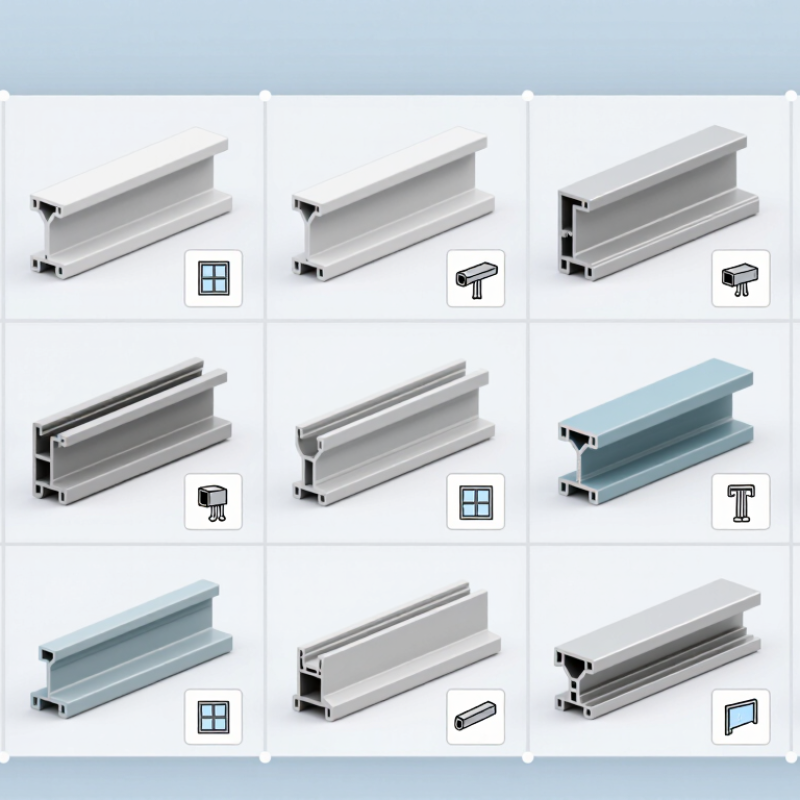
Table of Contents
[Hide]
PVC Extruded Profiles: Definition, Structure, and Manufacturing Basics
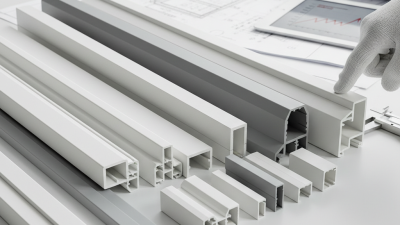
PVC extruded profiles are continuous shapes formed by pushing heated PVC compound through a shaped die. They include window frames, trims, channels, edge guards, and protective sections. The profile structure usually combines an outer skin, internal walls, and sometimes hollow chambers. Rigid PVC supports load and dimensional stability. Flexible PVC uses plasticizers for seals and soft edges. A small wall-thickness change can affect stiffness, weight, and installation fit.
Manufacturing starts with a controlled formulation of PVC resin, stabilizers, impact modifiers, pigments, and processing aids. The dry blend enters an extruder, where heat and shear create a uniform melt. A precision die gives the melt its cross-section. Calibration tools set dimensions while vacuum and cooling water stabilize the shape. Haul-off rollers then pull the profile continuously. Cutting, drilling, printing, or co-extrusion may follow.
In practical sourcing, global buyers should inspect samples under natural and artificial light. Check corner sharpness, cavity consistency, surface gloss, and cut-end density. Measurements should cover length, width, wall thickness, and bowing. Tolerances are not always perfectly stable. Tool wear, cooling changes, and recycled content can influence results. I would request a technical drawing, material data, batch records, and test results before approving production. The overlooked detail is often the die.
Top 10 Types of PVC Extruded Profiles for Global Buyers - PVC Extruded Profiles: Definition, Structure, and Manufacturing Basics
| No. | PVC Extruded Profile Type | Definition and Main Function | Typical Cross-Section Structure | Common Applications | Typical Material and Formulation | Typical Manufacturing Basics | Key Buying Considerations |
|---|---|---|---|---|---|---|---|
| 1 | PVC Window Frame Profile | A rigid hollow profile used to form the main frame, sash, or mullion of windows. | Multi-chamber hollow sections with glazing rebates, sealing-gasket grooves, drainage paths, and reinforcement cavities. | Residential windows, commercial buildings, replacement windows, and insulated glazing systems. | Unplasticized PVC (uPVC) with impact modifier, stabilizer, pigment, processing aid, and filler as required. | Twin-screw extrusion, vacuum calibration, cooling, haul-off, cutting, and optional steel reinforcement insertion. | Dimensional stability, weathering resistance, chamber geometry, gasket compatibility, weldability, and applicable regional standards. |
| 2 | PVC Door Frame Profile | A structural profile used for door jambs, heads, sashes, and thresholds in interior or exterior door systems. | Large hollow chambers, hinge or lock reinforcement zones, weather seals, and panel or glazing channels. | Exterior entrance doors, balcony doors, patio doors, and interior door assemblies. | Rigid PVC, commonly combined with galvanized steel or other reinforcement in load-bearing areas. | Profile extrusion followed by calibration, cooling, precision cutting, welding or mechanical joining, and hardware machining. | Impact strength, reinforcement fit, corner-welding performance, thermal movement, seal compression, and door-load capacity. |
| 3 | PVC Glazing Bead | A removable retaining strip that secures glass or insulated glazing units inside a window or door frame. | Narrow snap-fit or clip-fit section with a glass-contact lip and a channel for a sealing gasket. | PVC windows, doors, partitions, display systems, and glazing assemblies. | Rigid PVC, often co-extruded with a softer sealing or cushioning component when required. | Single- or co-extrusion, profile calibration, cooling, cutting to length, and optional surface finishing. | Accurate snap-fit dimensions, retention force, corner compatibility, UV resistance, visible-surface quality, and glass thickness range. |
| 4 | PVC Siding Profile | A weather-resistant cladding profile installed as an exterior protective and decorative building surface. | Interlocking panels with a visible face, nailing flange, drainage features, and expansion allowance. | Residential façades, low-rise commercial buildings, eaves, gables, and renovation projects. | Weatherable rigid PVC with impact modifier, light stabilizer, pigments, and optional recycled-content layers. | Profile extrusion, embossing or surface texturing, vacuum forming, cooling, perforation, and cut-to-length processing. | Color retention, wind resistance, impact performance, coefficient of thermal expansion, drainage, and installation overlap. |
| 5 | PVC Skirting Board Profile | A protective and decorative trim installed where walls meet floors to conceal joints and protect lower wall surfaces. | Flat or hollow rectangular section with a rear fixing channel, cable space, or flexible wall-contact lip. | Homes, offices, healthcare facilities, retail interiors, and areas requiring easy-clean trim. | Rigid PVC or flexible PVC edge components; common finishes include solid colors, wood patterns, and foils. | Extrusion, optional co-extrusion of a soft lip, printing or laminating, cooling, and cutting. | Straightness, surface appearance, impact resistance, adhesive or clip compatibility, cleanability, and moisture resistance. |
| 6 | PVC Corner and Edge Trim | A protective trim designed to cover, reinforce, or finish external and internal edges of panels, walls, and boards. | L-shaped, rounded, bullnose, or angle section with equal or unequal legs and optional flexible wings. | Drywall, wall panels, furniture boards, flooring transitions, displays, and construction finishing. | Rigid PVC for structural protection or flexible PVC for irregular surfaces and impact-absorbing edges. | Profile extrusion, co-extrusion where soft and rigid zones are combined, cooling, cutting, and optional perforation. | Angle accuracy, leg dimensions, flexibility, corner coverage, adhesion method, color consistency, and impact resistance. |
| 7 | PVC U-Channel Profile | A channel-shaped profile used to cover, guide, frame, or protect the edge of another component. | Open U-shaped section with uniform legs; internal ribs or retaining beads may be added for grip. | Panel edging, glass protection, signage, cable management, partitions, and light fabrication. | Rigid PVC for dimensional support or flexible PVC for snap-on edge protection. | Single-profile extrusion with calibration and cooling; soft gripping lips may be added by co-extrusion. | Internal width tolerance, wall thickness, retention force, bendability, chemical resistance, and compatibility with the substrate. |
| 8 | PVC T-Section and Divider Profile | A T-shaped profile used to divide, join, cover, or finish two intersecting surfaces or panels. | A vertical stem combined with a horizontal flange; the flange may be visible or designed for concealed insertion. | Wall and ceiling panels, flooring transitions, furniture, exhibition systems, and interior partitions. | Rigid PVC for trim and separation; flexible grades may be used where movement or cushioning is needed. | Extrusion through a shaped die, vacuum calibration where needed, cooling, cutting, and optional surface lamination. | Stem and flange dimensions, insertion fit, visible-surface quality, thermal movement, and color matching with adjacent materials. |
| 9 | PVC Cable Trunking and Raceway Profile | A protective routing profile that organizes and shields electrical, communication, or low-voltage cables. | Rectangular base with side walls and a snap-on or hinged cover; internal dividers may separate cable groups. | Offices, industrial control panels, retail installations, buildings, and low-voltage wiring systems. | Flame-retardant rigid PVC with pigments, stabilizers, impact modifiers, and additives selected for electrical use. | Profile extrusion, calibration, cooling, punching or drilling, cutting, and cover assembly or packaging. | Flammability rating, electrical insulation, cover retention, cable fill capacity, installation temperature, and relevant safety standards. |
| 10 | PVC Flexible Sealing Profile | A flexible or semi-flexible profile that closes gaps, reduces air or water leakage, and cushions contact between components. | Solid, cellular, bulb, lip, or clamp-on geometry; a rigid carrier may be combined with a soft sealing section. | Windows, doors, vehicles, refrigeration equipment, enclosures, partitions, and industrial covers. | Plasticized PVC or a rigid-and-flexible PVC combination produced by co-extrusion; formulation depends on temperature and weather exposure. | Single extrusion or co-extrusion, cooling, controlled stretching, cutting, and optional adhesive backing or flocking. | Hardness, compression set, sealing force, low-temperature flexibility, aging resistance, surface friction, and installation fit. |
Note: Dimensions, wall thicknesses, hardness, formulation, and performance requirements vary by application, tooling design, installation method, and regional standards. Final specifications should be confirmed through technical drawings, samples, and testing.
Related Posts
-
China Top 10 PVC Extruded Profiles Manufacturers?
-
Top PVC Extruded Profiles at the 139th Canton Fair?
-
Understanding the Applications and Advantages of PVC Extruded Profiles in Modern Construction
-

2026 Best PVC Extruded Profiles for Your Next Project?
-
10 Essential Tips for Choosing PVC Extruded Profiles for Your Projects?
-

How to Find the Best Extruded PVC Suppliers for Your Business?