Top Home Audio Intercom System Manufacturers in China?
China has become an important sourcing base for home communication and audio equipment. For buyers comparing Home Audio Intercom System manufacturers, a polished product photo is only a starting point. The real questions are practical: Can residents hear clearly from room to room? Does the system suit a renovation or a new build? Are wiring diagrams, installation guidance, and after-sales support available? Small details matter. A weak microphone, confusing controls, or an awkward wall panel can become daily frustrations.
This overview introduces manufacturers and the factors worth checking before requesting a quotation. It considers product range, customization, audio performance, connectivity, production capability, and support for overseas buyers. These points can help developers, distributors, and homeowners build a more useful shortlist. Still, a factory profile cannot prove how a system performs in every building. Room layout, wall materials, network conditions, and installation quality all affect results. Ask for current technical documents, sample demonstrations, and clear warranty terms, then confirm that the specifications match your project. Some comparisons may remain imperfect; public information is not always complete or directly comparable. That uncertainty deserves attention, not a confident guess. The aim here is informed evaluation—not a universal ranking—and careful checks can make the search more reliable.
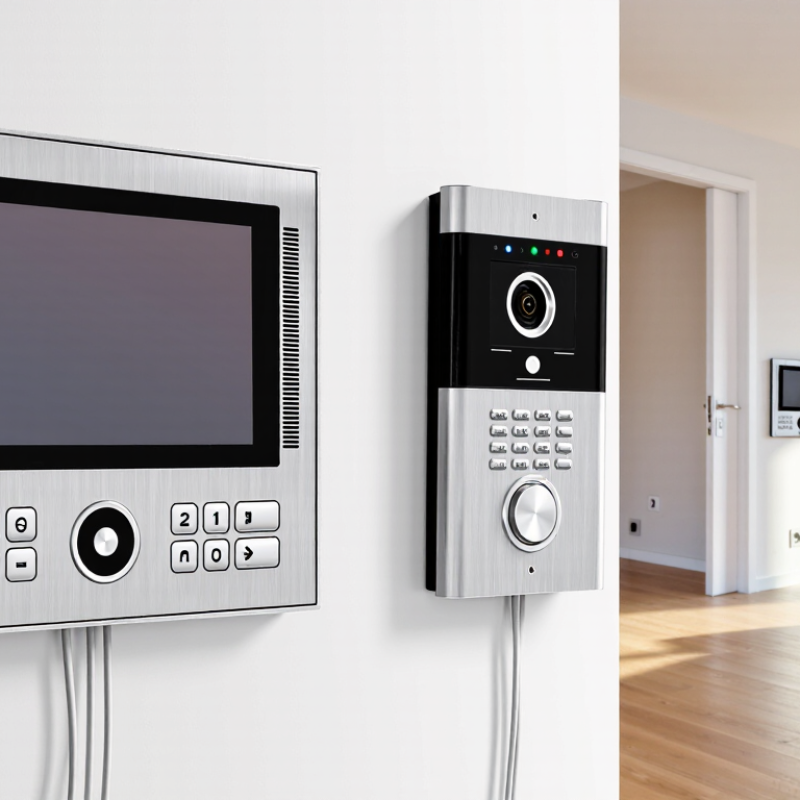
Understanding Home Audio Intercom Systems and Their Main Features
Home audio intercom systems let people speak between rooms, answer the front entrance, or make announcements without raising their voices. A basic setup may connect a kitchen station, bedroom panels, and an outdoor call point. More advanced systems can route calls to phones or integrate with door-release controls. Clear audio matters most. Ask about echo cancellation, microphone sensitivity, and performance when background sounds are present, such as a running extractor fan.
Useful features should fit daily routines, not just a product sheet. Hands-free calling helps when someone is carrying groceries, while volume controls make late-night conversations less disruptive. Some systems support room-to-room paging, call transfer, and adjustable alert tones. Wired connections can offer steady performance during poor Wi-Fi, though installation may require more planning. Wireless models are easier to place, but walls and interference can affect signal quality. Small details count. Test several stations in a real home before choosing a configuration.
When comparing manufacturers in China, review technical specifications, installation guidance, warranty terms, and available testing documentation. Ask how the system handles power loss and whether compatible parts remain available. A polished demonstration is useful, but it cannot replace checks across different rooms and speaking distances. I would also question claims of “crystal-clear” sound without measurable details; real homes are rarely quiet, and no single setup suits every floor plan.
China’s Home Audio Intercom Manufacturing Landscape
China’s home audio intercom sector sits within a much larger smart-home supply chain. Statista’s Smart Home market outlook estimated China’s smart-home revenue at about US$38.9 billion in 2024. That figure covers multiple product categories, not intercoms alone. It signals demand, but does not measure factory output.
Manufacturing is concentrated around electronics and appliance supply networks, particularly in the Pearl River Delta and Yangtze River Delta. A typical production line may combine microphone and speaker modules, circuit boards, touch displays, and plastic housings. These parts must work together in noisy corridors and across several rooms. Reliability matters more than a polished showroom demo. A clear voice at the kitchen panel is the real test.
For buyers, useful checks include acoustic testing, component traceability, firmware update procedures, and support for wired or networked installation. Ask for sample units and test them through actual walls. Not every factory. Some suppliers focus on assembly, while others design core electronics in-house; verify this distinction rather than assuming it. Intercom-specific output figures are rarely reported separately, so broad smart-home market forecasts should be treated as context, not proof of a manufacturer’s capacity.
China’s Home Audio Intercom Manufacturing Landscape
Urban population share provides context for housing-related demand; it is not a measure of intercom production, sales, or manufacturer market share.
Source: National Bureau of Statistics of China, annual statistical communiqués. Urban population as a share of the total population: 2019–2024.
Leading Chinese Home Audio Intercom Manufacturers and Their Specialties
Chinese home-audio intercom manufacturers tend to specialize in distinct parts of the system. Many offer OEM and ODM production, adapting indoor monitors, door stations, and control panels to a customer’s design. Some focus on clear two-way voice, echo reduction, and simple room-to-room calling. Others develop video door stations, mobile-app access, or integration with lighting and security devices. These differences matter. A polished touchscreen is less useful if speech becomes muddy through a closed bedroom door.
Fortune Business Insights valued the global smart-home market at USD 101.7 billion in 2023 and projected USD 633.2 billion by 2032.
This broad market estimate includes many product types, not intercoms alone, so it should not be read as intercom sales. For buyers comparing Chinese suppliers, check supported wiring, network stability, audio performance, and after-sales testing. Ask for a sample unit and test it in a real home, with background noise and several rooms in use. Product brochures rarely show every weakness. Even a capable supplier may need to refine microphone placement or app setup for a specific building.
How to Compare Manufacturers, Product Range, and Quality
When comparing Chinese home audio intercom manufacturers, look beyond catalog size. MarketsandMarkets estimated the global smart home market at USD 101.7 billion in 2023, with a forecast of USD 163.7 billion by 2028. This covers more than intercoms, but reflects rising demand for connected devices. Compare product options for apartments, multi-floor homes, and gate-to-indoor communication. Ask whether indoor monitors, outdoor stations, expansion units, and mobile access work on the same platform. Request wiring diagrams and protocol details before discussing price.
Test the sound in a noisy room. Check speech clarity, echo, call delay, and volume consistency. A broad product range is useful only when its components work together. Small details matter. Ask manufacturers for inspection records, component traceability, and recent defect data. Compare a production sample with the approved sample after a pilot run. Examine enclosure fit, button feel, terminal security, and audio after repeated calls.
Check that certificates apply to the exact model and intended market, rather than only to the factory. Warranty coverage and spare-part lead times can indicate how prepared a supplier is for after-sales support. A polished demonstration is not enough; it may not reveal weak performance across a larger production batch. That is easy to overlook.
Key Factors for Choosing a Chinese Home Audio Intercom Supplier
Key Factors for Choosing a Chinese Home Audio Intercom Supplier
Choosing a supplier takes more than comparing unit prices. MarketsandMarkets’ 2023 Intercom Systems Market report projected growth from USD 4.8 billion in 2023 to USD 7.2 billion by 2028. That expansion makes supplier capability worth checking closely. Ask for test reports covering audio clarity, echo control, and performance across the intended wiring distance. Request a sample and listen from a noisy kitchen, not only a quiet showroom. Small details matter.
Check whether the supplier can provide wiring diagrams, installation guidance, spare-part availability, and clear warranty terms. Confirm the quoted system supports your building layout and planned expansion. Ask how production batches are inspected and whether changes to components are documented. A polished brochure can hide practical gaps; I would verify specifications against a working sample. Good answers should be specific, not just reassuring.
Tips: Send suppliers the same room plan and cable details. Compare written responses, sample sound, and delivery lead times. Keep one question open: what happens when a component fails after installation?