

Your Compounder of Choice

Mon - Fri: 8:00 - 16:30 | Sat & Sun: Closed

Who Are the Top Graphite Raw Material Suppliers in China?

China is a pivotal source of Graphite Raw Material, but production scale alone does not identify a dependable supplier. The USGS Mineral Commodity Summaries 2025 estimates China mined about 1.27 million metric tons of natural graphite in 2024, out of roughly 1.6 million worldwide. That is a substantial share. The International Energy Agency’s Global Critical Minerals Outlook 2024 also describes China’s leading role in graphite processing and battery supply chains. These figures provide context, not a shortlist: mine output does not tell buyers whether a company can deliver consistent flake sizes, suitable purity, or reliable shipment volumes.

This guide examines Chinese suppliers through practical sourcing criteria: product range, processing capability, quality documentation, production scale, and evidence of export experience. A shipment of coarse flake graphite is not interchangeable with spherical graphite or other processed grades. Details matter. Public company profiles can be incomplete, and “top supplier” has no single standard; rankings may change with product type and buyer requirements. Readers should verify specifications, samples, certificates, and current capacity directly with each supplier. The data cited here comes from established industry sources, yet national statistics and company claims do not always align neatly. That uncertainty deserves attention. The aim is a grounded starting point for comparing suppliers—not a guarantee of performance.
Who Are the Top Graphite Raw Material Suppliers in China?

What Graphite Raw Materials Does China Supply?

China supplies several distinct graphite raw-material streams, not one interchangeable grade. Natural graphite includes coarse and fine flake, plus lower-carbon amorphous material. Flake is commonly upgraded into concentrates, then purified or shaped for battery anodes. Amorphous grades serve foundry, refractory, and lubricant applications. Small details matter: particle size, ash, sulfur, and moisture can affect performance.

The USGS Mineral Commodity Summaries 2025 estimates that China mined 1.27 million metric tons of natural graphite in 2024, out of about 1.6 million worldwide. That scale supports a wide range of concentrates and purified products, but does not guarantee uniform quality. China also supplies synthetic graphite, made by graphitizing carbon feedstocks such as calcined petroleum coke; needle coke is used for selected high-performance grades. The IEA’s Global Critical Minerals Outlook 2024 describes graphite processing as highly concentrated in China, particularly for battery-related materials. Yet spherical graphite and anode-ready material are processed products, not raw ore. Buyers should request assay results and traceable lot data. On paper, specifications can look neat. In practice, batches still vary.

How Are China’s Leading Graphite Suppliers Evaluated?

Evaluating China’s leading graphite suppliers takes more than comparing quoted prices. Buyers should review carbon content, ash levels, moisture, and particle-size consistency. These properties affect performance in real production, not just on a specification sheet. Request recent test reports and confirm that the reported values match the material grade being offered. Details matter.

Reliable suppliers can explain how they control batch variation and handle inspection requests. Ask about production capacity, lead times, packaging, and storage conditions. For example, damp or poorly sealed bags may create handling problems after delivery. Check whether samples come from a representative production batch, then arrange independent testing when the application is sensitive. Communication matters, too. A clear technical answer is useful; a vague promise is not. No evaluation scorecard is perfect, and a polished audit cannot guarantee every shipment will be identical.

Tips: Compare suppliers using the same written specifications and testing methods. Keep records of sample results, delivery dates, and any quality differences. A small trial order can reveal issues that paperwork misses.

Who Are the Top Graphite Raw Material Suppliers in China? - How Are China’s Leading Graphite Suppliers Evaluated?

Supplier evaluation framework for natural graphite and processed graphite materials. No company names, brands, or supplier-specific rankings are included. Specifications depend on the intended application and should be agreed between buyer and supplier.

Evaluation Dimension Data to Request How to Evaluate Why It Matters
Product and application fit Product form, such as natural flake, fine powder, spherical graphite, expandable graphite, or high-purity graphite; intended end use and grade. Check that the offered material and processing route match the buyer’s application and written specification. Graphite grades are not interchangeable; particle shape, purity, and processing affect performance.
Carbon content and ash Fixed carbon or total carbon (%), ash (%), test method, and whether results are reported on an as-received or dry basis. Compare like-for-like test results against the agreed grade specification. For high-purity applications, buyers may specify carbon content of at least 99.9%; the required value varies by use. Carbon content and ash are key indicators of material purity, but the test basis and method must also be consistent.
Particle size and distribution Nominal size, sieve results or D10/D50/D90, and the measurement method. Check the full size distribution against the purchase specification, not only a single nominal mesh value. Laser diffraction may be used where appropriate (for example, ISO 13320). Particle size and distribution can affect processing, packing, and end-product performance.
Impurity profile Relevant elements and compounds, such as iron, silicon, sulfur, and other application-specific impurities. Request batch-level analytical results and compare each impurity with the agreed limits. Use independent testing for qualification or disputed batches. A total-purity figure alone may not identify impurities that matter to a particular application.
Moisture and handling condition Moisture content, packaging type, storage conditions, and reporting basis. Set a moisture limit for the intended product and verify it on representative samples using an agreed method. Moisture can affect delivered weight, storage stability, and downstream processing.
Batch consistency and quality control Certificates of analysis (COAs), sampling procedures, inspection records, and documented handling of nonconforming material. Review results from multiple production lots and confirm that the COA corresponds to the shipped batch. Verify the scope and current validity of any ISO 9001 certificate. Consistent, traceable quality is more informative than a single sample or a general product brochure.
Production capacity and delivery Available capacity for the specified grade, typical lead time, minimum order quantity, packaging options, and delivery history. Confirm capacity for the exact product—not just total facility capacity—and check whether the proposed schedule fits the purchasing plan. A supplier’s ability to produce one grade does not necessarily indicate availability of another grade or timely delivery.
Traceability and raw-material sourcing Origin and processing records, lot identification, and traceability from incoming material to finished goods. Check that the supplier can link the shipment, COA, and production lot to documented sourcing and processing records. Traceability supports quality investigations and responsible-sourcing due diligence.
Environmental and regulatory controls Applicable operating permits, dust and wastewater controls, waste handling, and environmental-management documentation. Review relevant records and verify the scope and validity of any ISO 14001 certification; certification does not replace applicable permits or legal requirements. Mining and graphite processing can involve environmental impacts that buyers may need to assess as part of supplier due diligence.

Note: Numerical specifications should be confirmed for the intended grade and application. The high-purity carbon figure above is an example of a buyer specification, not a universal requirement for graphite products.

Which Companies Are Major Natural Graphite Suppliers in China?

China remains the leading source of natural graphite, but supplier size alone does not guarantee consistent material. The USGS Mineral Commodity Summaries 2025 estimates China mined 1.27 million metric tons in 2024. Global mine production was about 1.6 million tons. That places China near four-fifths of mined supply. These figures describe mine output, not export-ready products.

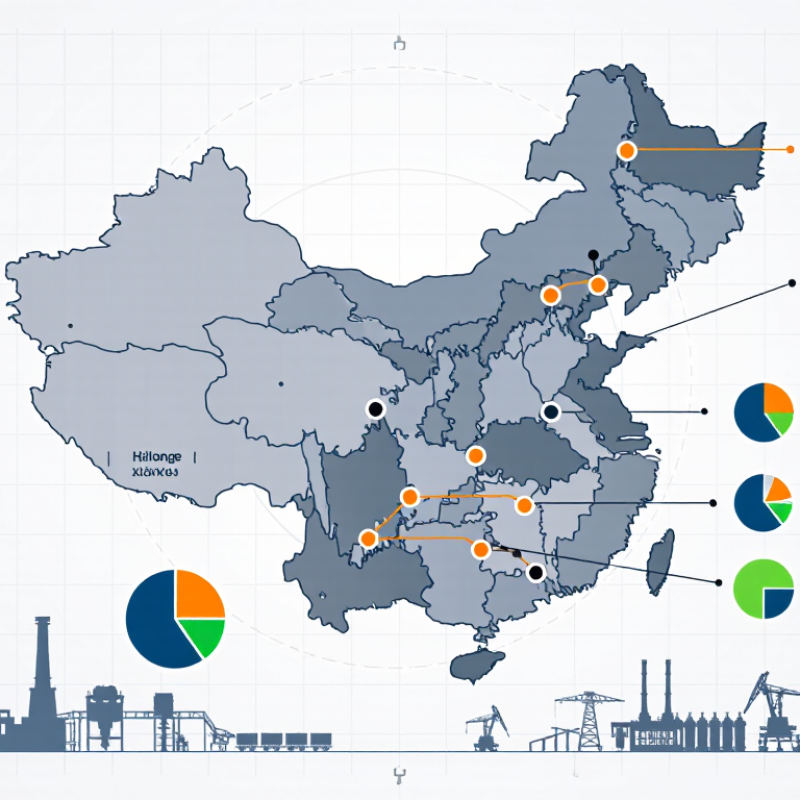
Major natural graphite supply comes through mine operators, beneficiation plants, and processing or trading firms. Production is concentrated in Heilongjiang, with other deposits and processing capacity elsewhere in China. Suppliers may offer flake or microcrystalline graphite. Buyers should match particle size, carbon content, and impurity limits to the intended use. Public rankings are difficult to verify because company disclosures vary. A mine’s stated capacity is not the same as reliable delivered volume; that distinction is easy to overlook.

Tips: Request a recent independent assay, representative samples, and monthly output records. Check moisture and particle-size consistency across batches. A low quoted price can still prove costly if the material needs extra processing.

Which Chinese Suppliers Specialize in Synthetic Graphite?

China’s synthetic graphite suppliers range from large integrated producers to specialized processors. The strongest fit depends on the end use: battery anodes, refractory products, or electrical applications require different particle sizes, purity levels, and performance tests. Many suppliers handle several production stages, such as shaping, baking, and graphitization, while others focus on processing purchased feedstock. Ask which steps take place at the supplier’s own facility.

For a technical review, request a current specification sheet and representative test data. Check ash content, sulfur, particle-size distribution, moisture, and batch consistency against your requirements. For battery-grade material, also ask how tap density and first-cycle efficiency are measured. A polished datasheet is useful, but it cannot replace a sample evaluation. Details matter. Compare results from more than one batch when possible.

Tips: Ask for a process flow, sample traceability, and the inspection method used for each key property. Confirm production capacity and lead time in writing. If a supplier cannot explain how a result was measured, treat that as an open question—not proof of poor quality, but a point to investigate. My own caution: specifications can look precise while leaving practical differences unclear.

How Can Buyers Compare and Verify Graphite Suppliers?

When comparing graphite raw material suppliers in China, start with the grade you actually need. Ask for fixed-carbon content, ash, moisture, particle-size range, and the test methods used. A specification sheet should describe measurable limits, not just say “high purity.” Small differences can affect conductivity, processing time, and yield.

Request a recent certificate of analysis tied to a specific production lot. Then compare it with an independently tested sample, using the same methods where possible. Check that sample labels, lot numbers, and shipment documents match. Ask how the supplier controls batch variation and handles rejected material. A polished PDF is not proof. It is only a starting point.

Look beyond price. Clarify monthly capacity, lead time, packaging, storage conditions, and how long a quoted specification remains valid. If practical, arrange a video walkthrough or site visit to see sampling, weighing, and sealed-bag labeling. Keep a written record of questions and replies. Some suppliers may answer unevenly; that itself deserves a closer look. Test a small order before relying on a large shipment, and reassess performance after delivery rather than trusting promises alone.