

Your Compounder of Choice

Mon - Fri: 8:00 - 16:30 | Sat & Sun: Closed

How to Choose an SMC Slice Material Press in 2026?

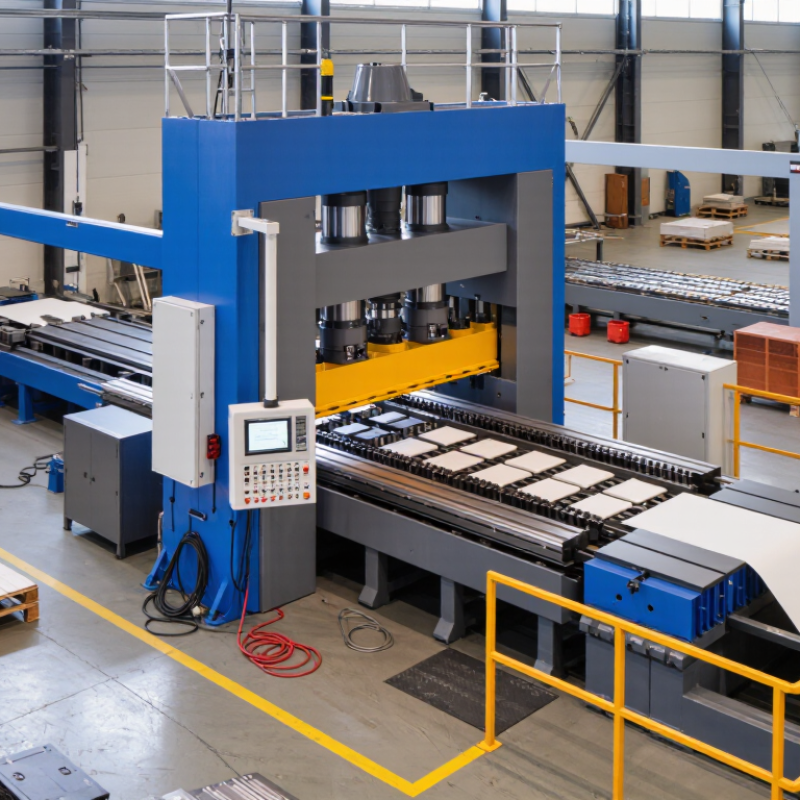
Choosing the right Smc Slice Material Press in 2026 requires more than comparing tonnage and price. The press must match the compound, slice geometry, production volume, and required surface quality. A machine that performs well with thick glass-fiber SMC may struggle with thinner sheets or faster curing systems. Small differences matter. They appear in flash, warping, uneven thickness, and rejected panels.

Dr. Vlastimil Kunc, a recognized composites manufacturing specialist at Oak Ridge National Laboratory, has emphasized, “Manufacturing is where material performance becomes reality.” This principle fits SMC processing closely. The material may have excellent strength, but poor pressure control can waste that advantage. Buyers should examine platen parallelism, pressure stability, heating accuracy, mold change time, and recipe control. They should also request test data using their actual SMC formulation. Brochures are not enough.

A reliable evaluation should include the full operating picture. Check slice feeding, mold loading, cycle repeatability, energy consumption, maintenance access, and operator safeguards. Ask how quickly replacement seals, sensors, and hydraulic components can be supplied. Talk with current users, not only sales teams. Their comments may reveal inconvenient truths.

The cheapest press can become expensive through downtime. The most advanced model may be unnecessary for modest production. That judgment is not always comfortable. It also depends on future demand, available floor space, and staff skills. In 2026, a sensible Smc Slice Material Press should combine precise control, documented reliability, practical service support, and enough flexibility for changing composite designs. No selection is perfect. A measured trial remains the strongest evidence.
How to Choose an SMC Slice Material Press in 2026?

What Is an SMC Slice Material Press?

An SMC slice material press is an industrial machine used to form Sheet Molding Compound into rigid composite parts. SMC combines resin, chopped glass fibers, mineral fillers, and additives. The material arrives as a flexible sheet, then operators cut it into measured charges, or slices. These charges are placed inside a heated mold.

The press applies controlled pressure while the mold heats the compound. Heat activates the resin, while pressure pushes the material into ribs, corners, and mounting details. The result can be an electrical enclosure, vehicle panel, or structural cover. It is not simply a cutting machine. It is a compression-forming system. Small details matter.

When choosing a press, engineers should check force capacity, platen size, daylight, heating accuracy, and control response. The machine must handle the planned mold weight and charge thickness without unstable movement. A practical trial should measure part thickness, fiber distribution, surface defects, and cure time. Temperature sensors near the mold are especially useful.

In real production, the first setup is rarely perfect. Excessive pressure may cause flash, while insufficient pressure can leave dry areas or weak corners. Cycle data should be recorded and reviewed by trained operators. Maintenance access also deserves attention, because resin buildup can affect alignment and platen cleanliness. A reliable choice matches the actual SMC formulation, mold design, production volume, and quality requirements.

How to Choose an SMC Slice Material Press in 2026?

What Is an SMC Slice Material Press?

An SMC slice material press is used to cut, portion, and prepare sheet molding compound before compression molding. The chart shows typical SMC characteristics that influence press selection: material density, glass-fiber content, sheet thickness, and compression-molding pressure. Actual values vary by resin system, fiber formulation, and product specification, so the material supplier’s technical datasheet should be checked before final equipment selection.

Which SMC Press Specifications Matter Most?

How to Choose an SMC Slice Material Press in 2026?

Which SMC Press Specifications Matter Most?

A practical press choice starts with force, not catalog reputation. Calculate projected area, cavity pressure, and safety margin from real SMC charge weights. ASM Handbook, Volume 21, notes that compression molding pressure depends strongly on compound design and mold geometry. Many SMC tools operate near 5–15 MPa, but this range is not universal. Do not simply copy an older mold.

Platen size must cover the tool, inserts, and safe handling space. Daylight and stroke need enough room for loading and part removal. Check platen parallelism under full load, not only when empty. Thermal uniformity matters too. Confirm temperature mapping across the working surface, preferably within ±3°C during production trials. Ram speed, pressure-holding stability, and repeatability deserve equal attention. Small fluctuations can leave visible knit lines or inconsistent thickness. That happens.

Energy data should influence the specification. The International Energy Agency reports that industry consumes about 37% of global final energy. A servo-hydraulic system, cycle-level power logging, and automatic idle control can reduce avoidable consumption. Grand View Research valued the global composites market at approximately USD 95 billion in 2022, forecasting a 7.6% annual growth rate through 2030. This growth increases pressure for measurable efficiency. Still, the cheapest cycle is not always the best cycle. Validate force, temperature, and cure time with production material, not only water or an empty mold.

How to Compare Press Types, Sizes, and Control Systems

Choosing an SMC slice material press starts with the part, not the machine brochure. MarketsandMarkets projects the global composites market to grow from USD 99.5 billion in 2024 to USD 126.3 billion by 2029. That growth increases pressure on repeatability and cycle time. For medium-volume production, hydraulic presses remain practical because they deliver high force and tolerate demanding molds. Servo-hydraulic systems usually offer better pressure control and lower idle energy. Fully electric systems can provide fast response, but their purchase cost may be harder to justify for large tooling.

Size the press from projected mold area, SMC flow behavior, and required forming pressure. A rough tonnage estimate is useful, but it is not enough. Edge flash, mold deflection, and uneven charge placement can expose an undersized frame. Leave sensible capacity for future tooling. Too much capacity also wastes energy and floor space. The calculation deserves review.

Control systems separate acceptable output from repeated troubleshooting. Look for closed-loop pressure control, platen-parallelism monitoring, recipe storage, temperature-zone control, and alarm history. Data should record pressure, position, temperature, and cycle time for every batch. The International Energy Agency reports that industrial motors account for about 30% of global electricity consumption, so hydraulic efficiency deserves serious attention. However, energy figures depend on duty cycle and local conditions. A supplier’s laboratory result may not match a dusty production floor, especially when operators adjust charges manually. Ask for a witnessed trial using your actual SMC slices and mold.

How to Evaluate Safety, Maintenance, and Production Efficiency

How to Choose an SMC Slice Material Press in 2026?

How to Evaluate Safety, Maintenance, and Production Efficiency

A reliable SMC slice material press should make hazards visible, not merely reduce them. Check fixed guards, interlocked doors, emergency stops, and clear access around the cutting zone. ISO 12100:2010 recommends risk reduction through inherent design, guarding, and user information. OSHA 29 CFR 1910.212 also requires protection from machine hazards. Ask operators to test these features during a live demonstration. Paper compliance is not enough.

Maintenance details often decide production stability. Inspect hydraulic lines, blade alignment, sensors, and mold-contact surfaces. Look for tool-free access and readable service points. The U.S. Department of Energy’s Operations & Maintenance Best Practices Guide reports that predictive maintenance can reduce downtime by 35–45%. That figure is useful, but not guaranteed. Poor sensor calibration can create false alarms. No press is maintenance-proof.

Measure production efficiency with cycle time, scrap rate, changeover time, and availability. The OEE framework remains practical because it separates availability, performance, and quality losses. Request several weeks of operating records, not one impressive shift. Watch the press during cold starts and material changes. A fast cycle may increase trimming waste. A cheaper machine may consume more labor. These trade-offs deserve honest calculation.

How to Select the Right SMC Press for Your 2026 Requirements

How to Choose an SMC Slice Material Press in 2026?

Selecting the right SMC press begins with your actual production requirements, not a catalog rating. Define part dimensions, material charge weight, target cycle time, and annual output. A press with excessive force may increase energy use and operating costs. A small platen can create uneven pressure around large slices. Measure your mold carefully. Include edge clearance, ejector space, and future tooling changes.

Practical trials reveal details that specifications often miss. Check platen parallelism under load, temperature stability, and pressure response during filling. For thick automotive panels, stable heating can reduce voids and incomplete consolidation. Review the control system, data logging, guarding, and emergency functions with your operators. Service access matters too. If technicians cannot reach valves or sensors safely, downtime may become expensive. I would also request sample parts from the proposed setup. Laboratory results can look excellent, yet production behavior may differ.

Tips: Compare the press using your own mold and SMC formulation. Ask for measured cycle data, not estimates. Confirm available daylight, stroke length, and mold weight capacity. Leave room for maintenance. Do not ignore operator feedback; they notice vibration, awkward loading, and slow adjustments first. One issue is easy to overlook: future materials may need different pressure or heating profiles. A flexible press can protect that investment, although flexibility sometimes adds unnecessary complexity. Be strict about essential functions, but allow thoughtful room for change.

How to Choose an SMC Slice Material Press in 2026? - How to Select the Right SMC Press for Your 2026 Requirements

Selection Dimension Low-Volume / Prototype General Production High-Volume / Structural Parts What to Confirm Before Purchase
Recommended press force 600–1,500 kN 1,500–5,000 kN 5,000–20,000+ kN Calculate force from projected area, required molding pressure, and a safety factor. Do not select force from part weight alone.
Typical molding pressure Approximately 5–12 MPa Approximately 8–18 MPa Approximately 12–25 MPa, depending on geometry and grade Use the SMC supplier’s processing recommendation and validate the value during mold trials.
Platen size 400 × 400 to 800 × 800 mm 800 × 800 to 1,500 × 1,500 mm 1,500 × 1,500 mm and larger Allow room for the mold, bolsters, insulation, ejector components, and safe clamping access.
Heated platen temperature range Ambient to 200°C Ambient to 220°C Ambient to 220°C or higher when required by the process Most SMC molding processes commonly operate near 140–160°C, but the press must match the resin system and mold specification.
Temperature uniformity Within ±5°C Within ±3°C Within ±2–3°C Request a temperature mapping report across the working platen, not only the controller set-point accuracy.
Daylight opening 300–600 mm 500–1,000 mm 800–1,500 mm Check mold height, loading space, part removal, flash-trim access, and the required mold stroke.
Closing speed 50–150 mm/s 100–250 mm/s 150–400 mm/s, with controlled low-speed mold protection A fast approach speed should transition to a controlled closing speed before contact to reduce mold damage and material displacement.
Typical cycle-time target 3–8 minutes 2–5 minutes 1–4 minutes where part thickness, resin cure, and automation permit Cycle time depends on charge layout, part thickness, temperature, cure kinetics, cooling, and handling—not press force alone.
Hydraulic system Single or compact multi-pump system Variable-flow multi-pump system High-flow, energy-managed multi-pump system Review pressure stability, leak protection, filtration, oil cooling, noise level, and energy use during idle periods.
Ejection arrangement Optional bottom ejector Programmable bottom or return ejector Integrated multi-point ejector with mold interface Confirm ejector force, stroke, synchronization, return monitoring, and compatibility with the mold’s ejector layout.
Control and data logging Basic PLC with recipe storage PLC/HMI with pressure and temperature trends Recipe management, alarm history, traceability, and network connectivity Specify required records for force, position, temperature, cycle time, alarms, and operator access levels.
Automation level Manual loading and unloading Assisted loading, part removal, or conveyors Robotic charge placement, demolding, inspection, and transfer Evaluate labor cost, repeatability, guarding, robot reach, mold-change time, and line integration requirements.
Best fit for 2026 requirements New product development, sampling, and small batches Mixed production with several mold sizes and materials Stable, repeatable production of large or safety-critical SMC components Select the smallest press that meets force, platen, daylight, temperature, safety, and future capacity requirements with documented margin.
Selection note: Final press sizing should be verified through mold drawings, projected area calculations, SMC technical data, required molding temperature, part thickness, target cycle time, and a production trial.