

Your Compounder of Choice

Mon - Fri: 8:00 - 16:30 | Sat & Sun: Closed

10 Tips for Buying an Indoor Isolating Switch

Choosing an Indoor Isolating Switch is a safety decision, not merely a product comparison. The right unit separates electrical equipment from its supply during maintenance, inspection, or emergencies. In practice, small details matter. A crowded distribution board, warm terminals, or a poorly marked handle can create serious confusion. This guide presents ten practical tips for evaluating switches before purchase. It considers current rating, voltage, number of poles, enclosure quality, terminal access, operating force, and installation space. It also explains why manufacturer documentation deserves careful attention.

Reliable selection begins with verified information. Check the product datasheet, certification marks, wiring diagram, and applicable local requirements. An experienced electrician should confirm compatibility with the circuit and installation environment. Indoor locations still vary widely. A clean office panel differs from a dusty workshop or humid utility room. Look closely at IP protection, insulation materials, mechanical durability, and visible isolation markings. Do not rely on a low price alone.

Small errors matter.

A checklist improves decisions, but it cannot replace professional judgment. I have seen specifications appear suitable until terminal capacity or mounting depth was checked closely. That is an easy mistake to repeat. Ratings may also differ between resistive, motor, and mixed loads. The following tips aim to make those questions clearer before money is spent. They encourage careful comparison, realistic planning, and documentation that remains useful after installation. Safety should guide every choice.
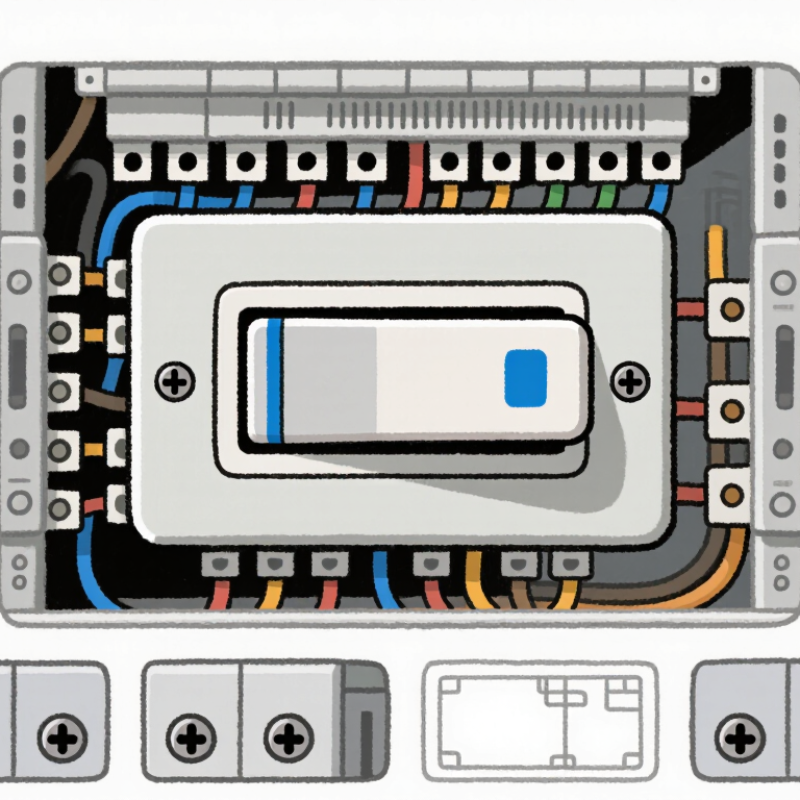
10 Tips for Buying an Indoor Isolating Switch

Define the Application: Match 50/60 Hz Voltage, Current, and Installation Class

10 Tips for Buying an Indoor Isolating Switch

Define the application before comparing prices. Tip 1: Confirm whether the circuit uses 50 Hz or 60 Hz. Tip 2: Match the switch’s rated operational voltage to the system voltage. Tip 3: Check continuous current, not only the normal load. Tip 4: Review short-circuit withstand requirements. IEC 60947-3:2020 separates isolating devices by utilization category and operating conditions. Its guidance helps prevent unsafe assumptions. The IEA Electricity 2024 report recorded a 2.2% rise in global electricity demand during 2023. More demand means more retrofit work. Small selection errors can spread quickly.

Tip 5: Identify AC-22A or AC-23A duty when motor or mixed loads are involved. Tip 6: Verify the installation class, including overvoltage category and pollution degree. Tip 7: Check indoor altitude limits and temperature derating. Tip 8: Select an enclosure with suitable IP protection. Indoor does not mean dry. Condensation still appears near cold walls and unheated rooms.

Tip 9: Confirm the number of poles, neutral switching, and earthing arrangement. Tip 10: Compare terminal size with the actual cable cross-section. NFPA 70 guidance also requires equipment ratings to suit the installation and available fault current. A neat label is not enough. Ask for test certificates and clear technical drawings. One imperfect habit remains common: buyers check amperes first and frequency last. That order deserves reconsideration. Test the handle clearance, too. Space can be surprisingly tight.

Verify Standards: Require IEC 62271 Compliance and Minimum IP2X Protection

When buying an indoor isolating switch, verify the exact IEC 62271 standard before comparing prices. IEC 62271-102 covers disconnectors and earthing switches, while IEC 62271-200 addresses AC metal-enclosed switchgear. The distinction matters. A product may claim “IEC 62271 compliant” without identifying the applicable section, voltage range, or test certificate.

Require documented type-test evidence, not only a supplier declaration. Check rated voltage, short-time withstand current, power-frequency withstand, mechanical endurance, and interlocking performance. The enclosure should provide at least IP2X protection under IEC 60529. This means a standard test finger cannot reach hazardous live parts. In a real control room, that small barrier matters when an operator works near the cubicle with tools in hand.

The International Energy Agency’s Electricity 2024 report projects global electricity demand growth of about 4% annually through 2026. More switching equipment will operate in crowded, frequently modified networks. That increases the value of traceable testing and clear maintenance instructions. Ask for factory routine-test records, installation clearances, and service history. Also inspect door hinges, viewing windows, grounding points, and the position indicator under actual lighting. I have seen specifications focus heavily on fault ratings while overlooking awkward operating handles. That is a useful warning. Compliance paperwork can still leave practical questions unanswered. Confirm every claim against the current standard edition, independent test documentation, and the conditions at the installation site.

Assess Fault Ratings: Compare Short-Time and Peak Withstand Currents

10 Tips for Buying an Indoor Isolating Switch

Assessing fault ratings is one of the most important steps when selecting an indoor isolating switch. Check the short-time withstand current, usually marked Icw, and the peak withstand current, known as Ipk. Icw indicates the RMS current the switch can carry for a stated period, often one or three seconds. Ipk shows the highest instantaneous current the equipment can withstand during the first fault peak. These values describe different stresses. Thermal stress develops over time, while electrodynamic forces act almost immediately.

Compare both ratings with the prospective short-circuit current at the installation point. Do not rely only on the transformer’s nameplate. Cable length, conductor size, upstream protection, and system impedance can change the available fault current. The switch’s withstand duration must also match the clearing time of the protective device. A higher Icw rating is not automatically sufficient if the Ipk value is too low. Check certified test data, not just a sales table.

In panel inspections, mismatched ratings are easy to miss, especially when current values use different units or test durations. A small error can create serious contact movement, enclosure damage, or overheating. Recheck the calculation with the site engineer. I have seen selection decisions based on normal load current alone, and that shortcut is difficult to defend. Also verify the installation category, earthing arrangement, ambient temperature, and enclosure conditions before approval.

Choose Construction: Evaluate Insulation, Earthing, Poles, and Space

When buying an indoor isolating switch, inspect its construction rather than relying only on current ratings. Good insulation should resist heat, moisture, and accidental contact. Check the enclosure material, terminal barriers, and stated voltage rating. A higher rating is not automatically better. Poorly matched components can create loose connections and excess heat.

Earthing deserves careful attention. The switch should provide a dependable earth terminal and clear continuity through the enclosure. Never use it to interrupt the protective earth. During installation, a qualified electrician should test continuity, insulation resistance, and terminal tightness. Small details matter here.

Pole configuration must match the circuit. A single-phase installation may require two poles, while some three-phase systems need three or four poles under local rules. Ask whether the neutral must be isolated. Space is another practical concern. Leave room for cable bends, ferrules, tool access, and future inspection. A compact switch may look tidy but become difficult to maintain. I have seen neat enclosures fail this simple test. Measure the available mounting area before purchase, including clearance around the handle and cable entries. Check the installation instructions carefully, because assumptions can be costly.

Confirm Lifecycle Value: Review IEC Endurance Classes, Testing, and Maintenance

Buying an indoor isolating switch requires more than checking voltage and current ratings. Review its lifecycle value through IEC endurance classes and verified test evidence. Mechanical endurance shows how many operating cycles the mechanism can withstand. Electrical endurance reflects switching under defined load conditions. These figures reveal whether the switch suits occasional isolation or frequent operation.

Ask for test reports, not vague claims of compliance. Confirm the applicable IEC standard, edition, utilization category, and test conditions. Check whether testing covered temperature rise, dielectric strength, short-circuit performance, and terminal heating. A switch rated for demanding duty may cost more initially. It can reduce replacement work later. Real conditions still matter. Dust, humidity, vibration, and poor alignment can shorten service life.

Maintenance planning should match the expected operating cycle. Inspect enclosure seals, labels, contact condition, and cable terminations at scheduled intervals. Recheck terminal torque using the manufacturer’s specified method. Record operating frequency and unusual heat marks. One practical lesson from site inspections is simple: installation quality often limits endurance before the mechanism does. A low-cost unit may appear efficient, yet its lifecycle value can weaken quickly. I would also question optimistic cycle counts without independent evidence. Ask how failures were defined, who witnessed testing, and whether spare parts remain available. Reliability needs records, not promises.

10 Tips for Buying an Indoor Isolating Switch - Confirm Lifecycle Value: Review IEC Endurance Classes, Testing, and Maintenance

No. Buying Tip Technical Data to Confirm Relevant IEC Reference Evidence to Request Lifecycle Decision Rule
1 Define the installation voltage Select the correct rated insulation voltage (Ui), rated operational voltage (Ue), frequency, number of poles, and earthing arrangement. IEC 60947-3 for low-voltage switch-disconnectors and disconnectors; IEC 62271-102 for high-voltage and medium-voltage disconnectors. Nameplate, wiring diagram, type-test report, and a voltage compatibility statement. Reject any device whose rated voltage and insulation level do not exceed the installation requirements.
2 Choose the correct utilization category Confirm whether the switch will isolate, switch resistive loads, or control motors and other inductive loads. IEC 60947-3 utilization categories include AC-20, AC-21, AC-22, and AC-23 for different load conditions. Declared category, rated current for that category, load schedule, and application notes. Use the category matching the actual load; do not size only from the continuous current.
3 Check rated current and thermal performance Compare rated uninterrupted current (Iu), rated operational current (Ie), ambient temperature, enclosure temperature, and cable size. IEC 60947-3 includes current ratings, temperature-rise requirements, and verification conditions. Temperature-rise test results, derating curves, terminal torque values, and conductor compatibility data. Allow the specified derating margin where ambient temperature or enclosure heat exceeds the test conditions.
4 Review short-circuit withstand capability Confirm conditional short-circuit current, short-time withstand current where applicable, peak withstand current, and upstream protective-device coordination. IEC 60947-3 short-circuit performance requirements; coordination must also follow the installation design and protection study. Short-circuit test certificate, declared withstand values, fuse or circuit-breaker coordination table, and prospective-fault-current calculation. The declared withstand capability must be equal to or greater than the calculated fault level at the installation point.
5 Verify isolation and safety features Check visible or reliable contact indication, padlockable OFF position, handle position, interlocking, shrouding, and clearance requirements. IEC 60947-3 includes requirements for switching and isolating functions; installation safety practices are governed by applicable national rules. Isolation test results, mechanical interlock description, lockout provisions, and installation instructions. Prefer designs that provide positive isolation indication and prevent unintended operation during maintenance.
6 Review endurance data instead of assuming a fixed life Compare declared mechanical endurance, electrical endurance, operating frequency, and the load category used during testing. IEC 60947-3 defines verification requirements, but endurance values are product-specific and depend on construction, rating, and utilization category. Manufacturer declaration, routine or type-test documentation, number of operations, and test-load conditions. Use the electrical endurance value for load switching and the mechanical endurance value for no-load operation; never treat them as interchangeable.
7 Confirm dielectric and insulation performance Check power-frequency withstand, impulse withstand where specified, creepage distance, clearance, and pollution-degree suitability. IEC 60947-3 insulation requirements; IEC 60664-1 provides insulation-coordination principles for low-voltage equipment. Dielectric test report, impulse withstand rating, pollution-degree declaration, and enclosure installation limitations. Select a rating suitable for the actual indoor environment, including dust, condensation, altitude, and contamination.
8 Evaluate enclosure and environmental protection Confirm IP rating, indoor ambient-temperature range, humidity limits, altitude, corrosion exposure, and condensation control. IEC 60529 covers IP-code classification; IEC 60947-3 provides equipment requirements and operating conditions. IP test evidence, environmental operating limits, materials information, and enclosure ventilation requirements. Do not use an indoor rating in areas with water ingress, conductive dust, chemical vapors, or persistent condensation without suitable protection.
9 Plan inspection and maintenance Define inspection frequency based on switching frequency, fault exposure, dust, humidity, temperature, and operating criticality. IEC standards provide product requirements; maintenance intervals are determined by the equipment instructions, risk assessment, and applicable electrical-safety rules. Maintenance manual, inspection checklist, recommended torque values, cleaning method, replacement parts, and withdrawal criteria. Choose equipment with accessible inspection points and documented procedures; avoid unapproved lubricants or abrasive cleaning.
10 Calculate total lifecycle value Assess purchase price, installation time, testing, energy losses, planned maintenance, spare parts, downtime risk, and expected replacement cost. Use the applicable IEC product standard together with the project specification, safety rules, and asset-management process. Five- to fifteen-year cost model, test certificates, spare-parts availability statement, warranty terms, and service requirements. Select the lowest compliant lifecycle cost, not automatically the lowest purchase price.

Note: Endurance figures, short-circuit ratings, environmental limits, and maintenance intervals are product- and installation-specific. Always verify the latest technical documentation and applicable local electrical regulations before purchase and installation.