How to Choose the Right Plastic Granules for Your Projects in 2026?
Choosing the right plastic granules can greatly impact your projects in 2026. The market is filled with diverse options. Understanding the types available is essential for success.
Plastic granules come in various forms, each serving unique purposes. Some are suitable for automotive applications, while others fit consumer goods better. It’s important to consider your project needs carefully. You may find it challenging to narrow down your choices.
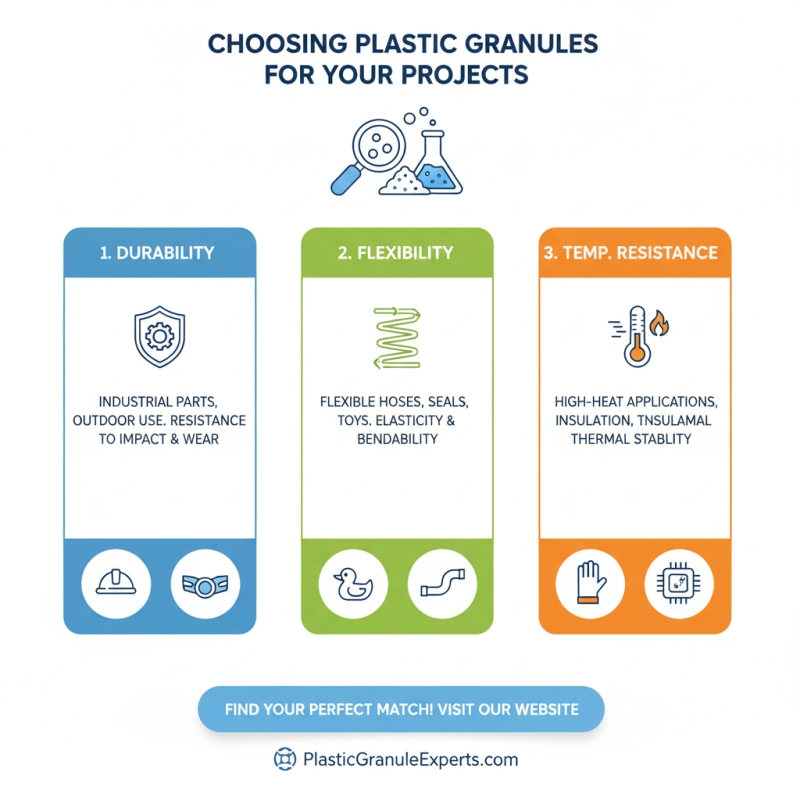
Think about durability, flexibility, and cost. The best plastic granules can enhance the functionality of your products. However, not every option will meet all your requirements. Take time to evaluate your priorities. Sometimes, what seems ideal may not deliver the expected results.
Understanding the Types of Plastic Granules Available in 2026
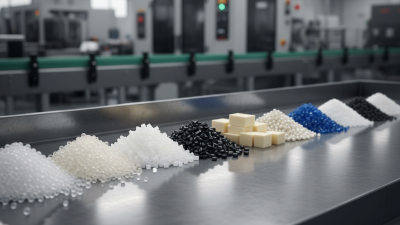
When considering plastic granules in 2026, it’s vital to understand the many types available. Each type has its unique characteristics and uses. For instance, polyethylene granules are widely used for packaging due to their flexibility. They are lightweight and resistant to moisture. In contrast, polypropylene granules are more rigid. These are perfect for automotive parts and durable goods.
Tips: Always verify the source of your granules. Not all suppliers maintain high standards. Look for certifications that ensure quality.
Another important type is polystyrene. It's clear and offers excellent insulation. This makes it ideal for consumer products. On the other hand, there's PVC, which is versatile and can be rigid or flexible. But it can be challenging to recycle. Keep this in mind if sustainability is a priority.
Tips: Try to focus on the long-term implications. Some granules may offer short-term benefits but have environmental costs. Evaluate your project's requirements critically. Selecting the right material can be a complex decision. Don't rush it—take your time to reflect on the implications of your choices.
Key Properties to Consider When Selecting Plastic Granules
Choosing the right plastic granules for your projects can be crucial. Different applications require different properties. Consider durability, flexibility, and temperature resistance. For instance, if your project involves high heat, look for granules with high thermal stability.
**Tips:** Always test a small batch before full-scale production. This helps you avoid costly mistakes. Understanding how the granules behave in real conditions is essential.
Another property to consider is the granule size. Smaller granules often provide better flow and coverage. However, they might not offer the strength needed for heavy-duty applications. Reflect on your project's unique demands.
**Tips:** Consult with material experts to refine your choices. It can save time and resources down the line. Also, keep in mind that not all granules are created equal. Some variations can lead to unforeseen issues.
Identifying the Right Granules for Your Project's Specific Needs
Choosing the right plastic granules involves understanding your project’s specific requirements. Different types of granules serve distinct purposes, influencing strength, flexibility, and durability. For instance, materials like polyethylene offer excellent moisture resistance, while polypropylene provides higher chemical resistance. According to a recent industry report, the demand for sustainable plastic materials is projected to rise by 25% by 2026. This suggests a shift towards eco-friendly granules, which is crucial for future projects.
Identifying the right granules can be tricky. It requires a careful analysis of your project's environment and use case. Factors like temperature, exposure to chemicals, and mechanical stress must all be considered. An industry survey indicates that 45% of manufacturers reported challenges in selecting suitable materials for specific applications. These difficulties often stem from a lack of comprehensive information. Relying solely on product specifications can lead to suboptimal choices, causing potential failures in the end product.
Experimentation is essential. Testing various granules allows for better insights into their properties. Living with imperfections in the choice can lead to learning opportunities. For example, a project might initially fail due to using low-grade granules, underscoring the need for thorough research and evaluation. Ultimately, understanding your project’s unique demands and being open to trial and error will guide you to the best plastic granules for success.
Evaluating Cost-Effectiveness and Sustainability of Plastic Granules
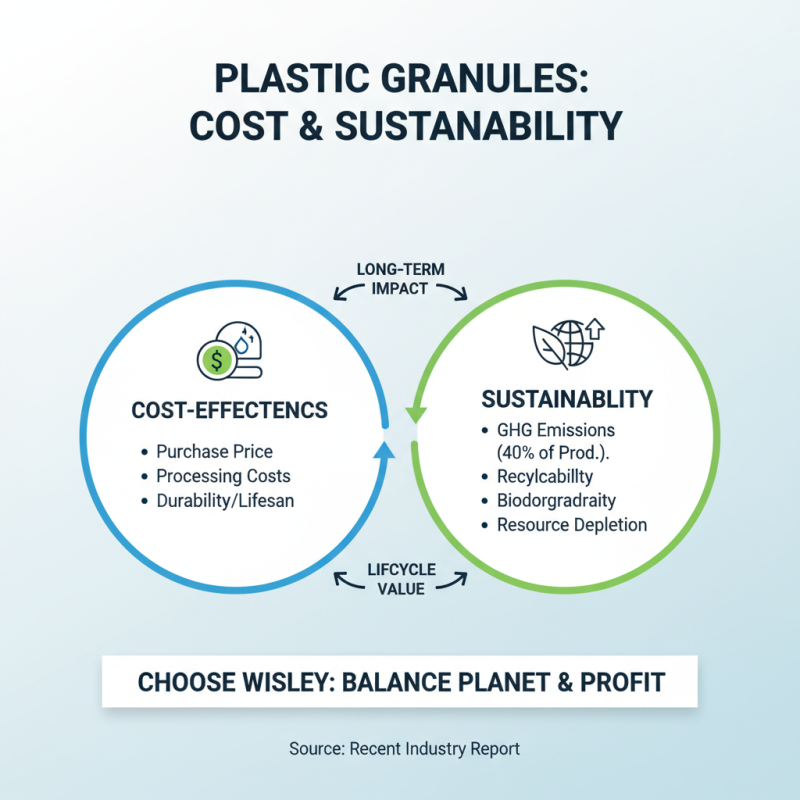
Choosing the right plastic granules for your project involves evaluating both cost-effectiveness and sustainability. According to a recent industry report, approximately 40% of plastic production contributes to greenhouse gas emissions. This alarming statistic urges project managers to consider the environmental impact of their material choices. Many granules may be affordable, but their long-term effects on the planet can be detrimental.
Cost is a significant factor when selecting plastic granules. However, opting for cheaper options may lead to increased waste and disposal costs. A study by the Plastic Waste Management Coalition found that sustainable granules, while often pricier, can reduce overall expenses by minimizing waste and enhancing recycling potential. Be mindful that the initial savings of cheap granules could lead to larger financial burdens later on.
Sustainability also means examining the lifecycle of materials. Some granules may be recyclable but require specific facilities for processing. In contrast, bio-based granules may offer a better alternative but often come with their own challenges in sourcing and availability. Balancing these factors is crucial but often leads to difficult decisions. Ultimately, the quest for the right granules is a complex process, requiring deep reflection on cost vs. ecological responsibility.
Best Practices for Sourcing and Storing Plastic Granules
When sourcing plastic granules, quality matters. Over 60% of manufacturers report challenges with inconsistent quality in their supplies. It’s essential to establish clear specifications. The Association of Plastic Manufacturers indicates that granule selection impacts the final product's durability and appearance significantly.
Storage methods play a crucial role too. Granules must be kept dry and away from direct sunlight. According to industry guidelines, moisture can lead to degradation and affect performance. Ensure your storage area is well-ventilated to reduce humidity. Regularly check bins for signs of contamination.
Purchasing in bulk can save costs, but be cautious. Buying too much can lead to waste if the material doesn’t meet project needs. A recent survey found that 40% of companies overordered, resulting in excess granules. Analyze your project requirements carefully. This step can prevent material loss and unnecessary expenses.
How to Choose the Right Plastic Granules for Your Projects in 2026? - Best Practices for Sourcing and Storing Plastic Granules
| Material Type |
Common Applications |
Sourcing Tips |
Storage Recommendations |
| Polypropylene (PP) |
Packaging, automotive parts, textiles |
Evaluate suppliers for quality and certifications |
Keep in cool, dry areas away from sunlight |
| Polyethylene (PE) |
Containers, plastic bags, toys |
Check for low-density versus high-density options |
Store in sealed containers to prevent moisture absorption |
| Polyvinyl Chloride (PVC) |
Pipes, fittings, medical devices |
Ensure compliance with industry standards |
Avoid storing near heat sources |
| Acrylic (PMMA) |
Display cases, screens, signs |
Seek suppliers who specialize in acrylic products |
Store flat to avoid warping |
| Polystyrene (PS) |
Disposable cutlery, insulation, packaging |
Look for eco-friendly sourcing options |
Keep away from sunlight to prevent degradation |