Why Choose a Metal Forge for Your Manufacturing Needs?
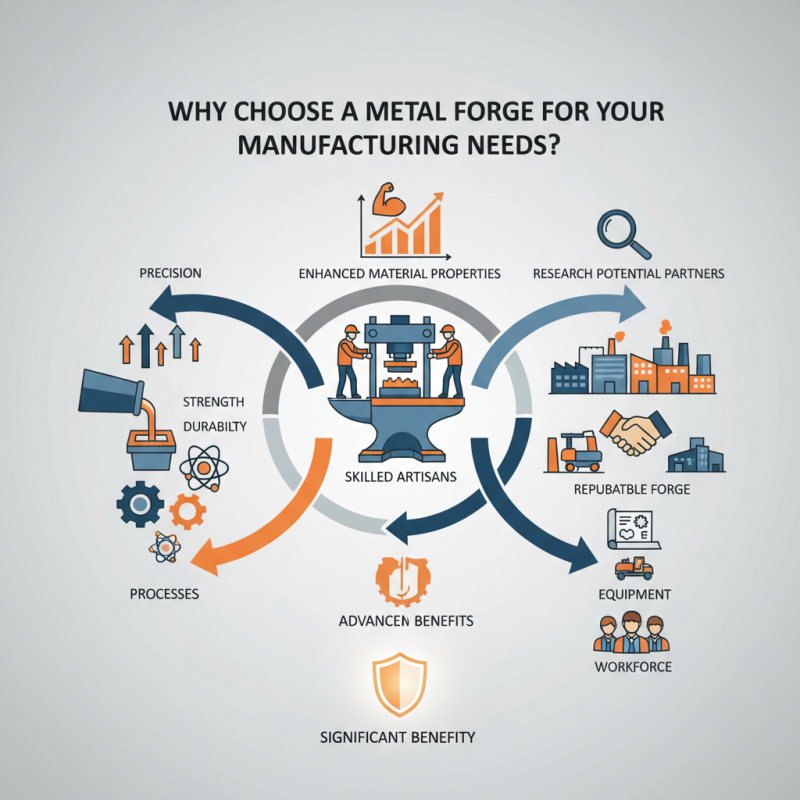
When considering manufacturing needs, many factors come into play. One important option is a Metal Forge. Modern manufacturing demands precision, strength, and durability. A Metal Forge excels in producing high-quality metal products that meet stringent specifications.
With years of expertise, Metal Forges employ skilled artisans and advanced technology. This combination ensures consistent results. The forging process often enhances the material's properties, making it stronger than other manufacturing methods. However, quality can vary significantly among different forges.
Not every Metal Forge offers the same level of service or capability. It’s essential to research potential partners. Choosing a reliable Metal Forge can lead to significant benefits. Understanding their processes, equipment, and workforce will aid in making an informed decision. Engaging with a reputable forge not only impacts productivity but can also enhance the overall quality of your manufactured products.
Benefits of Metal Forging in Manufacturing Processes
Metal forging presents distinct advantages in manufacturing processes. The deformation of metal under high pressure leads to improved structural integrity. According to a report by the Forging Industry Association, forged parts can achieve up to 30% higher strength compared to cast parts. This quality makes forging ideal for critical applications in aerospace and automotive industries.
The precision in metal forging minimizes material waste. A study conducted by the American Society of Mechanical Engineers indicated that forging can reduce material scrap rates to as low as 1%. This efficiency not only lowers costs but also promotes sustainability. However, implementing forging processes can require significant initial investment. Companies must weigh long-term benefits against upfront expenses.
Moreover, the versatility of metal forging allows for various shapes and sizes. It adapts well to different alloys, enhancing the properties of the final product. Yet, it's essential to acknowledge that not all designs are suitable for forging. Evaluating design feasibility is crucial. Targeted research and development can help refine processes and enhance outcomes.
Comparison of Metal Forging vs. Other Manufacturing Techniques
Metal forging is a time-tested manufacturing process that offers distinct advantages over other techniques such as casting and machining. According to a report by the Manufacturing Institute, forged parts exhibit superior strength-to-weight ratios. This makes them crucial in industries like aerospace and automotive, where every ounce matters. Forged components can withstand greater stress, leading to increased durability.
In contrast, casting can introduce imperfections. Porosity in cast products can lead to weakness and failure in high-stress applications. A study published by the American Society of Mechanical Engineers reveals that the rejection rate for castings due to defects can exceed 10%. This inefficiency can burden manufacturers with higher costs and delays.
Machining also presents challenges. While it allows for precise dimensions, the process often leads to wasted material and energy. Reports from the National Institute of Standards and Technology indicate that up to 30% of material can be wasted in machining processes. This inefficiency highlights the need for manufacturers to assess their priorities. Forging may require more upfront investment but can reduce long-term operational costs due to higher yield rates and fewer defects.
Comparison of Metal Forging vs Other Manufacturing Techniques
Key Industries That Rely on Metal Forge Services
Metal forging plays a critical role in various industries due to its ability to create strong and durable components. The automotive sector heavily relies on forged metal parts. According to a 2021 report by the International Organization of Motor Vehicle Manufacturers, approximately 80% of automotive components are made from forged materials. This strengthens vehicles and enhances safety.
Aerospace is another industry where metal forging is indispensable. The unique stresses involved in air travel demand components that can withstand high levels of pressure and temperature. The Federal Aviation Administration noted that forged parts are often preferred for their reliability. These parts account for nearly 60% of aircraft components, ensuring both performance and safety.
In addition, the construction and energy sectors utilize forged metal for machinery and structural components. A study by the American Institute of Steel Construction revealed that forged steel provides significant structural integrity. However, quality control in the forging process can be challenging. Manufacturers must constantly refine their techniques to avoid imperfections, which can lead to increased costs and safety risks. Balancing innovation with reliability remains a persistent challenge in the forging industry.
Factors to Consider When Choosing a Metal Forge
When selecting a metal forge for manufacturing, several factors come into play. Experience in the industry can significantly impact the quality of products. Look for forges with a history of successful projects. This background often indicates reliability and expertise. Reliable forges can ensure consistent quality in their output.
Material selection is critical. Different metals require specific forging techniques. A knowledgeable forge should understand these requirements. They can guide you in choosing the right material for your project. This can prevent costly errors later on.
Tips: Always check the forge's certifications. This reflects their commitment to industry standards. Additionally, visiting the forge can provide insights into their operational capabilities. Seeing the process in action can build confidence in your choice. Remember, communication is key. A well-informed team should be ready to answer your questions. Trust your intuition when assessing their responsiveness.
Understanding the Types of Metal Forging Techniques Available
Metal forging is a critical process in manufacturing, offering various techniques tailored to different needs. The primary methods include open-die, closed-die, and impression-die forging. Each technique has unique advantages, suitable for distinct applications. According to the Forging Industry Association, the market for metal forging is projected to reach $98 billion by 2025, highlighting its value in modern manufacturing.
Open-die forging uses flat dies, allowing flexibility and less restriction on part shapes. It is ideal for large parts, like axle shafts and equipment components. Closed-die forging involves a more complex design, producing precise shapes with high dimensional accuracy. This method is often used for automotive components. Impression-die forging combines both techniques, offering versatility in shape and efficiency.
**Tips:** When choosing a metal forge, consider the required tolerances and sizes. Evaluate the lead time and production volume too. Collaborate with your forge to optimize design. Understanding these aspects can lead to better project outcomes.
Utilizing forging can lead to improved material properties. Forged components often have superior strength and fatigue resistance. However, one must be aware of the limitations in part design. Certain geometries may not be feasible with forging techniques, which could lead to added costs or time delays. Engaging with skilled professionals can help navigate these challenges effectively.
Why Choose a Metal Forge for Your Manufacturing Needs? - Understanding the Types of Metal Forging Techniques Available
| Forging Technique | Description | Applications | Advantages |
| Open Die Forging | A forging technique where metal is placed between two flat dies and shaped through hammering. | Large components such as shafts, rings, and heavy machinery parts. | Versatile, cost-effective for large components, produces strong materials. |
| Closed Die Forging | Metal is enclosed in a die that shapes it as it is hammered or pressed. | Automobile parts, aerospace components, and precision instruments. | High precision, better surface finish, efficient mass production. |
| Ring Forging | Specialized forging technique to produce ring-shaped products by working metal into a ring. | Bushings, bearing races, and other circular components. | Efficient for producing hollow components, maintains material integrity. |
| Precision Forging | Forging process that aims for tight tolerances and exact dimensions. | Medical devices, automotive parts requiring high precision. | Reduces machining time, tight tolerances, enhances performance. |