

Compact track loaders earn their keep in tight spaces, but their undercarriages take a steady beating. Mud packs around the frame. Gravel grinds against the rollers. Repeated turns can leave uneven wear that is easy to miss during a quick walkaround. A failing Compact Track Loader Track Roller may seem like a small parts issue; downtime rarely feels small.
Industry data gives useful context, but not a shortcut to choosing parts. The U.S. Census Bureau reported that construction spending reached about $2.15 trillion in 2024, up 6.5% from 2023. That figure measures construction activity, not track-loader sales or roller demand. AEM’s equipment market outlooks offer another view of equipment-market conditions, but they do not rank individual rollers. These limits matter. A headline number cannot tell you how a roller performs in wet clay or on a rough demolition site.
This guide compares 10 roller options for 2026 using practical criteria: machine fit, sealing, materials, expected service life, availability, and warranty support. We also consider how well each option suits different work conditions, because a roller that lasts on firm soil may struggle in abrasive rock. Wear starts quietly. Check for rough rotation, damaged seals, and fresh metal debris before a small fault becomes an expensive repair. Published tests rarely compare every brand under identical conditions. That leaves room for judgment, and some uncertainty.
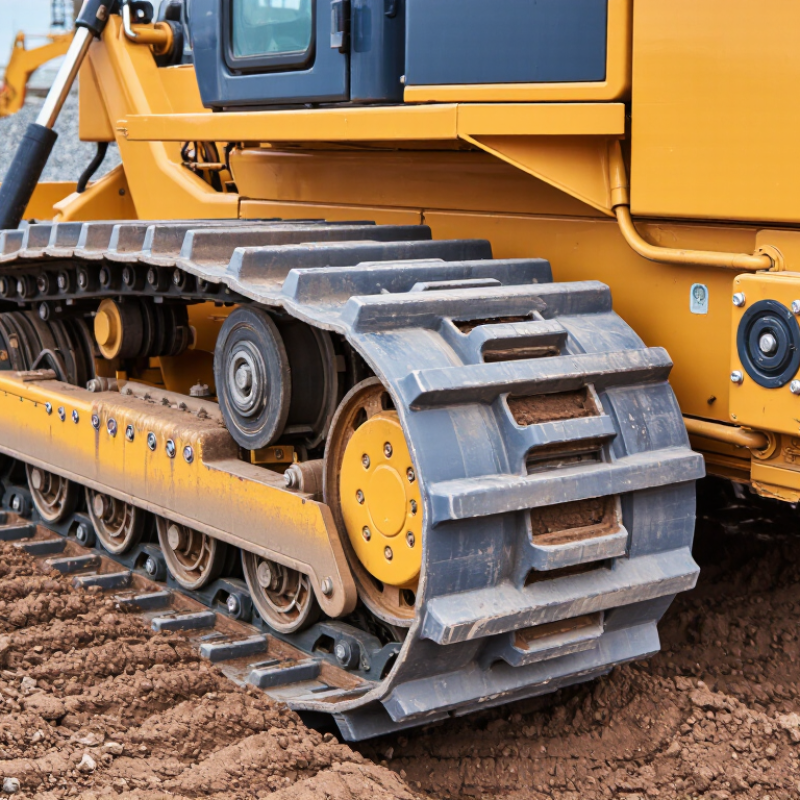
Compact track loader track rollers carry machine weight and keep the rubber track moving along its frame. Their job is easy to underestimate. A roller’s shell turns around sealed bearings, while its flanges help guide the track. Single-flange and double-flange designs are used in different positions, depending on the undercarriage layout. The correct arrangement is the one specified for that machine, not simply the one that looks sturdier.
Rows matter because they spread load across the track. A multi-row layout can support the machine over more contact points, but uneven wear or a seized roller can still concentrate pressure. Feel the rollers after operation, check for rough rotation, and look for chipped flanges, oil leakage, or packed clay. Small clues matter. A quick visual check will not reveal every bearing problem.
The load path runs from the chassis through the roller frame, shafts, and bearings, then into the roller shells, track belt, and ground. When a roller stops turning freely, friction and heat can rise, wearing the belt faster. Mud can hide damage. Cleaning the undercarriage before inspection helps, though it does not replace service measurements or the machine’s maintenance guidance. I would not judge a roller by appearance alone; a smooth-looking shell may still conceal bearing wear.
For a compact track loader, a roller that looks close can still run poorly. Start with track pitch: measure from pin center to pin center across several intervals, then divide by the number of intervals. Measure twice. Match roller width to the track’s running surface, not just its outside diameter. Check whether the track uses single or double guide lugs, and confirm the roller’s flange layout clears them. A small mismatch can push the track sideways or concentrate wear along one edge.
Seal design matters in mud, grit, and standing water. Compare the replacement’s seal style and shielding with the loader’s original arrangement. A good seal helps retain lubricant and block abrasive debris, but it cannot compensate for a damaged housing or poor installation. Before ordering, verify the machine’s model and serial details, bolt pattern, shaft dimensions, and any undercarriage changes. Photos can help, but measurements are more dependable.
It is easy to treat roller width as a nominal figure; that assumption deserves a second look.
ISO 16754 provides a repeatable method for determining average ground pressure on crawler machines. For a compact track loader, the basic comparison relates machine operating mass to the track area in contact with firm, level ground. Record the machine configuration, including attachments and carried load, because added mass changes the result. Keep the setup consistent. Small differences matter.
This figure helps compare undercarriage demands, but it does not measure the load on each track roller. A roller may experience higher forces when the loader turns, crosses a sharp edge, or runs over uneven ground. Track tension, wear, and debris between components can also affect local loading. The ISO result is an average, not a map of pressure peaks. That distinction is easy to miss. For roller assessment, pair the standardized ground-pressure measurement with inspection for uneven wear, loose hardware, and damaged track surfaces. Record operating conditions and repeat checks after significant changes in attachments or workload. The method improves consistency, yet it cannot reproduce every jobsite impact. That limitation deserves attention.
Illustrative comparison using a fixed total track contact area of 1.60 m². Ground pressure is calculated as operating mass × 9.80665 m/s² ÷ contact area.
These are calculated examples, not specifications for particular machines or certified test results. ISO 16754 describes a method for determining ground pressure for crawler machines. Track roller loads depend on undercarriage design and operating conditions and are not measured by this simplified chart.
A compact track loader’s rated operating capacity is not a track-roller specification. ISO 14397-1 provides a framework for determining loader capacity and stability under defined test conditions. That figure helps compare machines, but it does not tell you how much load each roller carries. Numbers need context.
During lifting, load position, attachment weight, and ground slope can change stability. A pallet held close to the machine behaves differently from one extended forward. Track rollers guide and support the undercarriage as it moves; worn or damaged rollers may affect tracking and increase maintenance needs. They do not increase the machine’s rated capacity. Check the operator’s manual and load chart for the exact machine and attachment.
For roller selection, match dimensions, mounting details, and the machine’s operating environment. Mud, abrasive grit, and repeated turns can influence wear. Inspect for uneven wear, looseness, and unusual noise, then compare findings with service guidance. A capacity rating is useful, but it is not a promise for every surface or lift. I may be overly cautious here, yet treating a published ROC as a universal working limit misses important conditions.
A practical, brand-neutral comparison of roller types and selection checks. There is no universal “best” roller: fit, roller arrangement, and service requirements depend on the specific loader undercarriage.
| No. | Roller choice or configuration | Typical position | Function and load context | What to verify before purchase | ISO 14397-1 / ROC relevance |
|---|---|---|---|---|---|
| 1 | Double-flange bottom roller | Lower track frame | Supports the track frame against the inner track surface; the flanges help guide the track. Bottom rollers carry part of the machine’s operating weight, with the load shared among rollers. | Confirm flange profile, dimensions, mounting pattern, shaft and seal arrangement, and the machine’s specified part number. | It has no standalone ROC rating under ISO 14397-1. Roller loads depend on the loader’s undercarriage design and operating conditions. |
| 2 | Single-flange bottom roller | Lower track frame, where specified | Supports and guides the track in undercarriage designs that use a single-flange arrangement. It is not automatically interchangeable with a double-flange roller. | Match the flange location and track-frame position to the parts specification; check track alignment and wear patterns. | Machine ROC describes loader lifting capacity, not the permissible load of an individual roller. |
| 3 | Position-matched bottom roller | Front, center, or rear position on the lower frame | Some undercarriages specify different roller parts or arrangements by position. Impacts and load distribution can vary with terrain, attachment, and operating practice. | Use the parts catalogue for the exact position. Do not assume every lower roller on a machine is identical. | ISO 14397-1 does not provide a method for converting ROC into a position-specific roller load. |
| 4 | Heavy-duty specified bottom roller | Lower track frame on applications requiring a designated heavy-duty option | A heavy-duty option is meaningful only when engineered and listed for the loader. A heavier-looking or larger roller is not proof of higher capacity or compatibility. | Verify that the loader manufacturer or authorized parts documentation lists the option for the machine’s serial-number range. | Any claimed machine ROC remains a machine-level figure; it does not certify an aftermarket roller’s capacity. |
| 5 | Upper carrier roller | Upper run of the track | Supports and guides the upper track run. Its duty differs from that of a lower roller that supports the track frame against the ground-contacting track. | Check track width and profile, mounting dimensions, rotation clearance, and the specified carrier-roller location. | Carrier-roller capacity is not represented by the loader’s rated operating capacity. |
| 6 | Sealed, lubricated roller assembly | Bottom or carrier position, if specified for the machine | Sealed assemblies are designed to retain lubricant and limit contaminant entry. Seal condition and correct installation affect service life. | Confirm the assembly type, seal design, lubrication specification, and whether the unit is serviceable or replaced as a complete assembly. | Sealing and lubrication features do not change the ISO-rated ROC of the loader. |
| 7 | Roller matched to the installed track system | Lower or upper track frame | Track pitch, width, guide-lug geometry, and roller profile must work together. A mismatch can contribute to poor tracking or accelerated wear. | Identify the installed track type and measure against the machine parts specification; do not select by outside diameter alone. | Track compatibility is an undercarriage fit issue, separate from the loader’s rated operating capacity. |
| 8 | Roller selected for the operating environment | Any specified roller position | Wet soil, abrasive material, debris, and frequent travel can affect wear and maintenance needs. No single roller construction is best for every site. | Consider the actual duty cycle, contamination, cleaning access, and inspection intervals; follow the machine’s maintenance guidance. | Operating conditions may affect practical stability and performance, but they do not turn ROC into a roller-load specification. |
| 9 | Roller replaced as a matched set when required | Corresponding positions on the track frame | Replacing only a worn component may be appropriate, but uneven wear or damage can justify inspecting adjacent rollers and the complete track system. | Measure wear and inspect adjacent rollers, track links, idlers, and sprockets. Follow the service limits for the specific machine. | Maintenance condition is separate from ISO ROC; a worn undercarriage does not create a revised rated-capacity figure. |
| 10 | Serial-number-verified replacement roller | Any replacement position | The most reliable selection is the part specified for the exact loader configuration, rather than a generic “compact track loader” fit claim. | Provide machine model, serial number, roller position, and any undercarriage configuration details when checking fit. | Use the machine’s published ROC and load chart for lifting decisions; do not infer lifting capacity from a roller listing. |
Load-capacity context: ISO 14397-1 addresses calculation of rated operating capacity and verification of calculated tipping load for applicable loaders. ROC is a machine-level rating, not a per-track-roller load limit. Use the loader’s documentation for ROC, attachment limits, and operating guidance; use the parts specification and service limits to select and assess rollers.
Compare ten roller options by fitment first, not price. Record machine model, serial range, roller position, shaft diameter, tread width, flange profile, and bolt spacing. A near-match can still bind against the track or wear unevenly. Measure the removed part and confirm dimensions against the parts manual. Small differences matter.
Check whether each option is a single- or double-flange track roller, and ask about seal design, lubrication, material, and rated load. ISO 16754:2008 sets out a method for determining average ground contact pressure on crawler machines; it does not certify roller interchangeability. Use it as engineering context, not a fitment shortcut. Keep the specification sheet. It helps when a supplier’s listing is vague.
Warranty terms deserve a close read. Confirm coverage period, exclusions for contamination, and whether labor or freight is included. Compare delivered cost, not just the quoted unit price. The U.S. Bureau of Labor Statistics’ Producer Price Index tracks machinery-manufacturing price movement, useful for checking broader quote trends, but it cannot predict a specific roller’s price. A spreadsheet helps. I still find that field measurements sometimes disagree with old records, so verify before ordering.