Your Compounder of Choice

Mon - Fri: 8:00 - 16:30 | Sat & Sun: Closed

2026 Top Trends in Injection Molding PVC Technology?

The landscape of "injection molding PVC" technology is evolving rapidly as we approach 2026. Leading industry expert, Dr. Emily Johnson, once stated, "Innovation in PVC processing will redefine manufacturing standards." Her insight captures the essence of the shifts underway. New trends are taking shape, focusing on efficiency, sustainability, and precision.

Companies are investing in advanced techniques that enhance the performance of injection molding PVC products. This includes integrating smart manufacturing processes and optimizing material properties. However, challenges remain. Many firms struggle to adapt to these innovations, which can lead to production delays and increased costs. The need for skilled labor in this area also poses a significant hurdle.

As the industry pushes forward, the importance of sustainable practices cannot be overlooked. With growing environmental concerns, minimizing waste in injection molding PVC is crucial. Manufacturers are exploring biodegradable options and recycling methods. Navigating these trends requires an open mind and a willingness to experiment. The future promises exciting developments but also demands reflection on current practices.
2026 Top Trends in Injection Molding PVC Technology?

Emerging Technologies Impacting PVC Injection Molding in 2026

The field of PVC injection molding is evolving rapidly. In 2026, several emerging technologies will shape its future. One prominent trend is the integration of artificial intelligence. AI can optimize production processes and reduce waste. This leads to more sustainable practices. Machine learning algorithms will analyze data in real-time, allowing for better quality control.

Another important advancement involves 3D printing. This technology is becoming more accessible and can create complex mold designs. It enables faster prototyping and reduces lead times. Companies can now produce small runs more efficiently. This flexibility might seem appealing, but it poses challenges regarding traditional scaling.

**Tips:** Consider investing in training for your team. They need to stay updated on these new technologies. Also, embrace iterative development. Experimenting can lead to unexpected improvements. The shift to new tech may require patience and reflection on how current practices align with future goals.

2026 Top Trends in Injection Molding PVC Technology

Trend Description Impact Adoption Year
Sustainability Focus Increased use of recycled PVC materials in the injection molding process. Reduces environmental impact and meets stricter regulations. 2026
Smart Manufacturing Integration of IoT devices for real-time monitoring and data analytics. Enhances efficiency and reduces downtime through predictive maintenance. 2025
Advanced Mold Design Usage of 3D printing for rapid mold production. Speeds up production cycles and reduces costs. 2026
Bio-based Additives Incorporation of bio-based materials in PVC formulations. Improves biodegradability without compromising performance. 2026
Energy-efficient Processes Adoption of energy-efficient machinery and techniques. Reduces operational costs and carbon footprint. 2025

Sustainable Practices in PVC Injection Molding: Trends to Watch

As the world increasingly focuses on sustainability, PVC injection molding is evolving. This evolution offers exciting options for manufacturers. More companies are exploring eco-friendly materials. Biodegradable additives, for instance, are gaining traction. These additives can help reduce plastic’s long-term impact.

Energy-efficient processes are another important trend. Many injection molders are adopting technologies that consume less energy. Equipment improvements can lead to significant savings. Using renewable energy sources is also a way to enhance sustainability. Still, the transition is not always smooth. Not all facilities can afford to upgrade their machinery.

Recycling programs are being implemented across the industry. However, the effectiveness of these programs varies. Some companies struggle with maintaining quality in recycled materials. There is a critical need for better systems to ensure efficiency in this area. Embracing innovation and sustainability is crucial for the future of PVC injection molding. Yet, the journey is complex and requires ongoing commitment.

2026 Trends in PVC Injection Molding Technology

Advancements in Material Science for PVC Applications

2026 Top Trends in Injection Molding PVC Technology?

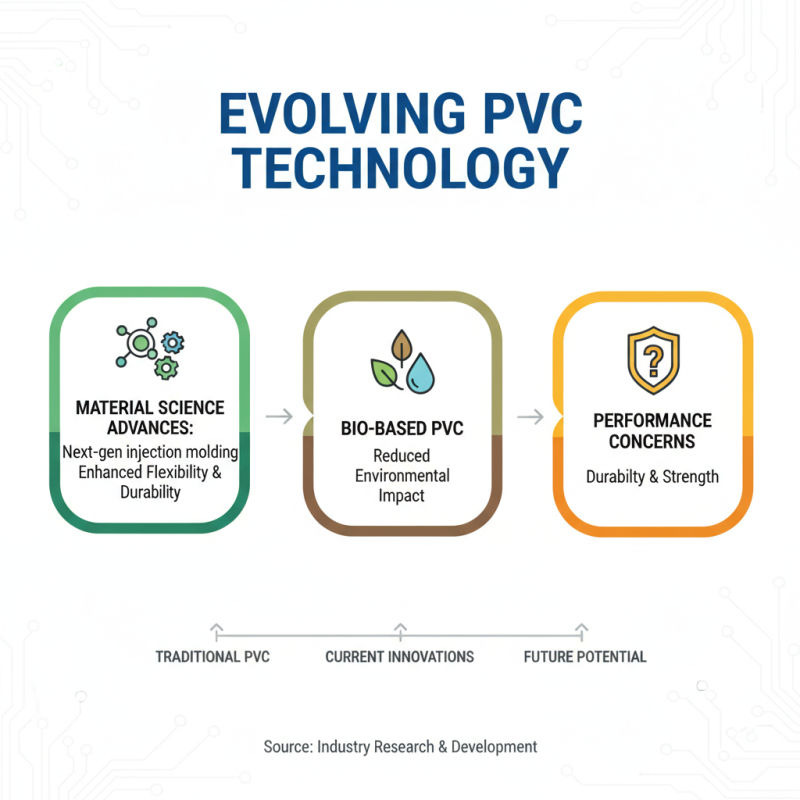
The landscape of PVC technology is evolving. Advancements in material science are pushing the boundaries of injection molding. New formulations enhance flexibility and durability. Engineers are experimenting with bio-based PVC materials. These alternatives reduce environmental impact, yet concerns about performance linger.

Modification techniques are becoming more sophisticated. Adding modifiers can enhance properties like UV resistance. However, these changes may complicate recycling processes. The industry faces a challenge in balancing performance with sustainability.

Emerging technologies like 3D printing with PVC are gaining traction. This method allows for intricate designs and faster prototyping. Yet, the long-term viability needs further exploration. As these trends develop, the PVC community must remain adaptable. The journey is far from perfect, but progress continues.

Automation and Robotics in PVC Injection Molding Processes

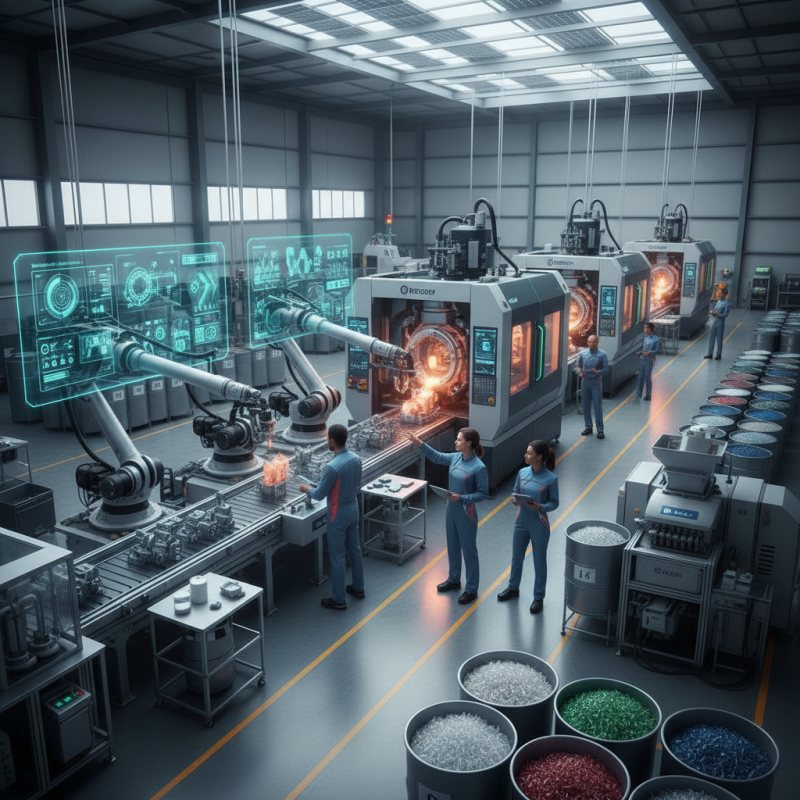
In 2026, automation and robotics are poised to reshape PVC injection molding processes. These technologies hold the promise of increased efficiency and precision. With robotic arms handling tasks, production lines can move faster and with fewer errors. The introduction of artificial intelligence improves decision-making on the factory floor. Data analytics can guide adjustments in real time, optimizing each cycle.

However, the journey isn’t without challenges. Implementing automation requires significant investment. Small manufacturers may struggle to adopt these technologies. Training staff to work alongside robots is another hurdle. There’s a learning curve, and mistakes can happen during the transition. Companies must rethink workflows to fully harness these advancements.

The future of PVC injection molding hinges on adapting to this changing landscape. Companies should remain open to feedback from their teams. Continuous improvement is essential in this field. Exploring new ways to integrate robotics can lead to breakthroughs. Embracing change while acknowledging imperfections will be key to success in the evolving industry.

Market Predictions for PVC Injection Molding in the Coming Years

2026 Top Trends in Injection Molding PVC Technology?

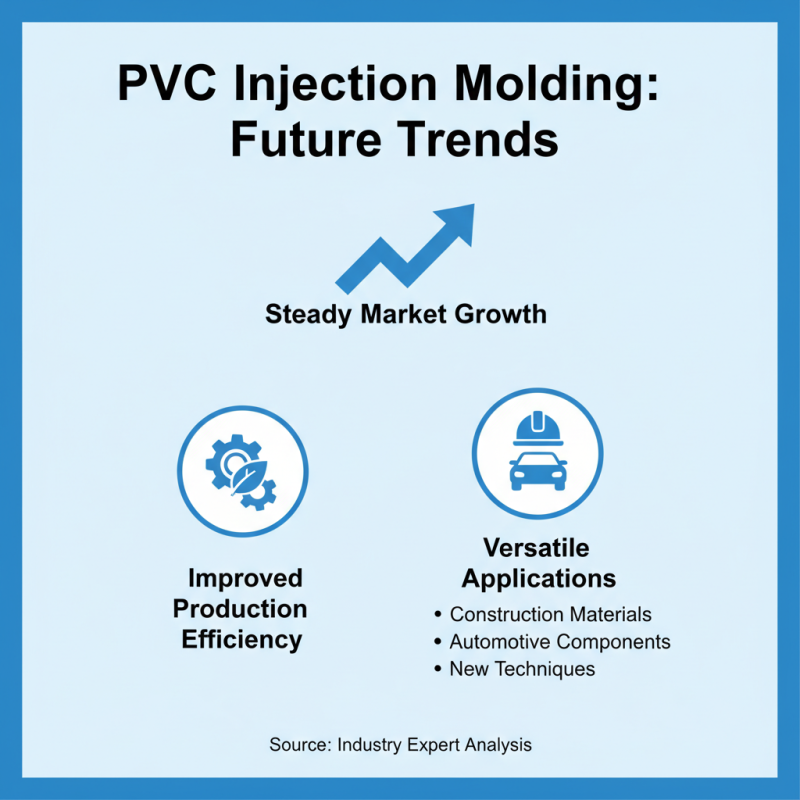
The PVC injection molding market is poised for significant changes in the coming years. Industry experts predict a steady growth in demand driven by its versatile applications. This includes everything from construction materials to automotive components. As manufacturers explore new techniques, the efficiency of production processes will improve.

Sustainability is becoming another crucial trend. Companies are seeking eco-friendly alternatives to traditional PVC. This shift may lead to innovative materials that are less harmful to the environment. However, it raises questions about performance. Can new materials match the durability of conventional PVC? This is a pressing issue that needs further exploration.

Additionally, automation and smart technology integration are crucial for future advancements. Robotics can speed up production while minimizing errors. But, the initial investment for these technologies can be high. Smaller businesses might struggle to adapt quickly. The balance between cost and innovation will define the market landscape in the short term.