

Therapeutic Peptides are moving from specialist laboratories into mainstream medicine. Grand View Research estimated the global peptide therapeutics market at approximately USD 43.1 billion in 2023. It also projected continued growth through 2030. That expansion attracts reputable manufacturers, but it also increases sourcing confusion. A polished website is not proof of quality. Neither is a low price.
David Craik, a leading peptide-drug researcher, has emphasized, “Nature has provided us with an enormous diversity of peptides.” His observation matters because peptide performance depends on sequence accuracy, purity, folding, formulation, and storage. The IQVIA Institute’s Global Use of Medicines 2024 report also highlights continued investment in specialty and biologic medicines. These trends make supplier verification more important, not less. A certificate alone may not reveal contamination, incorrect labeling, or poor cold-chain handling.
Small details matter. A package should arrive sealed, traceable, and temperature-appropriate. The label should show a batch number, concentration, storage conditions, and expiry information. Independent testing should confirm identity and purity. Still, no checklist is perfect. Records can be incomplete. Online claims can look professional while remaining unverifiable. This guide, “10 Tips for Sourcing Therapeutic Peptides Safely,” focuses on practical due diligence, documented quality systems, and responsible communication with qualified professionals. It does not replace medical advice, regulatory guidance, or validated laboratory procedures. Safety begins before the order is placed.
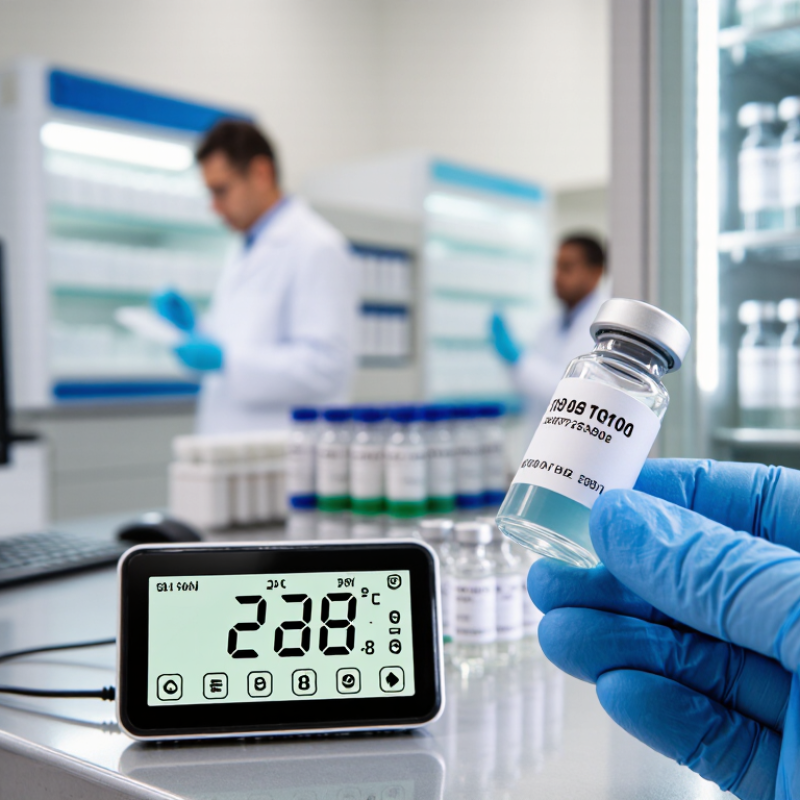
Therapeutic peptides are short chains of amino acids designed to produce a defined biological effect. Their medical uses may include metabolic disease, endocrine disorders, oncology, fertility care, and selected rare diseases. A peptide is not automatically a medicine because it appears in a vial. Its intended use depends on clinical evidence, manufacturing controls, approved labeling, and medical supervision. IQVIA’s Global Use of Medicines 2024 report forecasts global medicine spending could reach about 2.3 trillion dollars by 2028. Demand is growing. Confusion is growing too.
For safe sourcing, check these ten points:
A certificate can look convincing and still be incomplete. I would not rely on one laboratory result. Ask whether testing used validated methods and whether the sample represented the entire batch. Storage matters. A warm delivery can quietly damage a sensitive molecule.
Evaluate Pharma’s World Preview 2024 projects the broader obesity-treatment market may approach 100 billion dollars annually by 2030. That forecast reflects legitimate clinical demand, not permission for unsupervised use. Buyers should match the peptide to a documented diagnosis and authorized treatment pathway. Pharmacists and physicians can verify formulation, contraindications, interactions, and monitoring needs.
Some sourcing decisions remain uncertain, especially when long-term data are limited. That uncertainty deserves an honest pause.
Safe sourcing of therapeutic peptides begins with verifying the supplier’s credentials, licensing, and quality systems. Ask for the company’s legal registration, manufacturing authorization, and relevant regulatory permissions. These documents should match the facility address and product scope. A polished website proves very little.
Request a current certificate of analysis for each lot. Check identity, purity, potency, residual solvents, microbial limits, and testing methods. The report should show lot numbers, test dates, acceptance criteria, and an accountable laboratory signature. Independent laboratory confirmation adds confidence, especially for high-risk materials. Look for a documented quality management system, controlled records, deviation investigations, change control, and staff training. Good suppliers can explain how they prevent mix-ups during weighing, labeling, storage, and shipping. Temperature logs matter. So does traceability.
Supplier audits can reveal practical details that certificates miss, such as damaged seals or handwritten corrections. Ask whether the supplier welcomes a qualified audit or provides a recent third-party assessment. Confirm that transport conditions protect stability and that complaints receive written responses. Never rely on unusually low prices or urgent promises. Those signals are not proof of misconduct, but they deserve questions.
A certificate is not enough. I have seen checklists become too comfortable. Recheck expired licenses, inconsistent addresses, and unclear test methods before approval. Use qualified scientific and regulatory professionals for procurement decisions, and keep every verification record linked to the purchased lot.
| No. | Verification Dimension | Evidence to Request | Practical Verification | Key Red Flags |
|---|---|---|---|---|
| 1 | Confirm the intended use and legal pathway | Written description of whether the material is an approved medicine, pharmaceutical active ingredient, compounded preparation, or research-use material. | Match the product category, labeling, import requirements, and permitted use with the rules of the destination country and the responsible health authority. | “For research use only” material marketed for human treatment; vague claims about approval or clinical use. |
| 2 | Verify supplier identity and registration | Legal entity name, registered address, responsible quality contact, manufacturing or distribution site details, and applicable registration numbers. | Check official public registers, licensing databases, or regulator portals where available. Confirm that the legal entity matches invoices and certificates. | Only a messaging-app contact, unverifiable address, mismatched legal names, or refusal to provide registration information. |
| 3 | Assess manufacturing authorization | Current manufacturing, import, wholesale, or pharmacy authorization relevant to the supplied material and jurisdiction. | Confirm the scope, site address, product category, and expiry date directly with the issuing authority when possible. | Expired licenses, licenses covering a different activity, or certificates issued only as informal scans without independent confirmation. |
| 4 | Review the quality management system | Quality manual or summary, document-control procedure, deviation and CAPA process, change-control policy, training records, and internal audit program. | Look for controlled procedures, traceable records, defined responsibilities, and evidence that quality issues are investigated and closed. | A single generic certificate presented as proof of complete quality oversight; no deviation, complaint, or change-control process. |
| 5 | Check GMP or equivalent production controls | Current GMP inspection status or equivalent evidence covering production, packaging, testing, sanitation, contamination control, and batch release. | Ensure the evidence applies to the specific site and product type. Review inspection findings and corrective actions where publicly available. | “GMP-like” wording without a defined standard, site-specific documentation, or current inspection evidence. |
| 6 | Validate the certificate of analysis | Batch-specific certificate of analysis showing identity, assay or content, purity, impurities, residual solvents, water content, and test methods. | Match the batch number, manufacturing date, specification limits, methods, results, analyst approval, and release date to the shipment. | Generic or reused certificates, missing batch numbers, unexplained rounding, absent methods, or results outside scientifically justified specifications. |
| 7 | Use independent testing and identity confirmation | Raw data or validated reports for orthogonal identity testing, purity testing, and relevant microbiological or endotoxin testing. | Before use, send representative samples to a qualified independent laboratory using methods appropriate for peptides, such as mass spectrometry, chromatography, and microbial tests where applicable. | Reliance on a single unverified purity number or refusal to permit independent testing. |
| 8 | Review sterility and contamination controls | Sterilization or aseptic-processing information, bioburden and endotoxin limits, environmental monitoring summary, and container-closure controls when relevant. | Confirm that sterility claims are supported by validated processes and that the testing strategy is suitable for the dosage form and intended route of administration. | “Sterile” stated without validated processing, test results, packaging controls, or a clear distinction between sterile and non-sterile material. |
| 9 | Confirm storage, shipping, and chain of custody | Temperature requirements, light and moisture limits, packaging specification, shipping records, excursion procedure, and stability or retest information. | Check whether the shipment maintained the required conditions and whether the product remains within its assigned expiry or retest period. | Uncontrolled transit, missing temperature records, damaged seals, unclear retest dates, or packaging that does not protect against moisture and light. |
| 10 | Evaluate traceability, complaints, and recall readiness | Lot-traceability procedure, complaint-handling process, recall procedure, adverse-event escalation route, and documented supply-chain records. | Confirm that every lot can be traced from starting materials through testing, release, shipment, and final recipient, with a named contact available for urgent issues. | No lot traceability, no formal recall process, anonymous support, or reluctance to disclose material changes and quality incidents. |
Use this checklist as a supplier-screening aid. Final acceptance should be performed by qualified quality, regulatory, and clinical personnel in accordance with applicable law and the intended use.
Confirming peptide identity, purity, storage, and testing requires evidence, not confident wording. Match the material to its certificate of analysis, batch number, molecular mass, sequence, and stated concentration. Use orthogonal testing when possible, such as mass spectrometry plus chromatographic analysis. The FDA reported that 62% of drug shortages from 2013 to 2017 involved manufacturing or product-quality problems. That finding still matters for peptide sourcing.
Tip: Request raw data, not only a summary. Check chromatograms for integration quality, impurities, and system suitability. Confirm that the testing laboratory uses validated methods aligned with ICH Q2(R2). A purity figure alone can mislead. Counterion content, water, residual solvents, and aggregation may change the actual result. No single test proves everything.
Tip: Treat storage records as part of identity control. Review temperature logs, shipment duration, packaging, and freeze-thaw exposure. Many peptides require controlled refrigeration or freezing, but the correct condition depends on formulation and stability data. WHO estimates that up to one in ten medical products in some low- and middle-income markets may be substandard or falsified. That statistic is broad, not peptide-specific, yet it supports careful supplier qualification. I would not accept a missing chain-of-custody record, even when the vial looks perfect.
Tip: Verify supplier expertise, independent testing, and complaint handling. Ask for a retained sample policy and deviation records. Certificates can contain errors. Review them critically.
Before purchasing therapeutic peptides, treat regulatory evidence as a safety requirement, not paperwork. Confirm that the supplier holds appropriate licenses for manufacturing, storage, and distribution in the relevant jurisdiction. Ask for the legal entity name, facility address, and responsible quality contact. Documentation should match the exact batch. That detail matters.
Request a current certificate of analysis showing identity, purity, concentration, testing methods, and acceptance limits. Check whether an independent laboratory performed the testing. Review manufacturing records, storage conditions, transport controls, and expiry information.
A polished PDF can still hide gaps. Compare document dates, batch numbers, and product descriptions carefully. In procurement reviews, I have learned that small inconsistencies deserve written clarification before payment.
Regulatory expectations differ across countries and intended uses. Verify import rules, institutional approvals, and applicable clinical or research requirements with qualified professionals. Do not rely on a supplier’s statement that a product is “compliant.” Evidence should be traceable and available for audit. Keep invoices, correspondence, test reports, and temperature records in one controlled file. It may feel slower, but rushed sourcing creates larger problems later. I still find documentation review imperfect when records are incomplete, so decisions should remain conditional until the missing evidence arrives.
10 Tips for Sourcing Therapeutic Peptides Safely
Use Secure Handling, Medical Guidance, and Ongoing Quality Checks
Sourcing therapeutic peptides safely starts with medical guidance, not a marketplace search. A qualified clinician should confirm the diagnosis, indication, dose, and monitoring plan. In practice, the safest route is a licensed pharmacy or regulated healthcare channel with traceable documentation. Ask for lot numbers, expiry dates, storage instructions, and a named quality contact.
Quality risks are not theoretical. The WHO’s 2017 global study estimated that one in ten medicines in low- and middle-income countries may be substandard or falsified. The OECD and EUIPO’s 2020 report estimated that counterfeit pharmaceuticals represented 0.4% of global trade, worth about US$4.4 billion in 2016. These figures do not prove that a specific peptide is unsafe. They justify careful verification.
Secure handling means controlled access, clean preparation areas, documented temperature checks, and immediate quarantine after a broken seal or unexplained appearance. Do not rely on a clear vial alone. When clinically appropriate, qualified laboratories should review identity, purity, concentration, sterility, and endotoxin results. Ongoing checks matter because transport excursions can occur after release. Keep an audit trail from receipt to administration. No checklist is flawless. Documentation can look complete while one missing temperature record weakens the entire decision. That gap deserves escalation, not assumption. Reassess supplier records, test results, and clinical response at scheduled intervals under medical supervision.
This chart groups ten practical safety tips into four evidence-informed domains: secure sourcing, medical guidance, handling controls, and ongoing quality checks. Safe peptide use requires qualified clinical oversight, verified supply chains, appropriate storage, accurate labeling, and documented quality monitoring.